Welcome to our Psychometric Spotlight video with Peter Clarke, Head of Learning Performance and Innovation at St James’s Place.
Here you’ll discover how St James’s Place used their Leadership Blueprint Framework to create accessible tools that have been used by the whole organisation. If you’d like to learn more about what St James’s Place do, click here.
Welcome to our Psychometric Spotlight video with Jim Bloomfield, Director of Bloojam.
Here you’ll discover how Bloojam developed the Acuity model and used it to create a diagnostic and development tool for B2B sales roles. If you’d like to find out more about the Acuity Assessment, click here.
Welcome to our Psychometric Spotlight video with Juliette Alban-Metcalfe, the Chief Executive of Real World Group.
Here you’ll discover how Real Wold Group created their self-assessment, the Real World Leader. If you’d like to find out more about the Real World Leader, click here.
NatWest required a robust assessment platform to support implementing and integrating their bank-wide skills and behaviour frameworks.
Ensuring the security and privacy of their data in addition to usability was a top priority for the bank. With Evolve, NatWest has since developed multiple tools, truly making it a partnership from start to end.
The following case study has been drawn from an interview held between Richard Anderson (Commercial Director at Evolve Assess) and Martin Mason (Founder and CEO of Unleashed).
Introduction:
Evolve Assess is a leading company specialising in bespoke psychometric, assessment and 360° feedback technology. With a unique approach to delivering customised solutions, Evolve Assess stands out in an industry dominated by off-the-shelf products. This case study explores the experience of Martin Mason (Founder of Unleashed, a consultancy focused on diversity and inclusion), a satisfied client who found Evolve Assess after an extensive search for the perfect solution.
Background:
Martin wanted to create You Unleashed, a bespoke psychometric tool that measures management and leadership potential in recruitment and development.
Before partnering with Evolve Assess, Martin had conducted thorough research to find a solution that aligned with his specific needs. He had explored various options, seeking a platform that would allow him to keep the tool development in-house. However, he couldn’t find anything that matched his requirements until he was referred to Evolve Assess by Ben from Sten10. Intrigued by the recommendation, Martin scheduled an initial call with the Evolve Assess team.
Exceptional Service and Customisation:
During his first interaction, Martin was impressed by the level of service and the personalised approach of Evolve Assess. The team understood Martin’s vision and requirements, and they guided him through the solution step by step. Unlike other software providers that offered rigid, one-size-fits-all solutions, Evolve Assess stood out as a partner willing to go the extra mile. Their commitment to customisation and flexibility resonated with Martin’s goals, making the decision to work with them an easy one.
Effortless Collaboration and Seamless Integration:
One of the key factors that set Evolve Assess apart was the seamless collaboration and integration with Martin’s team. Unlike previous experiences where great technology was marred by poor service, Martin found working with Evolve Assess effortless and enjoyable. From the early stages, the partnership felt like an extension of his own team. Communication was smooth, and the Evolve Assess team was always available to address any questions or concerns. The ease of doing business with Evolve Assess made the entire process efficient and stress-free.
“It feels like the guys at Evolve are part of our team because of the way that we work with you.”
Martin Mason – Unleashed
A Small Business Approach with a Partnership Mindset:
Evolve Assess understood the unique challenges faced by small businesses. They treated Martin’s company as a partner, rather than just another client. Evolve Assess’s philosophy emphasised collaboration, ensuring a genuine partnership where both parties work together towards success. This resonated with Martin, who appreciated the value Evolve Assess placed on long-term relationships and mutual growth. The partnership felt like a true collaboration, where everyone was invested in each other’s success.
Clear Communication and Technical Expertise:
Martin found the communication with Evolve Assess refreshing and straightforward. They effectively translated complex technical concepts into layman’s terms, allowing Martin to easily understand the solutions presented. This clear communication built a strong foundation of trust and ensured that Martin was actively involved in the decision-making process. Evolve Assess’s technical expertise combined with their ability to explain things in simple terms made them an ideal partner for Martin’s team.
Delivering Results with Speed and Reliability:
The streamlined and efficient nature of Evolve Assess’s platform stood out to Martin. Compared to other products and services he had used, Evolve Assess’s solution required minimal effort to get results. Martin could effortlessly send links to clients, knowing that they would receive the reports as planned. This expediency and professional service provided Martin with peace of mind, allowing him to focus on other aspects of his business.
Continuous Improvement and Future Enhancements:
Evolve Assess actively seeks feedback from their clients and values their input. They prioritise continuous improvement and listen to client needs when developing new features and functionalities. Martin had a specific request regarding link expiration for gifting reports and a pay-as-you-go option for clients. Evolve Assess demonstrated their commitment to meeting client needs by exploring solutions for these requirements, showing their willingness to adapt and enhance their platform accordingly.
Conclusion:
Martin’s experience with Evolve Assess exemplifies the company’s commitment to delivering customised psychometric tools with unparalleled service. From the initial consultation to ongoing collaboration, Evolve Assess provided exceptional support, clear communication, and technical expertise. The seamless integration with Martin’s team and the emphasis on partnership made the entire process efficient and enjoyable. Martin and the team at Unleashed appreciated the ability to customise the platform to meet their specific needs and the attentive, personalised support they received exceeded his expectations.
By choosing Evolve Assess, Martin not only found a solution that perfectly aligned with his requirements but also gained a long-term partner invested in his success. Evolve Assess’s small business approach, partnership mindset, and commitment to delivering top-notch service set them apart in the industry.
Mind³/TeamUp, a company seeking a customised assessment tool, partnered with Evolve Assess to meet their unique requirements. Emma Ferrier, the Operations Director at Mind³/TeamUp, commends Evolve Assess for their understanding, flexibility, and commitment to delivering a tailored solution. This case study was provided by Emma Ferrier.
Challenge and Requirements:
Mind³/TeamUp had a highly specialised vision for their assessment tool and needed a company that could accommodate their unique requirements. The tool needed to attract website traffic while delivering a visually appealing and intellectually engaging experience for participants. TeamUp sought a partner who could adapt to their evolving needs and budgetary restrictions, understanding the ambitious goals they aimed to achieve with a small team.
A Collaborative Approach:
Evolve Assess demonstrated their commitment to TeamUp’s success by actively engaging in discussions and asking the right questions. They prioritised understanding TeamUp’s needs and building a solution around them, rather than forcing their requirements to fit an existing product. This collaborative approach, coupled with Evolve Assess’ honesty and responsiveness, fostered a strong partnership with TeamUp.
Partnership and Support:
Throughout the project, Evolve Assess exhibited a genuine understanding of TeamUp’s vision and limitations. The level of support provided went beyond addressing challenges promptly; it involved being available for assistance whenever required. The partnership was built on trust, with TeamUp confident that Evolve Assess would deliver exceptional results and appreciative of their honesty and responsiveness.
Value and Results:
The biggest value TeamUp derived from their partnership with Evolve Assess was not only the bespoke assessment tool but also the personalised service they received. Evolve Assess embraced their role as an extension of TeamUp’s team, offering support and expertise for both complex and straightforward queries. The partnership extended to time-sensitive situations, where Evolve Assess consistently had TeamUp’s back, ensuring a smooth project delivery.
Three Key Attributes:
TeamUp summarised their experience working with Evolve Assess using three key attributes: responsive, flexible, and positive. Evolve Assess consistently displayed a proactive approach, promptly addressing questions and providing solutions. Their flexibility in accommodating future requests and their positive attitude towards problem-solving contributed to a productive collaboration.
Conclusion:
The partnership between TeamUp and Evolve Assess exemplifies a successful collaboration driven by understanding, flexibility, and mutual trust. Evolve Assess not only delivered a bespoke assessment tool but also provided exceptional personalised service throughout the project. Their responsiveness, adaptability, and positive approach helped TeamUp achieve their goals, creating a lasting partnership based on shared success.
The Centre for Health and Disability Assessments (CHDA) is operated by Maximus and is responsible for recruiting and training healthcare professionals.
The Challenge:
CHDA needed an additional stage in the process for recruiting clinical assessor staff, which often entail challenging and complex roles.
CHDA wanted to provide candidates with real-life scenarios of key responsibilities in the roles to provide them with a better understanding of what they were applying for. The team wanted to retain successful candidates by providing better transparency into the difficulties and challenges they could face if they were successful.
The recruitment team also needed to be confident in knowing that the select number of candidates that were brought forward for a formal interview from high volumes of applications were the most suitable for the role in order to make the process quicker and more efficient.
When undertaken manually, this process proved to be highly time-consuming and incredibly laborious. It also relied on human judgement to assess whether applicants were suitable for an interview – and on a large scale, this was not effective.
The Solution:
Evolve partnered up with some of the UK’s top Occupational Psychologists to develop an online situational judgement test (SJT) which would be used to support the recruitment team. This highlighted candidates who demonstrated the best fit for the variety of clinical assessor roles advertised.
SJTs are a type of psychological assessment that asks candidates questions around realistic job scenarios that they could be faced with if they are successful in securing the role. The results from these assessments are then made available to the recruitment team at CHDA who could then make better-informed decisions around the best candidates to invite to an interview.
Evolve and the team of Occupational Psychologists worked closely with CHDA to build a custom SJT that was entirely tailored to its needs. The test included niche questions and examples that were provided by the client and was built on an intuitive and easy-to-use online platform built by Evolve.
The Impact:
The impact was simple. A streamlined, online process for recruitment that easily allowed the team at CHDA to identify candidates that they wanted to advance to an interview with reduced time and resources.
As well as identifying the best candidates, the platform gave candidates a clearer understanding of the role they were applying for and empowered them by giving them the ability to see early on in the process if the role was really suitable for them.
CHDA is now also able to undertake validity studies, which track and monitor correlations and patterns between those candidates who are successful at the SJT and who then go on to excel in the role and the business. The results from these can then build the ideal candidate profile for future recruitment drives.
The mutually beneficial advantages of this SJT project between recruitment team and applicants have transformed the recruitment process for CHDA. SJTs are fast-becoming a popular choice for recruiters in a range of different sectors – specifically those with high volumes of candidates or roles that require additional screening stages to find the best people for the job.
What the client said:
“The custom SJT we now have helps to guide us on a candidate’s suitability based on the answers that are provided within the assessment and, as recruiters, it has made our lives so much easier.”
“If we did not have the SJT in place, we would have had to undertake a highly manual task to find out whether the candidate would be right for the job. It offers us a reliable fail-safe to make sure that we are only taking on candidates who we are truly confident in.”
“The return on investment that we received from this service was significant and the account management from Evolve Assess was excellent.”
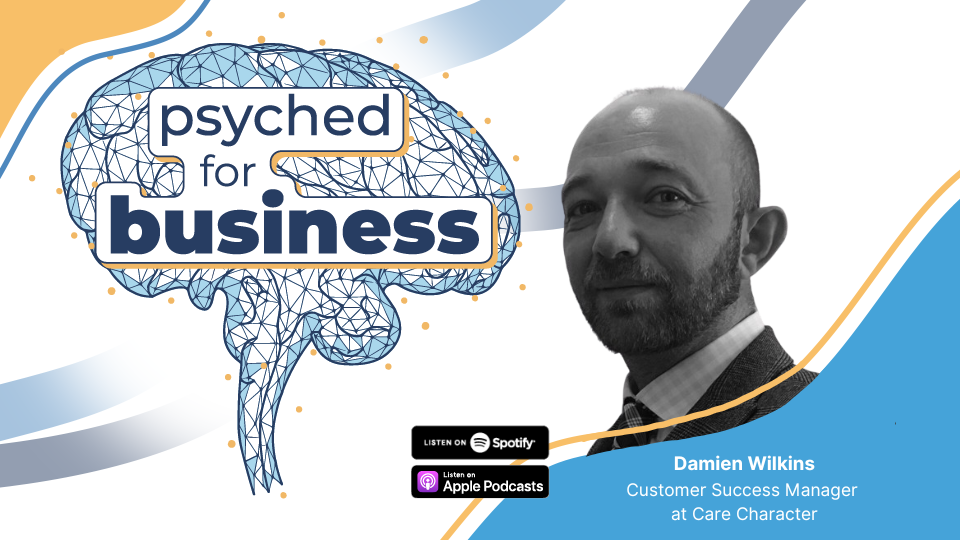
In this episode, we’ll learn more about the Care Character Tool including the traits it assesses, why 7 is the magic number and how it promotes Values-Based Recruitment. We will also delve into why the turnover rate of care staff is three times higher than in any other sector, and the importance of giving applicants developmental feedback.
Subscribe to the podcast on your favourite platform:
Voiceover 0:00 Welcome to Psyched for Business, helping business leaders understand and apply cutting edge business psychology principles in the workplace.
Richard Anderson 0:13 Hi, and welcome to Psyched for Business. My name is Richard Anderson. In today’s episode, I’m joined by Damien Wilkins from Care Character. In the episode Damien shares a ton of knowledge about the care sector, what needs to change in order to ensure that the right stuff are recruited and retained in such vital roles. We also spend a lot of time talking about the Care Character psychometric tool, which has been built specifically for the care sector. I really love recording this podcast with Damien, he’s such a passionate man who genuinely cares about the work that he does. I hope you enjoy listening as much as I did recording. Thanks again. So Damien Wilkins, welcome to Psyched for Business. Thank you for joining me, how’s things?
Damien Wilkins 0:52 Wonderful, very excited to be here. And thank you for having me on a this very cold day.
Richard Anderson 0:57 We were just we were just moaning about that. Before we started recording, I’ve got a I’ve got a gilet on, because on the second of July, it appears to be absolutely freezing outside. But don’t we just love it? British weather which I was on holiday,
Damien Wilkins 1:12 We love to have to have a complaint? Don’t we,
Richard Anderson 1:13 We do we do indeed. Brilliant. Okay. Well, that’s fantastic. I’m really, really appreciate you joining me, I think it’s fair to say that we’ve gotten to know each other probably quite well, certainly over the last probably three, maybe six months, six, maybe even a little bit longer than that. Since we’ve been working together. I think it’s fascinating what you guys are doing at Care Character. And I thought, Well, why not create a podcast and let’s get that rolled out to a few more people who are normal, be interested in the tool itself, what you’ve been up to why it’s been built, all of that sort of stuff. So I thought, well, let’s maybe do a little bit more of a deep dive around the Care Character concept and the tool that you’ve built from the original concept. But I thought, before we maybe get stuck into that particular part, if you’d be happy, maybe just to introduce yourself Damien. And just to give the listeners a little bit of background, kind of who you are and what you do.
Damien Wilkins 2:07 Yeah, absolutely. I think I wear many different hats, how to say the least. And my main priority is bringing Care Character to the sector’s attention. Because it’s it is a new innovative tool that doesn’t, hasn’t hasn’t existed historically, I’m ultimately client success manager. So I’m helping people get the most out of our product, and make sure it’s rolled out. And ultimately, the main thing is making sure people get better care at the end of the day by finding the right people in the beginning of the recruitment process.
Richard Anderson 2:36 Yeah, fantastic. So you mentioned that it hasn’t been around for a great deal of time. So how long has it been around Damien Care Character? And yeah, when was it? When was it originally built? Where did the idea come from? Yeah,
Damien Wilkins 2:48 So it’s a really nice story that goes behind it, actually. So I found out about a company called Cohesion Recruitments, some time ago for somebody that worked in the organization. And, you know, to get that little insight from somewhere in the side, this company is amazing. And at the time, I was a director for a care agency. And there’s a bit of a story that goes behind that. But I felt like a bit of a devil being the guy that was running an agency and I wanted to do the better part, of care. And the time came when it was right for me to change. And I managed to get a job as a business development manager at Cohesion. But I’m super passionate about what to do. And I’m more of these people who are looking for, like 1% gains in a process. You know, it’s not, it’s not about flipping something on its head and completely changing. It’s just some sometimes these little improvements and I was in this period of change coming out of COVID, where I think a lot of people saw business change, people change the way society seemed to change. So I was really on a bit of a crest of a wave with Cohesion, looking at different innovations of process. And that went from writing a job advert and the words you use and how many words you use and how you optimize the advert through to engagement and onboarding of people. So I spent quite a while doing that. But in the background, one of the things that attracted me to Cohesion is the two owners Will and Amanda are absolutely the hardest working CEOs I’ve ever known in my life. But certainly their their commitment to the care sector because they specialize in the care sector. It was above and beyond any, anything I’d ever seen from an organization. So they were trying to find ways to improve things for the sector. And one of the things that we understood was with such high turnover rates and the case that’s about three times higher than the rest of the UK. Something’s not quite right in the way and the type of people we’re attracting. So PhD study was done by Dr. John Barrett, and through wealth connections, more of our CEOs. He is a very good friend of Dr. Steven woods, who’s sorry Professor Steven Woods who’s leading world psychologist to get based on the Ph. D study based on recruitment and selection in the UK. The candidate assessments were designed is a way to effectively understand the people that you’re recruiting the recruitment process, either the right people that have the right values for a role in care. And it was born through Cohesion. And we’re no standalone company, which is absolutely amazing. Fantastic.
Richard Anderson 5:13 Well, it is. It’s tremendously innovative, what what you’ve been doing there for sure. And it’s interesting to hear a bit about the backstory, because you and I have never really kind of gone into that in in any detail. So that that is interesting. So you talked about the care sector? Was it? Did you say three times higher turnover than than any other industry in terms of staff? What were the or the principal? Or what are the principal reasons? Do you suspect for that? Is that is that based on values? Damien, would you say?
Damien Wilkins 5:40 This is the this is the thing, Richard, I am, I’m kind of on a mission, I have been for a few years to really champion values based recruitment. And I was in a webinar the other day, and I said, when I used to, you know, go back three years, and I’d be in a room of people doing a talk and say, can you put your hands up? Who does values based recruitment? And nobody put their hands up? Well, you might get somewhere, you know, very oh. Not too sure. If I should be putting my hand. Yeah. And then you say to people who recruit without experience, and you see a few hands go up and you go, Well, that’s exactly the same thing, you recruiting based on the value, not an experience. Now, when I go and do a talk, you should see the amount of hands that pop up with values based recruitments people are getting it, and most of the care but you know, personally, I’m championing that this is there’s, there’s a massive issue in this sector, as there is in lots of sectors at the moment. But I hate to say it so crudely, but if you boxes don’t get packed in a in a warehouse to get delivered, that’s not critical to someone’s day. But caring for people is absolutely critical. Absolutely. We can’t just think, Oh, we’ve got staff shortages, there’s an absolute complication that follows that. So you know, for me, the passion is that we can only attract more people to our sector, if there aren’t enough people with experience, and we need to find people with the values. So it’s been this ongoing campaign of this is how we’re going to solve this. And Cohesion has always been a values based recruitment company. So just to give you an idea around Cohesion, because quite, quite often word recruitment, and I think you just recruit people and try and effectively sell them to organizations, Cohesion, nothing like that, they will not take over a company’s recruitment process and run it for them. So if you’ve got the care provider and apply for a job, you think you’re dealing with that company, it’s actually Cohesion, giving you all that amazing process and engagement and touch points. So they’ve always championed values based recruitment. But what we then see is organizations can’t translate what they think they’re trying to achieve. So you’ll get a recruiter that goes, Yes, I’ll take anyone with experience and the right values. But then the manager of the service actually just wants someone with experience. So there’s, you know, there’s this breakdown in what’s actually going on in the world. So again, another reason why Care Character was created just to prove that you can take people in without experience to have the right values, and, ultimately, are just more suitable for holding care. And the great things which are, which is, you know, a lot of a lot of employers don’t really understand this is, when you use something like values based recruitment, it’s not just getting more people into organization, you actually find him better people more suited for a role. So people get cared for better, they turn up to work, they’re happier, they align better with things like compassion and empathy, funnily enough to have reduced levels of absenteeism. So, you know, it’s just, it’s just, it’s just this vein of the better way to do things. And there’s also a need and a requirement to do things that way, and Cohesion has been fully committed. And it’s been a joy to be part of that journey.
Richard Anderson 8:24 Yeah, I mean, it’s, it’s really, really interesting. And I have to say, from everything I know about Cohesion, which is a lot more these days than it was kind of six months ago, before we started working together with a fantastic company hugely passionate about values. I know about that. Let’s, let’s maybe take a step, step backwards. Just really quickly, Damien. So what I often do on on these kind of podcasts is probably ask a few silly questions. So I’m going to apologize in advance for that.
Damien Wilkins 8:24 But as long as you don’t mind silly answers, Richard.
Richard Anderson 8:55 I appreciate them, and I welcome them. So I think we’ve talked about values based recruitment. And obviously, you know, I’m very familiar with what you’re talking about, but just just to make no assumptions based on kind of who’s listening, what do we mean, specifically by values based recruitment? And why why is that? Why is that? I know, You’ve touched on it, but why is that kind of an important part of any recruitment process?
Damien Wilkins 9:20 So if you see, we do a lot of focus groups, obviously, what the kind of work we do, having psychometric assessments and delivering a product to people have to constantly engage what’s going on in the market, what are people saying? But we strip it right back. We know that when we do our focus groups that are good care service is driven by culture. We see this time and time again, if the managers got good culture, it just seems to work it seems, has to be led and driven like that. Now, if you haven’t already got that in place, then you probably find your retention rates quite quite low, and people coming in and out the service fail probations all these types of things. So when we started looking at the actual values of people coming into an organization, they’re the beginning foundations of building culture in the right way. Now, I think it’s dead easy to cover an assumption here that a lot of people would have that we’re probably only good for elderly care, or we’re only good for children. So we cover all different types of services, because the values of a person in care are very consistent and aligned. And we see this time after time after time. Yes, there are specialities you know, if you’re gonna look after children versus somebody at the end of life, you’re going to need slightly different skill sets that come along with those skill sets are consistent. And we’ve done a PhD study on these. It wasn’t, we didn’t sit in the pub one day think you know what? No, like, there’s a hell of a lot of validity going into these studies. And what we now start to see is, if you want to improve the culture in your organization, you can’t change the people that are there. You can’t just say to someone, can you just have a different culture on Monday, next week, please, it just doesn’t work like that. And you know, those people already in a culture that you obviously want to change. So the best way you can change culture is by injecting people with the right values and behaviors to support the culture, which supports a service, which supports the people. So you know, I know that sounds really simple right at the end, but it starts with the values. Now, I get to see lots of assessments come through. And we do some interesting dynamic datasets sometimes. And just because someone’s been in care for 10 years doesn’t mean that they’ve got all the right values and care, it could be that they’re the ones that are the ones that always pick up the shifts are the ones that always dealing with a difficult resident. So they appear to be a better carer and not saying that the people shouldn’t do that. But what we’re trying to find is consistent set of people that are consistently providing good quality care to people. And it starts with the values. Yes, and really, really want to stop there, please feel free to ask more questions, because I can just go on and on I’m so passionate about it.
Richard Anderson 11:50 I mean, you’ve put your your passions or, you know, it’s always been palpable, I’ve always kind of noticed that. And I think it’s a fantastic trait to have, I think, what really stood out about what you said there was, you know, it doesn’t matter at what stage you are caring for somebody, whether it’s kind of end of life care, whether it’s caring for young people, or whatever the values are principally principally the same. So and this is presumably across, across across the board Damien this is like, not just be a UK thing, this will be this will be a global thing when we talk about these types of values for anybody in the care sector.
Damien Wilkins 12:23 Yeah, I mean, we have to look at the you know, there may be different slight alignments in different parts of the world in our societies are different the way that people act, the way they see themselves in society. Now, this is different outputs and inputs, if you like, however, I would be very shocked if you went to a different country, and the values of care were significantly different. However, we don’t supply outside of the UK at the moment, that is something we would like to do in the future. Yeah, we’ve we’ve had a few conversations with some people in the States, for example, because we know they’re very closely aligned. However, the majority of our assessments are for people that are already in the UK for domestic recruitment, or people coming from other countries into the UK. So we are very much aligned with what the UK needs, as you know, as a set of care.
Richard Anderson 13:05 Brilliant. Yeah, yeah, that’s really interesting. So so let’s let’s dissect a little bit more around the values that obviously all of this academic research is gone into. And all of this validity we were talking about before, so why don’t you if you’re happy to maybe talk through, you know, a couple of the values or all of the values, if you want the you’ve you’ve established a really important in the care sector. And let’s, let’s do a bit more of a deep dive.
Damien Wilkins 13:29 I’ll give you the magic number Richard? Seven, we never meant for this to happen, okay. So just just to give, you have to share that assessment takes on average, seven minutes to complete. And there are seven traits, which I’ll tell you in a moment. And people that score seven or above are the ones that are offered for a role. So like seven is our magic to be that way. Yeah, but we have seven values that were identified in the PhD study, and, again, was doing a webinar the other day, trying to educate people that their values don’t generally look like the sets of values that appear on our assessments, but they always align, we do what’s called trait mapping. And we look at the values of a client versus the values of character, and you can consistently see alignment. So if someone’s, you know, they’re talking about inclusivity, and respect, the probably don’t use those particularly words of the use of phrase, but for most company values, and we see it consistently, they do align. So our values that were identified in the PhD study, and not in any particular order, some are way more important than others, but they’re all very important in every care setting. Something that’s massively important today, adaptable and resilient. Resilience is something that seems to be disappearing, by the truckload, and inclusivity and respect as well. We’d have to be we have to be inclusive in society. Naturally, compassion and empathy. Believe it or not, the trait that gets scored quite highly is procedural compliance. With then have dutifulness obviously, making sure you do what you’re supposed to be doing teamwork and working well together. But the one that always gets me is communication. Yeah, it’s such a defining trait when we’re talking about care. So, again, we’re talking about finding the right people for the sector. But then the sector is broken down into different kinds of settings, you know, you could be working in a care home, or you can go in and work in in somebody else’s home and everywhere in between. So we quite often find that communication is one of the lower lower scoring traits, because generally caring people aren’t boisterous and buoyant, and you know, going to work wanting to speak to everyone that come into care for people. So generally, you know, they’re not that comfortable, if you like starting new conversations or introducing themselves to people, caring people want to be cared for, funnily enough, yes. But quite often, you know, if somebody and this is the whole point about understanding how an assessment works, and the values based recruitment is the beginning of a much better processes, if you’ve if you’re interviewing someone, and you can see that they’re lower down the trait on communication, and probably not too comfortable having lots of new conversations, and probably shouldn’t be a domiciliary care worker going from one home to another and meeting new and different people. Yeah, on the road. So you found a good carer, but don’t put them in the wrong setting, because they’re not going to enjoy it and are going to leave the care sector, and we’re going to lose someone really valuable again. So let’s understand, do we have a different setting to put them in? If the answer’s no, well, then support them from day one. You say to them, I know you’re probably not comfortable having these conversations. So for the first week, you’re going to sit down with Damien, unfortunately, but he’s going to like all the introductions and take that, you know that that fear of anxiety away from you actually support you, rather than not realize what your situation is. And then in three months time, when you’re leaving us, we discover that you wasn’t, you know, one of those many things that adds up to why somebody would stay or leave. Yeah, it just identifying more about a person and allows you to support them better from day one. And again, I’m just going to say, and I’ll probably get you probably say Damien you said it 10 times now, a massive core theme here that caring people want to be cared for. So if you can find caring people, you bring them into your organization and you reciprocate that care back to them. It’s a massive trigger that people feel so much more valued. isn’t that surprising?
Richard Anderson 16:56 No. Well, yes. Isn’t it just, isn’t it? Yeah, no, you’re absolutely right. It’s really, really interesting stuff. So I mean, when we talk and you’ve taught, obviously talked to through the values, and I bet you didn’t read them out, but you know them off the top of your head by now.
Damien Wilkins 17:11 Do you know what I always seems to forget dutifulness for some reason, which is really bad, because it’s dutifulness.
Richard Anderson 17:17 The irony? Excellent. So, so you talked as well. And what I find really, really interesting is, I know how much research in academia has gone into underpinning the tool and the validity side of things. I think it’s fantastic that you’ve managed to build it around the seven values and still managed to keep it short. And engaging your talk that it takes on average kind of seven minutes to, to complete. So, you know, obviously, I know the answer to this. But for the for the listeners, how has it been? How has it been built in the sense that you you get a number of questions, presumably, that sit within each value that people will sit as part of that recruitment process?
Damien Wilkins 18:07 I wouldn’t say it’s quite as you will certainly wouldn’t identify during the assessment like that what happens is, as a candidate is is quite surprising, because we we come from the recruitment world, we know that any part of the process that isn’t engaging is disengaging. So you’re either warming somebody up, or you’re cooling them down in the process. Yeah. So one of the biggest concerns that people always say to us is does this turn candidates off? Well, no, it actually enhances candidates. And I’m gonna go off on one again, here, but our clients are screened people out 30 to 40% of the candidates do not complete the assessment. But they’re the same candidates that wouldn’t engage with the new process anyway. But you spend a lot of time and resource trying to engage send an email sending texts, putting phone calls in. And what this actually does is you could candidates come straight to the front of the process to take the assessment, the demonstrating that they’re good at the role, the demonstrating they’ve got the right values, and you engage with them, and they engage with you. And it sounds super simple. But you’ve also got to remember that Cohesion is a bunch of amazing people in the recruitment world that get candidate engagement. Professor Steven Wood’s designed the assessment to be easy to read. Yeah, I have this issue around marketing that, you know, we provide psychometric assessments, the candidate assessments, and then we know that sometimes people are going, but do I need to be trained to use the not at all the super simple to use. One report just goes to the candidate, you know, that’s going to a load of people that applying for jobs has to be dead simple and easy to use. Recruiters have a lot to do, and giving them something extra to do that is of no value, absolutely not going to be taken well, so it has to have value in it. And one of the biggest things we always get feedback is your reports are so easy to use and to understand, but it shouldn’t be it’s not we’re not going to create rocket science here. We’re trying to create an additional tool that helps you make better hiring decisions in your process.
Richard Anderson 19:49 Yeah no, I mean, it’s a really really good point because I think that you know, some of the, of course, you know, depending on the use case, there is obviously need and requirement in certain industries for certain use cases to have really lengthy reports that you need to have qualifications in or certifications in in order to administer. But I completely hear you on that one. And, you know, I remember when we started, Evolve up, and a lot of a lot of the pushback that we had when we were trying to sell well, in our case assessment technology. But in general, it was concerns of recruiters not wanting to put another another hurdle in place, as you’ve just said, and I think if you can make sure that it’s engaging, but your argument, there’s a really good one in the sense that if people can’t be bothered to sit a seven minutes assessment, are they really going to be the right the right person for for this particular role? So that’s really, really interesting. So in terms of the reports been easy to digest, I know that you’ve developed because I’ve been fairly close to the project. Of course, I know that you’ve developed a number of different reports for different applications, if you like, Would you mind just talking through those in a little little more detail, Damien, so essentially, what what your clients or your partners that you work with, who use the Care Character tool, what they get in terms of report and how they are typically used?
Damien Wilkins 21:09 Yeah so the moment the only live product we’ve got this is for frontline care stuff. But what we are currently working on and again, there’s a lot of validity goes into these things, and we’re gonna flip them around in a month or two. Now, of course, the current project we work on is the registered managers assessment, because we also understand that one of the biggest factors that can be changed is new starters, having meaningful and valuable conversations with the manager in the first four to eight weeks, which we would all think was pretty standard in any job anywhere your role, but managers are very stretched. And I don’t always have the time to do that. So creating the kinds of assessments super good to get people into business. But if the managers aren’t doing the right things with those new starters, then it’s not going to be as effective as you’d like it to be. So the next thing we’re working on is the managers assessment. So we’ve been holding focus groups for that recently. We’re hoping to release that in the next few months. So that’s the next one. And we’ve now been asked for assessments such as for nurses, and for senior management within organizations. So what’s the what this is starting to, you know, our clients are basically saying this is working really well here. But it hasn’t solved with the recruitment areas, because it is not applicable there. So these are the new tools that we’re starting to develop for the sector, we do have a few clients that use our assessments across the board for recruitment, whether it’s a senior manager coming to the organization, or it could be someone in the kitchen staff, it could be somebody in housekeeping, because the way this organization sees is you’re in a care company, we want you to be a caring person, and you probably still will interact some way with residents. So they don’t use it necessarily to say, Have you got the skills for the job, but do you align with the values that we need as an organization, so it is still quite dynamic on that basis. But we want to be nice to think that if we give you a tool, you want to get something super valuable out of it, benefit your organizations. But what we found really interesting during the focus groups, I think is interesting for people to hear is when somebody new comes into a business in most roles, whether that’s entry level or senior level, as you get on boarded into the organization, there’s a whole podcast around on boarding. But, you know, you assume that the company is your business, and you need to get more support that you need. Obviously, having assessments helps you to identify what support the need even. But what the big thing that consistently came up is people get promoted from a role into managers roles, with the assumption that we’re going to be, okay. And the, if you like, the onboarding disappears, because it’s obviously it’s been promoted, you can do the job. So people are promoting. So you end up with accidental managers, people eventually going to roll just because they were good at the previous role. And they may be good for the role. But if they haven’t been given that support early on it, and then you’re kind of setting them up for failure, and they get in assessments just help you to understand what’s going on with your person, what strengths in areas of development that support them. That’s what they’re there for setting people up for success.
Richard Anderson 24:03 Yeah it is. And I’ve seen that sort of thing happen, almost the world over and one of the specific examples, it’s outside of the care sector. But the reason I’m mentioning this is because it just struck a chord in my brain, it’s when, you know, when you’ve got that fantastic top performer in the sales team that does, you know, brilliantly every single month, and eventually they become the sales manager never had any experience brilliant salesperson, potentially an awful sales manager, because not probably because they haven’t got the chip because they haven’t had that level of support. And just assume because somebody’s doing, you know, however much per quarter on top of the you know, on top of target, then they’re going to be a great manager is not always the case. So when you’re talking about that in the care sector, it’s 100%. resonates, it’s interesting that it obviously occurs occurs there there to one of the things I’m interested in and I don’t know whether you’ve got an answer to this to me, but I’ll ask it anywhay. And have you seen anything in terms of trends because presumably you’re had a number of completions of the Care Character tool now? Well, I know you have. Have you done any kind of analysis? Or is that something that’s to come around? You know, what, are there any typical trends where, you know, a lot of people seem to do better on certain values than others, there’s maybe value values gaps in expression for those sorts of things. Have you ever done any looking at that type of thing just yet? Do we need to get better at certain things, as you know, as people within the care sector?
Damien Wilkins 25:30 Yes, one of the, you know, the ultimate thing that we’re trying to achieve here is people turn up to do role in care and do the job better and stay in organizations longer. That’s the ultimate thing that we’re trying to achieve. Yeah, for us, one of our difficulties is getting retention data, because companies don’t really want to share retention data, especially when it’s as bad as it is. Now company, no company is going to turn around and go, Oh, our turnover is X, Y, and Z and then and then and then tell you that they’ve got a 5% improvement, but it’s still only at 25%. So it’s very difficult to collect that data. So one of the projects that we’re we’re actually currently in the process of reaching out to some clients at the moment to do a project where we’re actually stitching in the whole process with our exit retention, and the K character assessments. So you get to see the fuller, bigger dataset as well. One of the things that we do see is, if you’ve got a service, for example, in looking after children services with challenging behavior, you know, the thing that people are looking for there is being adaptable and resilient. Absolutely. Time and time again. And I think I’ve touched on this earlier that, you know, resilience and adaptability in society seems to be dwindling away. So you know, when we’re dealing with very challenging circumstances, and people need lots of support, it’s very good to identify these things that are beginning of a process, again, for palliative care, compassion, and empathy is very high on the scale, I think, to answer your question is people make better decisions, and they don’t always identify the great result. But what they do see is less bad results. So, you know, we, we employed someone and we sat in a room with somebody in the you know, the last moments of the life and then that take a week off work, because they were struggling mentally as well. Well, have you put the person in the right set into to support them that, you know, it’s all about these making better decisions to get rid of less bad decisions effectively.
Richard Anderson 27:22 So just to go back to one of the things that you mentioned before Damien that really resonated with me, and obviously I said it at the time was was trying to educate people that you’re not putting another unnecessary step in the recruitment process that this is adding a huge amount of value. And obviously, I know that you’ve been doing a really good job on that with some of the new clients that you’ve brought on board and, and all that sort of stuff. But from those people who have been using the Care Character tool, today, what sort of what sort of general feedback are you? Are you are you getting? And because obviously, it is, although you’re not putting another step or an unnecessary hurdle in the recruitment process, it’s going to be different for them if they’ve not been assessing before for value. So what How’s how’s it going down in general?
Damien Wilkins 28:07 It’s an it’s really strange that sometimes the feedback you get is not what you expect, and it’s really negative, that’s actually really positive. So yeah, because it’s quite a dynamic to it, you know, in its most basic form, it’s, it’s people take an assessment in your recruitment process, score, the right score, and above, you’re going to engage with them. But what it actually does is, is gives a massive efficiency in the recruitment process, because, you know, when this clickbait world, where, I don’t know, I’m going to give it away a little bit here, but I remember when I applied for jobs, I used to have to write a cover letter. I’d write it you know, my application would go in in first chapter and verse what color socks we wearing last week? Absolutely everything. Now, it’s, you know, you’re signing up on Indeed, you can look at a job, which I’ll click on, apply for a job, click apply for another job. And there’s a massive danger that comes with that. And I think we’re all seeing that. And at the moment, lots of companies are seeing really high application numbers, because it is so accessible. And the problem is, if you don’t click click, click on jobs. And then the first thing you get sent is an application form to fill out, or you’re not going to engage at all, absolutely disengaged straightaway. So, you know, the whole idea is what, what’s in it for the candidate. We do all these wonderful things about these processes. We have applicant tracking systems, we have different ways of engaging different communications. What was the candidate actually getting out of it? And I don’t think quite often people look at it from the other side. They think, all we know people love to read this, what do they know and actually read it and they won’t give you any feedback. They didn’t really engage in anything better. Well, we’ll put another there’s so much investment of understanding what’s going on in the world that I think a lot of people miss. So for us, one of the biggest things we give the candidate a report back so the candidate gets a chance to reflect on their suit ability firstly, and prepare for the interview. So you’re actually giving them something. I know that sounds really bad. But most recruitment processes are just giving you hoops to jump through, and nuggets of information that you probably don’t really care about, then all of a sudden you do this assessment, and you’ve got, I’ve got something about myself, yeah, candidates are kind of going, I never knew that about myself, or I didn’t realize that there was a value that was you know, around inclusivity, and respect, but now we can see it and read it and reflect on it, I can now do something about it. So you get this self fulfilling prophecy of improvements? And then me and you’d be terrible to each other, like, what have you scored on communications? If you’ve got this, right, I’m having a seven. So you know, there’s this kind of thing that happens in the workplace. But what what some of our customers do is, you know, the, the one I love the most is we recruited someone that we would never have recruited before, because the application form or give us experience, they hadn’t got any. And now we’ve just employed an amazing worker. And we’ve got great feedback about them that would never have got this job with
Richard Anderson 30:56 Yeah, without without the assessment.
Damien Wilkins 30:57 I love reducing bias, we’re looking at numbers, we’re not looking at a CV, we’re not looking at experience, I’m looking at a number and assessment and starting with decision making on did they align well enough with their values. So seeing those kinds of things, I think is so powerful, but one of the reports that we create is the actual development report. So we know that it sounds really bad, but it’s actually good that you new starters in care generally want personalized learning and development above and beyond what we call manager training in the sector, which another training you have to do. They also want to train themselves personally, and this isn’t necessary to be promoted. Sometimes people want to become just better carers or specialists for, for example, dementia. So what we what we’re actually doing at the beginning of this onboarding process, give a report that still based on that initial seven minute assessment. And still based on those seven traits goes, here’s a learning and development plan based around these particular traits, which is based on using individual. And it gets the managers to sit down at weeks, four weeks, eight trigger points that candidates want. caring people want to be cared for, it’s just showing that demonstration of this is the organization values, here’s our culture, funnily enough, we’re going round in circles. It allows you to plug say, also onboard people better and give them the support from day one. So this is my point, when we you know, we get things where people go, we improve proficiency at 30% of the front end of the process, and we’ve got reduce failed probations. That’s all great. But for me, the magic is when we see these other benefits that come out of a recruiting, somebody’s never recruited No, got a career in care that’s going to go home. And God, you know what, this is amazing. I love the sector and start promoting assets to other people, because they had a great experience.
Richard Anderson 32:36 Yeah, for sure. I couldn’t agree with that more, I think that’s, that’s a really vital part of the process is recruiting somebody who would have never got a job historically, because the process was different processes changing significantly, you know, across the recruitment space of that of that, I’m sure. But what I really love it, as well as the fact that you know, the making huge differences to organizations is, is the path for the candidate to so you talked about getting the report, we’ve all sat psychometrics in the past, where you press submit, and then your results go into the abyss, you might never hear from the business again, you don’t know how you’ve performed or anything. And it’s just not a nice process for the candidate. It’s disengaging, it’s all that sort of stuff. And I think, you know, when you when you see your report, and it really resonates, there’s nothing better than that. Because even if you’re not to get the job, then you’ve got something tangible you’ve got so Oh, actually this organization implemented this part of the process. And it you know, I’ve come out with their thing, and well, actually, they’re a great organization, they’ve given me they’ve given me this. So I think after winning, so
Damien Wilkins 33:36 Sorry just to interrupt it’s just like, it’s where do you go for, I don’t know, let’s just say and anyone that’s listening now decides not want to go and try something different in my career, Grant, go for it scary as that is. But let’s say you wasn’t successful, is that you don’t then, you know, if I want to become a chef, let’s say I’m definitely not going to become a chef. That right. But let’s say I wanted to become a chef. And I don’t get the job, what I just go hungry, I didn’t get the job. If someone gave me a report going, you didn’t get the job. We don’t say you didn’t get the job. Obviously, these are the areas where you need to improve. I want to become a chef, I can go away and try and improve myself. Yeah. Without that. It’s just it wasn’t engineers. It’s just what was the benefit young people something but you know, we’re in the care sector, we should be showing ourselves as caring anyway. So give me a little bit about where we want more people to come into the sector. So if someone wasn’t quite right for us now. Let them try and work on that and then come back and get a job and be great at being cared we want that was people Yeah.
Richard Anderson 34:33 No Damien, you go off on one as much as much as you like, that’s not a problem at all. No, but you’re absolutely you’re absolutely right in what you’re saying. So, obviously, you mentioned right at the beginning the weather but your big part of your job is eulogizing, of course about Care Character, but about kind of what’s gone into Care Character and what it’s for and solving problems for people now. Do you suspect that over the next I don’t know, let’s say a year, two years, five years, whatever it might be that there’s going to be a lot more values based recruitment within the care sector, because obviously, from what you’re telling me that that’s the bit that seems to work for. For most most organizations within recruitment, do you think we’re going to see more of that across the board, whether that’s using Care Character, and hopefully the majority of people by that point will be but, you know, just in general, do you think that’s going to formulate part, you know, big part of the process?
Damien Wilkins 35:28 There is? I don’t know the other answer. If we don’t do it, Richard. I’m not going to start squirting statistics out. But we’re, you know, there are hundreds of 1000s of jobs needed to be filled in the sector. The scary news is less people are receiving care now than there was five or six years ago, which most people can’t even get the head around. The only way that we can support the growth of the sector is by getting more people into the sector that don’t have experience. Yeah, you know, for me, that just encompasses values based recruitment. Now, I do have scary moments when I speak to companies and scares the living daylights out of me when someone goes, if they can walk and talk, I’ll take them. Oh, my God, whoa, whoa, whoa, don’t use our assessments, then because they’re not going to help you.
Richard Anderson 36:18 It’s worrying that and alarming.
Damien Wilkins 36:20 But what you also get there is you get panic recruiting. And we’ve, we’ve gained from our focus groups to get real, you know, if you’re sat down in a room and have the conversation, you probably come to the same assumption anyway. But when you hear it resonating is how do people today make a decision in the recruitment process? We just call it the mum question, which of these personnel can have to your mum, the person you’re interviewing now? And if in your head, you’re thinking, Yeah, I’d have you look after my mum. And that’s kind of your decision based on other things, safeguarding relevant things. But ultimately, how am I making this decision, and it comes down to gut feeling of gut instinct. And then we have the discussion molecule 10 of the best recruiters in the world, whichever sector it is, and you gave them the same profile, the same job to fill, the company will have slightly different gut reactions and instincts as to the person that they’re interviewing. So what are we actually doing in the care sector of recruiting, we kind of make taking massive guesses and gains. And I’ve been recruiting the sector for many years, no one’s ever come and actually worked out how good I am at recruiting the right people, they’ll just go, we need this many people this month. So we give him a gauge a tool. And it might be a really bad analogy. But if you’re driving down the road, in your car, you’ve got a speed or you probably don’t speed, because you’ve got a gauge, you can keep looking at it and just checking decision, you take that speedo the way, it’s a very risky journey you’re about, you’re probably not going to break the speed limit because you’re aware of your decision. But you need a gauge to help you go when making the right decisions. But then you take it a step further on Chrome and what your question was, which because again, I’m going off.
Richard Anderson 37:54 It’s essentially just talking about the kind of the future of the care sector and recruitment, generally, they mean, but you’re not going off on.
Damien Wilkins 38:02 So the point is, we’ve got to find more people. Absolutely. Now, I am just going to champion the assessments here a bit because my if I got to the end of my days, and I’ve got to achieve one thing this would be it could be doing could UK campaign across the UK. And the government just said, you can jump on a website, you can take an assessment. And if you score whatever the score is, in this instance, as a seven, that then you know, you’re suitable for a role in care highly suitable for rolling care how many people out there out there that might go, Oh, I didn’t realize I could do that job. And all of a sudden, we’ve got loads more people applying for roles in our sector because they realize that they can be good carers, think about all the mums that have cared all their life and their families are the best people we could ever want to come to the care sector. But they might not realize that they’re actually really good carriers. So how, you know, we really need to promote more to children in schools that this is a sector. And there are brilliant opportunities to develop yourself as an individual professionally, personally, you’re making a difference to people’s lives. But you know, the Science, Tech, manufacturing industries, they’re the ones out there out there promoting their sector for being wonderful. We’ve got a massive job ahead of us, we need to work together as a sector. It’s such a big job for us to do it there. And you know, these tools just help you get it. right first time really,
Richard Anderson 39:27 I’ve got no question that that’s the case. And I have to say, Damian, as well as a little compliment here, but I’ve never heard somebody speak so passionately. I think I think every about of these still so I mean, but you know, it’s clear how passionate you are. It’s clear that it’s making a difference. And it’s, you know, it’s clear that you know, we need to get as many people using this as we as we possibly can always obviously, that’s a big part of your job, of course.
Damien Wilkins 39:53 Let’s just touch on that. I think it’s really important to understand, oh this guy is passionate You know, or is it fake? Or is it whatever, there’s a reason why I’m passionate. And I’m not going to go off on this one. But I was in foster care for 15 years of my life, and it wasn’t a great time. Then, I’m lucky, I met my wife that I’ve been with for 20 years. Otherwise, I don’t know what would happen to me, but she could put me on the straight and narrow. And unfortunately, her mom became very ill, and then ended up having her leg amputated. And we basically turned our front room into like a hospital room, and some of the care that I personally experienced. And I witnessed my mother in law experiencing acceptable to the overwhelmingly sick to my stomach about what was happening with the care sector, very much disenfranchised. So unfortunately, my mom passed away, let’s a time came around. We’re like, what, what we’re doing myself my career Well, someone that used to work for me reached out and said, Why don’t you want to work for my agency? And I went, I absolutely am done with the care sector. And what I’ve seen, and they’ve got me didn’t know they couldn’t make a difference. And, and it was like, you’ve got you’ve absolutely, you’ve just done me. Yeah, they used to sell for me, so obviously did a good job in training, it seemed to me. And so I went to work for the agency and ended up running the agency by the time I left. And the most amazing thing I saw happen, and we have many success stories. But I live in Lincolnshire, it’s a very rural county. So we have the added problem that you do have to drive because there’s nowhere that’s transportable by bus routes. So there’s an added issue in the whole recruitment process that even if you have got people that want to do the job, you’ve also got to be able to drive, you got to be able to cover shifts in different locations. So it was a huge challenge. And one of the things that we were doing was creating carers. And the council kind of helped with this a little bit because we did an induction to care program. So we’d bring people in values based recruitment, people that want to do care, but have no experience. And then we train them for two to three weeks with a fully registered nurse that will do the training, given the care certificate, and then send them out. Now we made a huge mistake. When we first started doing this, trying to be an honest business, you say to people, these guys have got no experience. So can you make sure you support them in the first few days? I can totally understand like a care company going, I don’t want someone with that experience. But then we used to get really good feedback. Yeah. So then eventually, the time came when you’d stop saying there were new people, and you just get great feedback, because we were molding people to be the carriers that we wanted them to be. So that began, my passion began there when I’m watching, hate someone and turn them into someone amazing. And then someone’s care improves, and all of a sudden revenue, happier into the day in the life has changed for the better. And it all started with finding the right people. So every day I wake up, I’m on this mission to have seen or felt it have achieved it. And I want everyone else to have a piece of that as well. Yeah. So that’s why the passion is there. Because I’ve seen the difference it makes.
Richard Anderson 42:51 Well that’s it you’ve had you’ve had your personal experience that you’ve talked through, you’ve seen the difference it makes for other people. So I think it’s it’s absolutely fantastic. What you’re doing Damien genuinely is, but I want to give you the opportunity, just just to kind of wrap up the podcast just to give anybody I don’t know how you want to do it, if you want us to, to kind of link your LinkedIn profile, maybe as part of the blog. This goes on, but if anybody is interested in how do they, how do they get in touch with you to talk in more detail about Care Character?
Damien Wilkins 43:20 Well I think first and foremost, we’re here to talk, recruitment, anything we can do to help people have a better day recruiting my people anyway, you don’t have to buy our products, you know, we want to help the sector anyway. But you know, it’s a waste what I’m saying if anyone’s a virtual cup of tea, talk about values, talk about onboarding, talk about writing adverts, more than happy to do that. But it’s dead simple with that. Our systems are dead easy to utilize. They’re not complicated, happy to give people pilots and free credits to trial. You know, don’t don’t take our word for it, try it for yourselves. See how it works. In reality, our website is www.carecharacter.com . You can go on there, you can book a demo, if you want. You can drop me an email. I’m damien.wilkins@carecharacter.com . Feel free to reach out. Our team are here to make your life easier at the end of the day. So even if your recruitment’s going great, I can probably I’ll be getting it a little bit better. So reach out, there’s nothing to lose.
Richard Anderson 44:13 Fantastic. Well, well, like I say, yeah, we’ll put all those links that you talked through and your email address as part of the blog post that this sits on Damien and I suspect it will be next week, which will be the kind of week beginning ninth, I think or eighth of July, this will go out. Yes, let’s Yeah, let’s hope so. But listen, I really, really appreciate you making the time I’ve thoroughly enjoyed the conversation, as I always do when we get together and chat. But obviously we’ve never done it in this type of arena before but it was really interesting because I’ve learned a huge amount over the last kind of 40 minutes or so. thanks for making the time Damien and yeah, really appreciate it.
Damien Wilkins 44:52 Thanks for having me. It’s been a pleasure.
Voiceover 44:55 Thanks for listening to Psyched for Business for shownotes resources and more visit evolveassess.com
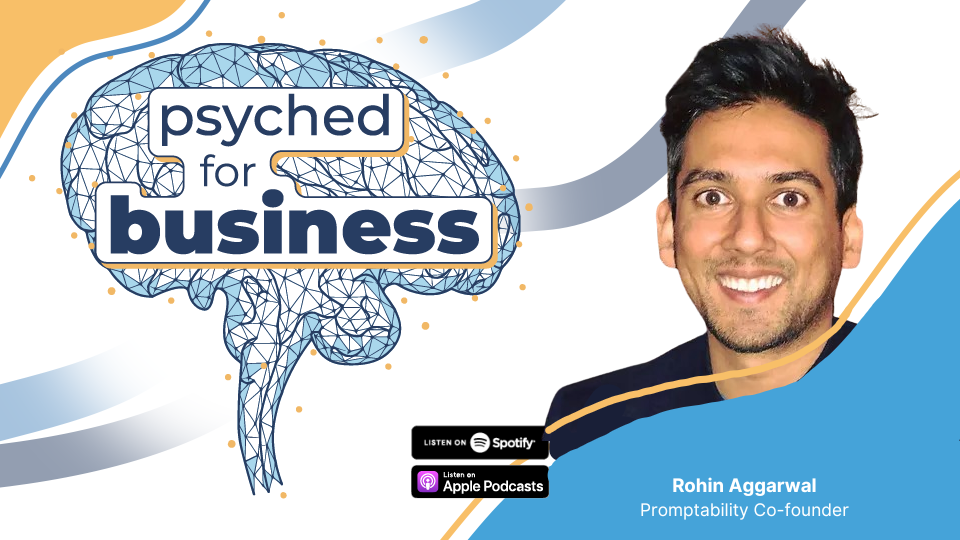
In this episode, we’ll learn more about how to write prompts to get the best results from generative AI tools plus, the importance of practising prompt-writing skills. We will also delve into the inspiration behind the Promptability tool, and who it is most suitable for.
Subscribe to the podcast on your favourite platform:
Voiceover 0:00 Welcome to Psyched for Business, helping business leaders understand and apply cutting edge business psychology principles in the workplace.
Richard Anderson 0:13 Hi, and welcome to Psyched for Business. I’m Richard Anderson. In today’s episode, I’m joined by Rohin Aggarwal, founder at Promptability. In our discussion, we talked about all things generative AI, what we already know, the direction of travel, and the importance of being able to use AI to perform at the highest level in the workplace. Thanks again for listening. I hope you enjoy the episode
Rohin Welcome to Psyched for business. Thanks for joining me, how are you doing?
Rohin Aggarwal 0:41 Yeah, good. Thanks, Rich. How are you?
Richard Anderson 0:43 I’m very well, thanks. And I’m delighted, I have to say to have you on, I feel like I’ve gotten to know you fairly well, over the last couple of months. And we’ve been doing lots of work together. And Promptability is a really exciting tool. It’s a really exciting concept. I’m really keen as part of this podcast to get into the the nitty gritty and how you started that and why you started it and all of that sort of stuff. And we’ll go into that in a second. Rohin. But would you mind just really quickly, maybe introducing yourself kind of who you are, what you do? Maybe a little bit about your background?
Rohin Aggarwal 1:14 Yeah, sure. Yeah. And again, thanks for having me on Rich. So my background broadly is in education skills and employment. And I’ve come at it more from a strategy and a tech point of view. So over the years, kind of I used to be a management consultant and worked in finance for a bit. And since then I haven’t had kind of a real job, you could say, for nearly a decade. And I started off with a careers tech platform called ThinkSMART, which where we could be, it’s actually very relevant to what we’re going to go on to, but we crowdsource problems from people in different jobs, got them to solve them, and then help them to figure out what path might be for them, whether they’re kind of 16 or 64, then, because of COVID, actually, that kind of online learning landscape really accelerated as you can imagine. So I ended up doing a lot of advisory work for clients, in loads of different areas, from anywhere from online high schools, to online degree programs to online products that might help the unemployed get back to work. So that that’s been really the core of my background over the last kind of six, seven years is strategy in tech products in this landscape. And then yeah, we can come on to what kind of, you know what maybe inspired the next step. So now at the moment, it’s a balance between what we’re going to come on to and still some advisory work with those clients.
Richard Anderson 2:27 Brilliant, brilliant. It’s really, really interesting, interesting background there. So Promptability is the late I’m guessing is the latest tool, unless there’s anything unless there’s anything that you haven’t told me, not yet. Not yet. But we’re just looking on your website here. Rohin. So what we do our mission of Promptability is to understand and improve people’s use of generative AI, such as chat GPT, and Bard for the benefit of the organizations that they’re they work for. Tell me a little bit more about that. And maybe, let’s assume that the listeners might not know what generative AI is, they may not have a great deal of experience or knowledge with Chat GPT. Although it is ubiquitous, everybody’s talking about it these days. But let’s make no assumption. So tell me a little bit more about kind of what inspired Promptability and a little bit more about what you do.
Rohin Aggarwal 3:16 Yeah, of course. Thanks, the so the initial inspiration was when I’d worked in the data science market a little bit looking at training companies that help people upskill in data science. Similar thing that was kind of the trend, the hype cycle for a while was everyone was talking about it. And I was looking at it thinking well organizations chief execs, senior people, they hear these buzzwords, but they’re thinking, how do you actually make this practical before I start investing loads of money and tools or loads of money and training and so on. And I thought at the time, there wasn’t really a quick diagnostic or assessment in data science, I don’t think there is still even now but I kind of had that in the back of my mind when this chat GPT hype was kind of going and I was very lucky to get a bit of a head start on it with a company I was involved with, called Auto Gen AI where the founders there have made amazing strides in helping people to better write bids and proposals using this technology. So the technology itself, essentially is like having a personal assistant. Next to you, it’s got the world’s kind of published work at your fingertips. And it predicts you ask a question, and it will then go to that library and predict the best fit words essentially, based on your question. So it’s not as really important. It’s not Google. People have to always remember, it comes up with text that is very convincing that a human could have written it. But that text is not sourced directly from any material. It’s almost like an art or a brain that’s coming up with a plausible set of words based on what you’ve put into it. So it’s a very, so you could you could actually chat to this for quite a long time. And the danger is you kind of It looks very, very real. And so with with this curve, hype curve, you’re seeing all the business press and like you said, it’s kind of you feel like it’s everywhere. But actually, if you’re a business person responsible for a team or companies, I think he’s still thinking and lots of the surveys, just insane. Where do we start?
And that was, again, where I went, and we can come on to sort of, I don’t have the expertise of business psychology but but then he you know, very well, my business partner on this was someone I said, Look, if this is the problem to solve, could we become one of the first in the industry to produce kind of a low stakes assessment to help people understand where to even start? Yeah.
Richard Anderson 5:40 And and, and when you had those conversations with Ben, were you thinking of using, you know, the this tool or this idea that was obviously embryonic at the time? Were you thinking about using that with existing employees and organizations? Or were you thinking of people to recruit based on based on these types of tools? Or what was kind of your mindset at the time?
Rohin Aggarwal 6:05 Yeah, we I think the target is existing or was existing employee. So from what I understand, and again, the psychologists will have kind of a better answer on this maybe, but the burden and unsure actually with your work, which you’ll see you’ll see this as the burden of the validation and what you have to go through if it’s in a recruitment context. It’s very different to a kind of national development context. And I think that’s where we were. We don’t all set things in this industry in generativity are changing every day. So people may have seen the videos of like, first there’s chat GPT, then there’s stuff that’s able to create videos for you and Google have brought out something called Gemini. So we were thinking, it’s probably not fair or right, at this stage to make it a recruitment test, although we are hearing from clients actually, is that possible? The first step was, a lot of people are worried a lot of people actually scared about it. A lot of people feel quite pressured into starting to use it, how can we help enable them to use it? And that was where exactly to your point, it was about existing employees? And then helping them to figure out what training and what steps to take to get them upskilled.
Richard Anderson 7:12 Yeah, because as you say, I mean, it’s incredible. The types of things that you can do with it, there was a colleague of mine Will, who, who first brought Chuck GPT, to our offices, whenever it was, whenever the kind of launch was kind of middle early part of of last year. And he was saying they could do really cool things that can write poetry like that they can do doctors Seuss and all of this sort of stuff. And he was showing off to the office. And I think at the time, there was a tremendous amount of concern, I think, among among the staff internally, and as I understand that that’s probably shared across across the board, or certainly was shared across the board. These tools Rohin, in your view, are there? Are they’re there to enhance or support us in a work context or replace us or so have you got any views on that side of things?
Rohin Aggarwal 8:02 Yeah, that’s a really good question, because you got the Sci Fi angle haven’t you. And that where we sort of think the bots are taking over. My view of the technology as it is today is that it’s like, it’s kind of gives you a bit of a superpower that if you use it right, and you use it well, it should help you do your job better, quicker, hopefully increase your quality of life, because a lot of the mundane tasks, where employees, I’m sure some of your employees may say the same way think it’s quite repetitive, or they’re stuck for ideas, and so on. That’s where it can help really nicely. And without the clients, we have the conversation we’re having increasingly it’s not that this is going to take your job, somebody who uses this better than you, or really takes the time to become fluent, may well look more attractive to employers and do their job better. You know, the statistic we’re still gonna have to see how this plays out. But I My gut feeling is you’d be kind of going into the into the job with one arm tied behind your back. It’s a bit like sort of saying, I’m not going to use Google, I’m not going to use the iPhone, if you believe this is a fundamental technology shift. And I think, which is that that would be my view is that you’re in danger of maybe losing out to in the labor market, or don’t see yet. I think it’s that classic thing of where people overestimate maybe the short term, but underestimate. Maybe like the five year stretch. If we had this conversation in 5/10 years, maybe it’s slightly different. And you know, maybe electric cars are a good example of actually how many cars are driving on their own round the streets that may not. You know, that’s mainly and there’s some analogies there maybe.
Richard Anderson 9:44 Yes, so you were talking about Rohin and people using it or people potentially using it better than you and I think that’s a really, really crucial point. Because you get out with these things, what you put in so tell me about a GPT and what we’re talking with ChatGPT as an example for the listeners. Because I’ve certainly noticed firsthand if you give it or prompt it with a bit of a wishy washy prompt message, you know, give me X, Y and Z, you’re probably going to get some stock. Yeah, response. It’ll be good to a point. But it might not be what you’re exactly looking for at that time. So it’s really, really crucial how you prompt these tools, how you ask the questions, and how you give it the information that it needs in order to get back what you need. That’s a that’s a key part of this, isn’t it?
Rohin Aggarwal 10:34 Yeah, it’s a great point. And actually, as he was describing this, I was thinking in the day to day workplace, before chat, GPT, and so on, if you sent a poorly constructed email to someone in your team, there wasn’t, they probably have the right to come back to you and say, like, you know, Rich, that wasn’t very clear. I really don’t know what you’re what you’re wanting from me, was kind of analogies a little bit like the Chatbot. You got to is the same thing. If you put a poor instruction in or poorly worded prompt, it’s going to do the best it can a bit like on of your employees, but you shouldn’t expect it to kind of have the 100% answer. And I think, yeah, the last pillar of the prompts ability assessment, when we looked at it, you know, in order to come up with the assessment, we interviewed experts to research as to what is important in order to prompt well, is about that prepare, review, you know, make sure you do the right steps and take more time at the start. That will save you time afterwards. And I think that’s if you prompt badly, it could actually be counterproductive. Yes, longer you get frustrated with it. So exactly. You’ve got you know, adding examples, adding context, all these things are features of a good prompt writer. And actually, if you go back to the email, probably not a bad analogy. If somebody sent me an email with that was really clear. You know, phrased well, maybe with example, maybe with context, you probably can understand it better.
Richard Anderson 11:57 Yeah, well, you are absolutely. And I like that analogy. I think it’s a really, really good one. And I was I was just thinking to myself, when I started using chat GPT, which I use multiple times a day. Now I have to say it just makes my life. Tremendous amount easier. Work wise, even things like just to digress slightly even things like you know, blog writing and support, maybe with LinkedIn posts and little things like that. I remember once there was a colleague of mine a couple of years ago, who had written a brilliant blog and brilliant article, but was struggling for ages on a conclusion of that it sounds so simple a conclusion. But trying to conclude the article and trying to give some really interesting next steps. These days, if you put a decent prompt in the in to chat GPT, you had inevitably a really great conclusion build from that. So So yeah, I’m I’m much, much better than I was. And I think that’s through trial and error. It’s through practice. But I’m still nowhere near the level that I think I could or potentially should be. For the prompts that I give, where do you think we are as a, you know, let’s just use the UK, for example, and UK businesses a very generic question, maybe, but where do you think we are in terms of our ability to prompt Well?
Rohin Aggarwal 13:12 Yeah, so really, it’s really interesting, actually, when you say that ability, so I think our ability is probably pretty good. Because the fundamental skills it requires in terms of logic, actually, a strong component is English language skills. So the UK, in some ways, have an advantage because these models are trained on English language. People who’ve done the assessment early kind of thing Oh, actually, I didn’t realize that a lot of the good writing skills, business writing, logic, they’re actually quite transferable. So I think the UK business probably does have ability two bits that I would add to that, though, to counter is the knowledge of risks, limitation, biases, hallucinations, you know, when it does things that you don’t expect, or you think that’s wrong, we’re noticing that element is probably lacking, because that’s about awareness and about people wanting to investigate things. And I think the point is, the average employee probably hasn’t even immediate employee probably hasn’t even logged into chat GPT it’s not there necessarily that problem or their fault, it’s about raising awareness, then realizing the benefits. So I think the opportunity may or may not be there depends on the workforce culture and the company, some of them Barnett, sorry. Whereas actually, the, if you get on the playing field, we think the ability might well be there. So it’s the opportunity, the motivation.
Richard Anderson 14:42 I mean, it’s a really, really good point. That’s probably I’ve made a couple of assumptions that are wrongly that I think maybe Rohin, just because I work in a small business and there’s, you know, we’ve got a handful of stuff, you know, primarily in the office together, and we’ll talk about these things and just make assumptions that people are always using chat GPT because we’re always talking about and it’s a big part of what, what what each of us do individually. But for a lot of I would imagine bigger organizations, then, as you said, there’s there’s people likely not using Chat GPT at all.
Rohin Aggarwal 15:13 And some will ban it, you know, for good reason. Some maybe the trouble is, it’s okay, banning it. But that timeline the organization’s are taking to figure out how to use it. That’s the bit when you still need to kind of increase awareness. And you could still do certain things that allow your workforce to get, you know, to get upskilled. Yeah.
Richard Anderson 15:32 How do we put a bit of a maybe a broad question, but how do we increase awareness? Would you say among those organizations that maybe either will ChatGPT, for example, hasn’t come on their radar yet, or?
Rohin Aggarwal 15:47 Yeah, I think the early adopters point someone was, someone asked me this question yesterday, I think it’s almost like the positive, and the kind of maybe less optimistic view that one is showing good examples of where it actually makes an impact in the business environment. So there are early studies showing productivity gains, and so on. But I think the jury’s probably a bit still out. There’s these early studies, we need more and more data and more and more examples of success stories. And the other, which is slightly in some geographies, this plays better than others, where there’s more of a risk aversion is to say, if you do believe this is a fundamental shift, which I think it is, it’s important not to use it badly. It’s almost like a compliance angle, that there’s also importance to raise awareness that it’s a great tool, but you can’t just go and quote, an academic paper from it, because that academic paper might not exist. And then that has huge implications if you use it in the wrong context. Yeah, yeah. Interest phase two, you know, I think I think it’s both actually, it can be reused really well, to improve productivity. But it can also be used very badly and cost you so it’s kind of two sides. Yeah.
Richard Anderson 16:57 So it’s making sure that people are aware of both of these things and how to use it correctly. I think thing most importantly, so obviously, that’s a lot of the work that you’ve been doing. Alongside alongside Ben with with Promptability. Obviously, you’ve created a, a tool and assessment that gauges somebody’s ability to Yeah, somebody’s somebody’s ability to how good somebody is, at prompting these these types of tilt tilt. Tell me a little bit more about that, if you wouldn’t mind going a little bit more more depth about what you’ve actually built.
Rohin Aggarwal 17:32 Yeah, thanks. So we few steps to the process was firstly, doing our own research of what does a prompt engineer, its a grand title, it’s more of a skill of writing with these chat bots, what do they do? What tends to characterize good ones. And then we put together an expert panel of some prompts engineers, for the markets and data scientists, some teachers, actually, actually, it’s really useful to get the angle of people who are teaching these kinds of skills. And we put together a profile, and then this is, you know, I’ll defer to the psychometricians, who know this better, but essentially, they were able to say, We think these four pillars make for somebody shows good ability. So we had knowledge of limitation, risks and biases, which I mentioned, because that’s an important to know the limitations that motivation, motivations, super important, because actually, doesn’t matter how good you are, if you’ve not got the right role models, people around you opportunities, then you’re never going to use it. Yeah. And actually, we thought, maybe that’s less relevant. But in conversations with firms, they’re really interested in that, because it gives them a so what, because actually, that’s a clear area you can work on if your employees are not motivated.
The other area is about essentially business writing skills, English language, which makes sense in terms of what you said, Rich. And then lastly, specifically for prompt writing. How well do you go about your business of writing that Prompt? Do you prepare for it? Do you think about examples again? Do you spend time thinking about the email before you send it to us to use that analogy? How well do you think do you put an attachment in it? You know, do you? Do you add some context? Do you give examples. So those four pillars, we use to then create the tests. And obviously, we thanks to you and the team that vav assess, we then needed, you know, a platform in which to take that. So we created the test, put together, you know, a methodology of scoring, so that everybody gets an individualized report with some recommendations. And everyone can take that see their data, see their outcomes through the vault assess platform that we partner with.
Richard Anderson 19:35 Yeah, brilliant. And I think it’s, it’s really, really interesting that you you’ve defined four pillars and as you talk through them, they all make complete sense from from my, you know, fairly limited knowledge, I guess, of these types of things. But but the the recommendations I think that’s that that’s really important as well, because presumably the idea for this is that you call it at the beginning kind of low stakes assessment for somebody to go through around, you know, their ability to prompt. How important are those recommendations? And what what, what what sorts of things are you? Were you giving people in terms of information? Is it based on where they’ve, where they’ve maybe displayed like a development areas to see and pillon? pillar number one, you know, knowledge of biases? And is it is it if you haven’t score particularly well on that, you’ll get recommendations about how you can improve?
Rohin Aggarwal 20:25 Yeah, I think that’s spot on. Really, it’s, and actually, and that’s the thing with assessments isn’t it is depending on what they useful, generally, it’s kind of the so what, okay, I’ve got, I’ve got this, you’ve shown me areas for development. Some people may take that and know what to do, or they’ll kind of be self starting. And that sense, others will appreciate in the report might say, go and practice this, go and find some people you could speak to about it, and so on. Then, the other bit, which we’re developing a new area is our training offer, because enough clients are now saying, well, actually, do you think you could show us a one on one demo, so we’re creating some sort of asynchronous materials, and we’ve got the ability to run some live workshops to which exactly to your point, which hopefully tackle they’re not going to tackle every single item across the four pillars, but gets gets you going. And I think, final thing, final thing I’ll mention is, I think this is something it’s all about practice. So you could have the kind of chalk and talk or the lecture material, but it seems really, really, really is believing on this. You’ve mentioned it you said about team members, when you see that prompt result in an image or a video, or it’s quite a wow moment. I think it’s really crucial. Employees see that for themselves.
Richard Anderson 21:36 Yeah, I quite agree. I think I think it’s one thing doing these tools. But to be able to get those those recommendations and potentially training interventions and all of that sort of stuff that you’ve you’ve talked through maybe based on development areas, then that’s the that’s the real crucial part, because I guess, then if they do the assessment, again, after they’ve gone through that intervention, or whatever the likelihood is that they’re going to improve in that area. And they’re going to increase their their knowledge. She mentioned right at the beginning about increasing awareness and potentially getting people using these types of tools. So in terms of the Promptability tool that you guys have developed, I mean, you talked about it being as part of the staff development process, do you have any particular? Is there a particular sector or vertical that might get the best use from this? Or is it? Is it genuinely a tool that can be used across the board?
Rohin Aggarwal 22:31 Yes, really? So it’s a really timely question, actually. Because just a couple of days ago, overnight, we got an email from a potential partner in Malaysia. And they asked him that, and they set up a really interesting is getting a lot of hype in Malaysia, what sectors? What type of person, you know, where would you use it, and I sort of thought it felt a bit flippant, so well everyone because that was my first reaction. But actually, I think if you are in an office, job related job, or actually, and depending because it’s, you know, it’s multimodal by that, I mean, you put in a prompt in text, but you might want to get image, you might want to get a diagram, you might want to get text, you might want to get video, you can then imagine, basically, all of the workforce needs to work with text image, you know, even translating into foreign languages. So I was kind of thinking, it’s actually relevant for everyone. But if I was to say where, you know, but maybe where are we seeing some early traction, or people that are really thinking about this as a professional services, so your lawyers, your consultants, your bank is because, you know, they charge high fees, they’re looking at value add for clients, and spending as much time with clients as possible versus maybe some of the mundane? Interestingly, we’re seeing oil and gas and telco. So that shows you maybe within the firms are looking at efficiencies.
You know, as I said, it started working a lot in education. And that’s got huge implications about maybe how teachers create lesson plans, how children can get one on one personalized tutors, how you can produce content at scale. So I think, hopefully, it’s a roundabout way of saying it is, I think, applicable throughout industries. And even throughout the organizations we’re seeing chief execs say, well, actually, we need to know about this. Yeah. Even if you’re not going to be using it day to day, you know, you mentioned yourself using it and then you’ve got and then you’ve got kind of right through to people entering the workforce and fat younger people are growing up with this now. Yeah. So you know, this is this is a bit like them growing up with the iPhone or something.
Richard Anderson 24:37 Yeah, no, no, you’re absolutely right. It’s it’s funny because like even even in our, the world in which we operate, or kind of small software business, we’ve got, you know, various different people who would be a department in our organization. And I know I know for a fact that we’ve created user stories for for software features using ChatGPT, something along the lines of the prompt might be assume the role of a grid near Silicon Valley business analyst and creates user stories for the following. And what it did for him was absolutely incredible. And it was just like, scenarios, stories all written in Go, and you copy that, and you and that at a time. And obviously, you know, you need to thoroughly review and all that sort of stuff, but at that one time, would have taken like, a day a day and a half to pull together and did it like in three minutes or different it just like, created all of these these things. And and I’m, I’m, I don’t know this for a fact. But I’m sure I was speaking to a developer fairly recently, who said, I don’t know whether it rah rah this chord, but give him a big support with with writing code and highlighting bugs and all that sort of stuff as well.
Rohin Aggarwal 25:50 Yeah, just on that, I think. So I don’t come from a software engineering background at all. But more and more I see and what I hear parently that like things like GitHub, copilot, or even chat cheap, see, the implications, it’s hard for speed of writing good code parent is quite exceptional. And so some people say, is that language next language of coding, actually kind of English, again, because you’re writing scripts, but I’m hearing huge productivity gains. Someone said that they were you doing a PhD? Were coding as part of it. They reckon they could have shaved nine to 12 months off of it? Don’t you know, these are anecdotal, but I’d sense that. Yeah, huge implications. I totally agree.
Richard Anderson 26:30 Well, maybe we can be software engineers after this as well
Rohin Aggarwal 26:33 Well I mean that that’s just a really good observation of like, what did you previously think you couldn’t do? Didn’t have the confidence and have the awareness? It’s just a good question. I hopefully for students in the classroom stuff. It allows them to open their eyes more. I mean, it should hopefully be empowering. I know, there’s a lot of you know, and rightly regulation, and it’s to be there and knowledge of risks. But yeah, to your point, why not?
Richard Anderson 26:59 Well, yeah, you would, it is actually really interesting to sit and think about that I, you know, I could never be and I would, you know, if I had my time again, I certainly sometimes flirted with the idea of what I’ve gone into software developer would have become a software engineer, because I really liked that side of things. I’m like one of these people who would love to be more techy than they are in reality sort of thing. Obviously, I work for a software business. But I would love to have been able to do that. And just think that’s interesting. Maybe we’ll use ChatGPT to build an application of some sort of who knows.
Rohin Aggarwal 27:30 What I can say is something like website building. I mean, you’re an entrepreneur, you’ve probably points thought, right, I need to knock that up. I need to, I need some things like that. Now, I wonder, you know, is the script that it comes up with good enough? Can I yeah. Can it empower you to do more basically?
Richard Anderson 27:47 Yeah, really, really interesting. So? And I know, it’s a really difficult question, this one might not be something that you’re able to answer at the minute, we kind of touched on it earlier, who knows what’s going to happen in kind of 5/10 years time? But what what do you see in terms just in the short term future with these types of tools, presumably, they’re just gonna get used more and get better?
Rohin Aggarwal 28:06 I think that, basically, I completely agree, I think what he said It’s spot on is, is, you know, version three, version four, version five, and then a bit of an arms race we’re seeing with the Amazons, the Googles, and so on. Moves use more. Yeah. And I think what I’m also seeing is, and rightly so companies thinking but bit worried about just using chat GPT, and our organization, what that confidential information, whatever. So these almost local large language models, or if you want to sort of, say, an ability to use the Chatbot, that safe to your company’s context, with much lower risk, I think that might be increasingly going to is going to be the case, I think the cost of doing these things is falling. So yeah, back to your point, I think more frequent and more advanced. Yeah.
Richard Anderson 28:54 It’s funny when you talk with the cost as well, because I mean, I think chat GPT three, or whatever is the typical go to for me, which is, which is free. I don’t pay anything. I mean, what would you I mean, it’s, it’s not quite as as a rhetorical question, what would you pay for something like that? If if they were to say, Look, you need to pay, you know, a few 100 quid a month or whatever, for the value that I get from it. I’ll be, it’ll be difficult to say no to that.
Rohin Aggarwal 29:19 I think that’s spot on again. And that’s you being as a business owner, I think that’s, that is ultimately the mindset and it’s your thinking, does it allow my employees to do more? Does it allow them if someone’s quality of life, actually, you also want to have a happy workforce if it allows them to spend less time the return on investments there? So I think that’s the thing actually, to your point, if you can prove the return, you pay for it. Yeah.
Richard Anderson 29:45 Quite quite agree. Brilliant. We’ll Rohin it’s been really fascinating to talk through these different areas. It’s an area that I have to say I’m really interested in as you know, because we talked about numerous times in the past. I also love what you guys have created the Promptability tool I think it’s I think it’s a fantastic tool. It’s so innovative, I don’t think there’s anything else like it out there. But as I always do with these, these types of podcasts, I want to give you the opportunity to, to kind of, if you want to give a little sentence about how people can contact you, if they’re interested in Promptability, how to how do people do that? Yeah,
Rohin Aggarwal 30:22 brilliant, Thanks, Rich. So we’re at hello@promptability.io. Or, hopefully, when the LinkedIn posts are shared, and so on working, you can reach out to me directly on LinkedIn as well. And Ben Williams, my business partner, so there’s few different ways in which you can contact us, we are ready to use we’re very lucky actually, because as test authors, you’re always thinking where to host it, we with Evolve Assess, we’ve got a ready to use user friendly, safe, secure environment. So you know, people can be rest assured in terms of data, the quality of the output. So we have a full a full solution there actually, and we are happy to discuss with you the number of licenses you may wish to use. So just to explain or talk to you about your needs, figure out which employees may like to use the test. And then we can discuss with you the different kinds of plans we have, and actually really exciting should the training offer be of interest. We can also discuss that whether that might complement things so yeah, we’re ready to go we’re already being used and yeah, we’d love to we’d love to discuss with you more about how we can help your organization get on the playing field with Gen AI
Richard Anderson 31:30 Absolutely no that sounds brilliant Rohin and Yes, this will be will put this podcast out on LinkedIn will be a kind of a blog post maybe even written by ChatGPT who knows how to go alongside it and we’ll put your your LinkedIn profile in there Rohin input Thanks ever so much for making the time to talk to you as always and and yeah, hope you enjoy the rest of the day.
Rohin Aggarwal 31:52 Yeah, you too. Thanks Rich for having me on.
Richard Anderson 31:54 Cheers Rohin, take care.
Voiceover 31:57 Thanks for listening to Psyched for Business. For shownotes resources and more visit evolveassess.com
Richard is joined by Becca Brighty, who is a business psychologist and ADHD coach from ADHD Impact.
In this episode, we’ll learn more about what ADHD means for different people plus, what employers can do to help neurodivergent employees. We will also delve into Becca’s personal journey with ADHD, and why her diagnosis was so important.
Subscribe to the podcast on your favourite platform:
Voiceover 0:00 Welcome to Psyched for Business, helping business leaders understand and apply cutting edge business psychology principles in the workplace.
Richard Anderson 0:14 Hi, and welcome to Psyched for Business. I’m Richard Anderson, thank you very much for joining me. In today’s episode, I’m joined by psychologist Becca Brighty. Becca talks to me all about ADHD. She explains what ADHD is. She talks through her own personal journey with ADHD and the diagnosis what the benefits of course of a diagnosis are. And what can employers do crucially, to help neurodivergent employees? I hope you enjoy the episode. Thanks again for listening. Rebecca brightly thank you for joining Psyched for Business. How are you?
Becca Brighty 0:49 I’m good. How are you? Richard?
Richard Anderson 0:51 Yeah, I’m really well, thanks Becca. And I’m really appreciate you giving up the time to do this. I’ve followed you quite well. I’ve seen a lot of your LinkedIn posts over the previous weeks. I know that you talk a lot and very passionately about the subjects of ADHD resilience. neurodiversity generally. So I’ve been really keen to have this conversation. It’s nice to do in a podcast format, as well. So Becca, I’m gonna ask you to introduce yourself, I guess probably in a second. But I know that you’re a business psychologist, you’re an ADHD, ADHD. Coach, you do a lot of work around culture resilience. Tell me Give me Give me a proper introduction, how you’ve gotten into the position that you are now.
Becca Brighty 1:32 So even after eight years of having my own business, the elevator pitch is still about like seven minutes long. You really need a really tall building. And but so yes, I am a business psychologist and ADHD confidence and resilience coach. And so my main ethos is about mindset that at the root of most problems business or or in personal life, it’s often a mindset issue. And so the lot of the work that I do, whether it’s about confidence, resilience, impostor syndrome, ADHD, is looking at your mindset, and seeing how you can shift that to then you can shift move towards whatever goal it is that you’re wanting to pursue, or overcome whatever issues is that you feel like you’re facing.
Richard Anderson 2:16 Brilliant no, that well, that was perfect. That wasn’t seven minutes was really brief, really brief, really interesting. Good stuff. So um, I know that we’re going to probably focus the majority of this conversation back on ADHD as we as we talked about before. And I know that this is something that you’re incredibly passionate about, I guess, from a personal perspective, as well. So I’d be keen to learn, I guess, maybe let’s start with a bit of a blank slate, because we’re hearing more and more about ADHD. And I’ll come to why I hear about it in a few minutes time. But I’m certainly seeing it more and more on LinkedIn. I think it was only yesterday, Steven Bartlett had announced that he’d been diagnosed with ADHD, which I thought was really interesting. We’re learning more and more about people that have been diagnosed with this, we’re learning more about neurodiversity. But with a specific lens looking at ADHD, what do we mean firstly by ADHD? And I wouldn’t, you know, I’ll be interested if you’d be happy to talk through a little bit of your own personal journey with that as well.
Becca Brighty 3:12 Yeah, absolutely. So ADHD means it stands for attention deficit hyperactivity disorder. And so already, I’m like, that’s a really mean title for a condition to have the word deficit and disorder within one within one title like it’s already given off a negative kind of negative connotations. I don’t know of any other disorders that have two negative words within the title of the disorder, but basically, it’s a neurodevelopmental condition. So what it means is that you from birth, your brain, develops in a slightly different way to neurotypical people. And then there’s different types of ADHD so there’s hyperactive ADHD, inattentive ADHD, and then combined, so inattentive, ADHD, and that’s the kind that I have. That’s where people are more. That’s the people who can’t really concentrate and they get easily distracted. And they lose focus easily. They have gone to the emails and like, Oh, what, what, why, why me in here, the eyebrow activist, probably more of what you stereotype people might think of people with ADHD. So they’re, they’re more like the people with the fidget toys and quite difficult to keep still and always need to be doing lots of different things. And then combined is where you have both in the inattentive symptoms and the hyperactivity symptoms.
Richard Anderson 4:40 Brilliant, makes perfect sense. What made you learn about this particular subject?
Becca Brighty 4:46 And so I have a friend called Michelle Minnikin, and she is a business psychologist. And it’s funny because the first time I ever met her, we connected through LinkedIn and then I met her we just got on really well. straightway a few times, yeah, yeah. Michelle. Yes, she’s loved. And so I saw she done that there was an article in I think was the Sunday Daily Mail on Sunday or something about when it’s not early onset menopause. It’s actually adult ADHD. And I read this article, and I was like, oh, it’s like my life, basically. So that like, piqued my interest, and they’re, like, spoke to her about it. And like, it didn’t have quizzes online, she was like, Well, you never know. And I wonder now, like, did she actually know because you kind of got this like radar once you know. And so that would kind of piqued my interest. Then also around that time, I spoke to a company in the Northeast called celebrate difference, who help people with access to work applications, and you can have access to work, which is a pot of money from the government to help people with different disabilities. I was applying for it because I’ve got a back problem, which costs me a lot of money like sit stand desk and chair and had to buy a new car. And sometimes like taxis and stuff like that I got told by my sister, oh, there’s this pot of money that government have to be able to help you to work more, because I can only work a certain amount of time at a desk. So I was like, Oh, great. Like if I can get some help with that. So I spoke to them. I was telling them all the different coping mechanisms I had, because of what I thought was for my back then when I love the thing you’re describing. These are like things we see a lot in our clients with ADHD. Yeah, I’ve wondered about that. Um, so that was part of it. And I started listening to this podcast called, Is It My ADHD, and it’s this, it’s really, really good. And it’s this girl and she found out she was had ADHD as an adult. And she interviews different people about different topics. So it’s like ADHD, and education, ADHD, has parent ADHD as a business owner. And every episode I would listen to was like, oh, it’s like my life. It’s my life. And then through ADHD fashion, I like hyper focused on researching about it and just became completely obsessed, like, due to couldn’t do anything else. But it was quite, it’s quite good because of my job as a business psychologist, I then I can make an interest even My only interest really is people. But being a self employed business psychologist, I can then make that interest into a product. So I then created neurodiversity at work workshops. So then I could really immerse myself in it because it had a purpose and a reason why I was doing it wasn’t just for me. So I learned loads about it for that. And but still didn’t know, do I have it or not? And so then I was like, tried to get diagnosis privately because I’ve got Bupa health care, but they don’t let you do it through Bupa because it’s not something that’s curable. So they contact the doctors and they’re like, yeah, yeah, you can go on the waiting list like two to seven years. Like at that point, I think, imagine how much I would know as I was kept researching at the rate I was. So then I just got private diagnosis.
Richard Anderson 7:49 Brilliant. And are you pleased you did?
Becca Brighty 7:51 oh, my goodness, it’s like the best thing that I’ve ever done. Completely, completely changed my life. So like, if I’ve gone through my whole life, feeling like, I’m a bit different. But like, I used to always say to my mum, and this sounds extreme, but I used to say I want to go to a mental institution for a holiday, just so I don’t have to pretend so I can like not pretend to be normal for a few weeks. I didn’t know what that was. I didn’t know why I felt like that. It just felt like it was pretending to be normal. And whatever normal means Yeah. And I’ve said that to her so many times, I’ve said it to other people. And then to to find out what that feeling was. And to be like, yeah you’re not normal, you’re not typical. You’re normal within a section of people are just like you. And the reason you find that life is more challenging is because of this, this deficit. And it’s like the, if you can change your environment, then it will be much less difficult. Yeah. And if you can just be self compassionate to yourself. And if you can understand why certain things are challenging and get people to help you with them, or automate different things or not put yourself in these situations, then you can be much happier, much more productive. I used to have really bad anxiety. I’ve not really had anxiety since I got my diagnosis. Okay. Like for a lot of years since I was 17, I got diagnosed with generalized anxiety disorder when I was 17. And then on and off since then, I have really bad periods be on different medications for anxiety. And then pretty much since my diagnosis, I’ve not had anxiety. And I think it’s that it wasn’t anxiety, it was overwhelm, I think at one period when it was really like bad and fear. I had like a lot of fear. I think that was when I was 17 probably till 18 But after that, I think it was overwhelmed. I think it was sensory overload. And so by changing my environment, I don’t have that anymore. And anyone who’s ever experienced anxiety I don’t know have you ever have
Richard Anderson 9:52 Yes, I have. Yeah, I was everything that you’re saying. A lot of what you’re saying is resonating and I have to say but one yeah To
Becca Brighty 10:00 anyone who’s ever experienced anxiety, if I said to you, there’s something that you can find out about, you can make changes to your life and you won’t have to experience anxiety anymore. Would you think that was a good thing?
Richard Anderson 10:12 Oh, absolutely. Yeah.
Becca Brighty 10:14 So even that even that one thing of not like anxiety is, like horrific. I’ve had physical like, my back problem was horrendous pain, like I was on morphine. And for years, I was in agony. But I would take that any day over anxiety. So to have find out something that means I don’t experience that anymore. Just that one thing, nevermind all the other things that have happened, and how much better I understand myself, however, managed to change the way I work, how I differently I parent differently. Just the one thing of the anxiety that in itself is completely worth it.
Richard Anderson 10:48 Well, it’s really interesting, because I think that’s that’s one of the things that hasn’t confused me. But I’ve probably wanted further clarity around you’ve just answered it perfectly as what are the benefits to getting a diagnosis and I’m not trivializing it by any means. But there’s been a long period of time probably, I reckon, the last four or five years where I’ve had colleagues say to me, you’ve definitely got ADHD, there’s no question you’ve got ADHD. And I’ve put them in my wife even says it, you know, close colleagues I’ve worked with for a long time. And they’ll say a little bit tongue in cheek, and it’s not. Again, it’s not to trivialize it, it’s just to say, look, you’ve definitely got ADHD, and I’ve thought in the past about getting a diagnosis for ADHD, but I was never sure about what would be the benefit to me personally, because I feel like, I do feel like I’ve, I’ve often been different with a lot of things, I’ve got very stressed and very anxious throughout several occasions, you know, in my entire, you know, adult, and I guess Child Life. But it was just okay, well, for me, I see a lot of the attributes that might put, you know, pertain ADHD or whatever that I have as a strengths as well as deficiencies or limitations or whatever it might be. So I think it’s a it’s a really interesting one. But I can definitely see the benefits in knowing if you if you do have ADHD, based on what you’ve just said there. But just to touch on the point that I’ve just made there. So I don’t know you and I’ve talked about this before is about people in business, people in life who have ADHD, but it can’t be viewed as a negative it this is, we’re talking here about a real strength for a lot of people on me.
Becca Brighty 12:37 Yeah, so I think for the individual, it’s a challenge. And I think in life, it’s a massive challenge having ADHD. And it is, like, I don’t see myself as disabled, but it is classed as a disability. Okay, but so it’s not to trivialize the experience of having ADHD and say, like, oh, this whole superpower narrative and stuff. But I believe it can be a superpower within the world of business or within the world of work, if you can harness it. And if you can, like you just mentioned that you see a lot of the stuff that you would associate with ADHD, you think they’re your strengths. And then I think that the strength based approach for ADHD is really, really powerful. And so I think that there’s within the world. And until two years ago, I would have probably thought of it that ADHD was a bad thing, and that you wouldn’t want to hire someone with ADHD. Because the one though I don’t know they wouldn’t be able to concentrate, they’ll be wanting to bungee jump off the roof or like it, there’ll be talking to way too much, or whatever, that whatever the stereotype is, I would have probably, like, thought that I don’t even know if I’ve ever in my life had a conversation about ADHD before two years ago. And yeah, it’s just, it’s crazy. But absolutely once you can get rid of, because one of the things that’s holding people with ADHD back is they’re spending so much energy on their weaknesses. So once you know, that’s one of the things about the diagnosis, is that once you know you’ve got it and you understand, like, you’ve got weaknesses, that that’s fine, because you’ve always got these amazing strengths. Yeah, there’s something called a spiky profile. I’m not sure I’ve come across it.
Richard Anderson 14:20 I’d like you to explain it if you if you will. Yeah. Yeah. So
Becca Brighty 14:24 for neurotypical people will have strengths and will have weaknesses, but they will. It’s difficult to describe it on audio, but there’ll be things that they’re good at, say, a plus 10 and things like they’re better at like a minus 10. Whereas people neurodivergent people with a spiky profile will have things that they’re amazing at, say plus 100 and things that they’re really, really terrible at at minus 100. It’s like the strengths are massively amplified, but then the weaknesses are massively amplified. So it’s it’s like my there was no one else I knew at school whose GCSE results ranged from A stars to U. Everyone else had like, either like, I don’t know As to Cs or A stars and Bs, it was all around the same. It wasn’t like amazing and in some subjects and terrible other subjects. And so that’s the thing like you don’t know why, why you like that and you’re just spending so much energy on like trying to get those, the minus 100 up to minus 50. You don’t have much energy to make the 100 up to 100 200. Yeah. So that’s one of the great things as well about finding out is like, yeah, I’m really bad at supermarket shopping. But Tesco online exists. So, that’s fine. Like, I’m really bad at like managing my email. But I’ve got a virtual assistant. So it’s like, now I can use all that energy I was wasting on trying to get my minus hundreds of to a minus 50. On taking that 100 to 200. Yeah, it’s much more fun and much less tiring (play to your strengths) Except that’s that’s a mean, like, that’s one of the main things that ADHD is, yeah. In general. That’s one of my most commodify approaches for coaching is like, yes, some of your weaknesses, you probably need to tweak a bit. But if you play to your strengths, you’re just going to be so much more successful.
Richard Anderson 16:20 Absolutely. And how important would you say because when we were talking about being diagnosed with ADHD, and it’s been enlightening for you, and it’s enlightening for probably the vast majority of people that get a diagnosis, it makes sense, you know, all suddenly that makes sense. But what about people that you work with? Is it worthwhile? I mean, how does it genuinely I don’t know, how does this typically work? Do people who are diagnosed with ADHD, do they tell the the typically tell the business to the tell their close colleagues, you know, this is a condition or technically a disorder that I’ve got that I’ve been diagnosed with, cut me a bit of slack here, this is what I’m good at. This is what I’m not what normally happens in those instances,
Becca Brighty 17:01 So it really depends on the business that they work for. Okay? This is a massive, massive thing. For a lot of people like finding out my whole like, it can be a really positive thing. But it’s also can be like, for a lot of people a really negative thing. So for me, I’d had prior to my finding out about 18 months beforehand, or maybe a year I’d had a really bad burnout. And as a result of that I’ve done a lot of work on like self awareness and mindset. And I’ve created a resilience model. And I’ve done a lot of work on like self acceptance. So then when I got the diagnosis, it wasn’t this massive, awful thing. It was still really like a lot to deal with. But it was like, Okay, that makes sense. Yeah. For some people, it’s like, life, like, at first blows their whole life up. Yeah. So to get that, and then the next day, go into your work and be like, Okay, so I’ve got ADHD, and this is what it is. And these are my strengths. Like, that’s a lot. It also depends on the organisation. So one of the questions I often get asked is like, what can businesses do to help neurodivergent employees? Great question. Yeah. And one of the things I would say is the number one best thing you can do is to educate your workforce and what new agents actually is. Because if you’re, if you’re a person, you’ve just been diagnosed with something and you know that everyone thinks it’s this thing that like crazy people who like I say want to jump off buildings can’t stop talking. If you think everyone’s got that perception of ADHD, and then you get told you you’ve got it. Are you really gonna go in and say, I have got this thing that everyone thinks is terrible? Yeah, probably not. But if you’ve had education, on, this is what ADHD is. This is the challenges it poses for people. This is the challenges that will pose for you if you’re working with someone, but these are the strengths. Yeah. And it’s a very different conversation, like saying, like, well, it’s not that people are lazy, or whatever it is that people might be perceiving about this person. And then when they get told, or they’ve got ADHD, oh, well, it makes sense why they’re lazy, then it’s like, no, it’s not lazy. It’s a dopamine deficiency. So once you understand it, like, once you educate your workforce on like, the science of it, it’s just a different, it’s a completely different thing for that person who has been diagnosed, to go and disclose because they’re disclosing it to people who understand, okay, this is like a brain chemistry thing. It’s not a choice. Yeah. It’s not a craze is like a real thing that we all know about, and how can we help you?
Richard Anderson 19:32 Yes. And I know that we, I’m guessing here, Becca and jump in, you know, if I see anything that you disagree with, but up but I guess we’re getting better generally, at educating people across the board with things like neurodiversity. I only say that because I know more about it. And I haven’t Well, I’ve researched it a little bit on occasion, but I feel like I’m much more educated generally from places like LinkedIn and kind of anecdotally and speaking to businesses and kind of how they’re approaching these things. Obviously we we specialise in assessment and reasonable adjustments and accommodating assessments for people with neurodevelopmental kind of conditions, all of that sort of stuff. But I would imagine, although we’re getting better, we’re still quite far away in terms of being able to educate people on mass with these things. Is that fair comment?
Becca Brighty 20:19 Yeah absolutely. So I think me and you might live in like a bit of a bubble. In terms of the people to work with business, you work with psychologists, work with psychologists and coaches and the type of businesses who come to me I want to genuinely want to learn and want to support people. So don’t know if I definitely think things are improving. Absolutely, completely. agree with that. And
Richard Anderson 20:44 skew it to my LinkedIn connections, which are in the majority psychologists and coaches and people like that
Becca Brighty 20:50 Yeah, yeah, exactly. So I think, I think like it’s massively, massively improved. I also think it’s really difficult with invisible conditions to understand. So it’s like, even if you get told something, it’s like, I don’t I genuinely, like even for me, myself, I understand it. But I still don’t understand sometimes why? I can’t, like, I’ll go, I’ll go somewhere, and I can’t get out the car. I’m just like, paralysed. It’s like if I’m really stressed, or something. And even though I experienced that, and I know, all the reason, going into a thing and said, Sorry, I’m 15 minutes late, I could not get out of the car. Even for me like I’m like eh like why? Like, why are you why are you literally stuck in the car. So I think even like the most open minded person, it’s a challenge. To understand something that you can’t see. We have to be as, as neurodivergent people, I think that sometimes it’s a bit of a narrative of like neurodivergent versus neurotypical. But it’s really hard thing to understand. If you’ve never experienced anything like that. You’re a person who’s never experienced depression, or anxiety or any form of neuro divergence, trying to understand these types of things. It’s really hard to with all the best will in the world. It can, you can still make mistakes. So I think it’s just like everyone’s learning together kind of thing
Richard Anderson 22:15 Course. And I would imagine it probably and again, jump in if I’m wrong here. It manifests maybe differently for certain people. So you talked about the the Combine stuff earlier on, but I’m thinking for myself, and by the way, I don’t know whether I’ve got ADHD, like I say, I mean, other people diagnose me all the time, I don’t know, possibly. But I think for me, what frightens the life out of me, as my business gets, grows a little bit, and I get busier every day is keeping on top of things in terms of responses to emails and diary management and those types of things. This might sound crazy, but I use a diary in outlook as I would imagine, most people do, or Gmail or whatever, but I use an outlook version, I get reminders from that diary that pop up. And they don’t process in my brain. So I’ve got a set two additional notifications. I’ve got one that’s native they’ve been slack, which has been it’s been a bit of a revelation, because a minute before a meeting pops up other bones. Oh, yeah, that’s where I need to be. But the other one is the mobile phone and the amount that I put a post on LinkedIn, I think you might have even liked it a couple of months, well, longer than that about. I mean, I must have it must drive people nuts in the office 10/12 alarms going off every single day and reminders to do things. But I would imagine if I did have ADHD, that’s probably how it manifests in me is like forgetfulness, concentration, not finishing. I mean, I did the Belbin I was kind of non completer finisher, you know, the sten one or sten 10 or whatever the years. Anyway, sorry, I’ve gone off on a bit of a tangent there. But that’s probably how it it manifests in me was for some other people, I guess it’s it’s different. And where I’m going with this is we probably need to educate across across the board because it might not just be okay, these are the symptoms or this is how it manifests in, in people generally, because it might be very different.
Becca Brighty 24:08 I guess it’s like saying, how does a neurotypical person act? Like, it’s all it’s a, it’s a type of brain wiring. That means that in certain situations, you act differently to neurotypical people or you find certain things more challenging, but you can’t, there’s not just going to be a standard ADHD person, just like there’s not going to be a standard neurotypical person or a standard autistic person. We’re all just people, different experiences, different wiring, different upbringings. And so there’s this typical challenges and there’s the executive function. So that’s, I’ve not found a more eloquent way of describing this, but your executive function is your brain, the bit of your bits of your brain and the connections in the brain that make you do complex things. And Um, and for people with ADHD, they have an up to 30% delay and their executive functions interested in executive functions are activating. So that’s like make it like doing stuff responding to stuff. Focus, quite self explanatory focusing on things. Energy. So managing your energy having energy using the right amount of energy, not using too much not using too little. Managing your emotions, and memory. So that’s working memory. So find a lot of people with ADHD can tell you about a holiday that that went on 20 years ago, and a person that they met in a bar and what that person wedding day was like, because I had immense conversation with, but they can’t tell you either in the emails, or what they brought in their bag for their lunch, which is, so it’s a different day. And then taking action. So, and monitoring yourself when you’re doing something. So it’s about like actually making yourself doing stuff, but also that challenge of getting out of something. So sometimes for me if I’m really into something, having to stop even to do something else, like it’s really difficult, of course, and so on a nighttime when I’ve been working, especially if it’s something I’ve been really enjoying, and I’ve really got into, I find it really difficult to go like back into family, mum, wife mode. Yeah. And so you’ve got a delay. So if you’ve got ADHD, you’ve got delay across those areas. Yeah. So, but how that manifests and how it shows up will be different for everyone, of course. And the thing about people with ADHD has had interest based wiring, whereas neurotypical people have important you’re laughing is this you? A little bit? Yeah. So yeah, so interest based wiring is basically if you are neurotypical, you just do something because it’s important you understand the consequences of doing it or not doing it. If you have ADHD, you need something to be interesting, novel, or you need to be fearful of the consequences of not doing it, or reason to emotions are an interest. And again, that’ll show up differently. Now we’re all going to have different interests, and we’re all gonna have different things that motivate us, like I used to have, be really hyper focused on certain things, and always try really hard. But the interest for me was an interest in not failing. So it wasn’t necessarily the topic for me, I had this like, thing where I couldn’t fail I didn’t ever want to get negative. Yeah. And so that made whatever, even if it was really boring, you’d be like, no, no, I need to do well at this because I don’t want to fail. So a fear can also be fear can be an interesting, emotions can be interesting. But it’s that difference between just doing something because it’s important, or doing something because it’s interesting.
Richard Anderson 27:52 Very, very interesting. So I’m just thinking of a recent project that I’ve done a bit of work on, and typically Becca my job, but I kind of, if you want, I’m the founder of the company, I run the company, whatever. But normally, I get involved in the new exciting projects, the new exciting tech functionality, new businesses, new clients, partnerships, all sorts of things, generally speaking, in delivery. So once we get clients on board, it’s with the operations team, and the client success team and all that sort of stuff. And if we ever have any issues, and it might be a bug in the system, or something that’s causing a delay or lag or a problem with people automatically, even though I find that that sort of thing bores the life out of me, fear of failure and the fear of and I’ll I’ll drop everything I’m doing to jump on that is what you’re saying is really resonating. And so it’s, it’s really interesting stuff. Okay, so just what I’m keen to get into, and I’m very keen for you to, to kind of talk about the work that you typically do Becca. But before that, how do we, how do we continue? Or how do we get better at educating people about this, because as you said, it’s still not brilliant, it’s better, but it’s still not brilliant, there’s still a lot more that we need to do on all these people like yourself and Michelle and other people in my kind of local network. And obviously, now that we’ve got people like Steven Bartlett coming out and saying that he’s been diagnosed with ADHD. So LinkedIn is probably one thing screaming and shouting about it from the rooftops. How else do we? Yeah, how do we get better at this?
Becca Brighty 29:22 So I think it’s just about being interested. So like, I think like a lot of the people I coach when anyone in their business comes to them and says, Oh, I was reading about ADHD, like they’re so touched. And I listened to a podcast on ADHD and I wanted to ask you this question. They’re like, Oh, my goodness, like this person is showing an interest in this kind of this thing. That’s a massive part of my life. And that means so much to people so like one of the great things about being diagnosed is you find your tribe. So you find the author of ADHD-ers, and that’s amazing, but another thing is really amazing as ADHD allies to the neurotypical people who are genuinely care. You just like it’s really, really nice. So I think people just have an a genuine interest and wanting to know about it. I think I do think businesses complain and make like such a big role in it. So I’m an ADHD coach. But in the day, the maximum people I’ll coach is, three people, okay? For my own energy, and to make sure I can give them the best that I’ve got, I could go to a so I’m speaking, I am a recruitment event in a few weeks, and there’s going to be 40 HR people there. Okay, I’d spend that half an hour teaching those 40 HR people about neurodiversity, and about ADHD, they can then go back to their business. And they can then disseminate that information and make changes in the business to help all those people. So it’s like that, I think, act kind of think of it as like that Teach a man to fish thing. So I think we’re in an amazing position to make a like to make a change for neurodivergent people. So a lot of people who found businesses it is because they’re really passionate about that thing. And they want to make a difference. But I don’t necessarily know if businesses think about how much difference you can make to a person’s life to a neurodivergent person’s life by making small changes by being interested in them. So I from didn’t myself because I’m, like, literally trained as a business psychologist and a coach. I’ve also had coaching, but I could change the way I worked. And that was kind of like the starting point for me for change in my whole life. Because it’s like, I’ve got my shit together at work now. And I feel like a failure at work. I’m not using up loads of energy at work. So I feel more confident in the rest of my life. So businesses have an opportunity to genuinely change people’s lives by just getting people not just but by getting people like me to come in and talk to the workforce for reading stuff from being from just showing a genuine interest. And everything that you do if if all businesses were designed to cater for on a neurodivergent people, everyone in the business will be more productive. There’s nothing you’d do for a neurodivergent person that wouldn’t benefit everybody. So I think at the education piece is really important. But I think a great place to start is within businesses, because you can they can have such a big impact.
Richard Anderson 32:27 Yeah, no, I completely agree with this. So when you talk about being an ADHD, sorry, an ADHD coach, you’re coaching the businesses about ADHD, rather than the individuals with ADHD is that
Becca Brighty 32:40 I do both you do people with ADHD, okay? To help them with managing their ADHD and work but then that obviously hasn’t a wider Yeah, I’m a workplace ADHD coach, basically. But then I also run workshops for managers to help them to support ADHD is, and then a run like, just knowledge, sharing workshops, which is where anyone comes and their whole business might call. And they all want to learn about neurodiversity, so that all the teams really understand it. Because it’s not just like, oh, we need to support the ADHD-er. So it’s like the ADHD is probably doing stuff that they’re not aware of, it’s quite irritating for the other people. So both the ADHD-er and the non ADHD-ers is can understand each other better, then all teams are going to thrive more, like a lot of conflict comes from, from things like so, as a lot of people with ADHD are people pleasers, but that then builds resentment. So if you’re in an organisation, and you’re people pleasing people pleasing people pleasing, but then you’re not getting it back, that builds resentment. But then if you’re not expressing your needs, which a lot, which most ADHD-ers that I know, I’m really bad at. Then the other person’s like, we’ve never told me, you know, you kicking off with me. So it benefits the teams as well. And so yes, it’s like all different levels in the business that are helped people. So it helped the individuals and help the HR people and help the knowledge sharing in general and help them the managers as well.
Richard Anderson 34:12 So you could theoretically be a one stop shop for all of these types of things with ADHD for businesses for staff management.
Becca Brighty 34:19 Well, that is sort of funny, you should mention that. So ADHD Impact my new my new venture. That’s the purpose of that business. I’m not going to do it alone. But the point of ADHD impact is to be a one stop solution for helping ADHD-ers smash it in the workplace and in business. So I’ve got ADHD, impactful business, and I’ve got ADHD impact for entrepreneurs. And the point of that is there’s so many problems that people come across in the workplace that can quite easily be solved, but it needs to be through an ADHD lens. Yeah, so for me personally, I would never I’ve gone on so many, so I Have a startup I’ve gone on so many like marketing programs and make this work and do this, I’ll be so I’ll be so excited on the day I’ve done it. And then I’m gonna do this. And then like for like three days after that, like I’m really consistent, and then I forget about it. And then a month later, I’m like, I’m so rubbish, I should, I should have kept doing that. So now I’ll only ever do things like for my business that are for specifically for ADHD-ers brilliant, because I know if something’s not designed with the ADHD and brand brain in mind, it won’t work for me. There isn’t really that service that exists for a lot of things. So for example, a lot of people who are coach tell me they really like find networking difficult is in not just what we think of as networking, but like, conferences or big functions that they work. So I want to work with a networking expert to create a course on networking for ADHD-ers my public speaking as in like standing up and doing presentations, that’s something that a lot of people tell me that they find hard. But it’s not just doing a presentation, it’s Speaking at a meeting or Speaking at a meeting or whatever. So I’m going to work with a public speaking expert to create public speaking for ADHD-ers. And so what I want ADHD Impact to be is at the moment, it’s just the courses that I’ve got the things I’ve already told you about, like the coaching, education for managers, the education for organisations, but what I want it to be is if you have a problem at work, and you’ve got ADHD, you know where to go, because at the moment, you just go to the internet, and it’s like, Google has returned 7 million articles. Yeah. Well, I have ADHD. So I have a real problem with filtering information, because I’ve got an executive function problem. And you’ve given me 7 million articles that just want it to be a place where people can come and they can say, this is my issue, and then there will be something there that will help them with that.
Richard Anderson 36:47 Brilliant, well it sounds really exciting. So as and when people want to get in touch with you to talk about that in a little more detail. Is that any way that they can do that? What’s your website?
Becca Brighty 36:58 So it’s ADHDimpact.com Yeah, for the website and
Richard Anderson 37:02 We’ll pop it in the blog as part of this.
Becca Brighty 37:05 Yeah. And then I’m on the can either email me at becca@adhdimpact.com, or contact or get in touch with me on LinkedIn, which is just Becca Brighty and I’m the only as far as I’m aware, I’m the only Becca Brighty got a unique name, which is quite handy
Richard Anderson 37:21 It is quite handy. Absolutely. Well, I’ve listened I’ve found that really, really interesting. I know that we’ve spoken about it previously, but I’ve learned so much in the last half an hour or so. So thanks ever so much for taking the time to educate with me and and the audience and thanks. I really appreciate that. Okay, thanks, Richard. All the best. Bye.
Voiceover 37:43 Thanks for listening to Psyched for Business for shownotes resources and more visit evolve assess.com