Category: Podcast

  • Psyched For Business Podcast Episode 12

    Psyched For Business Podcast Episode 12

    Episode 12:
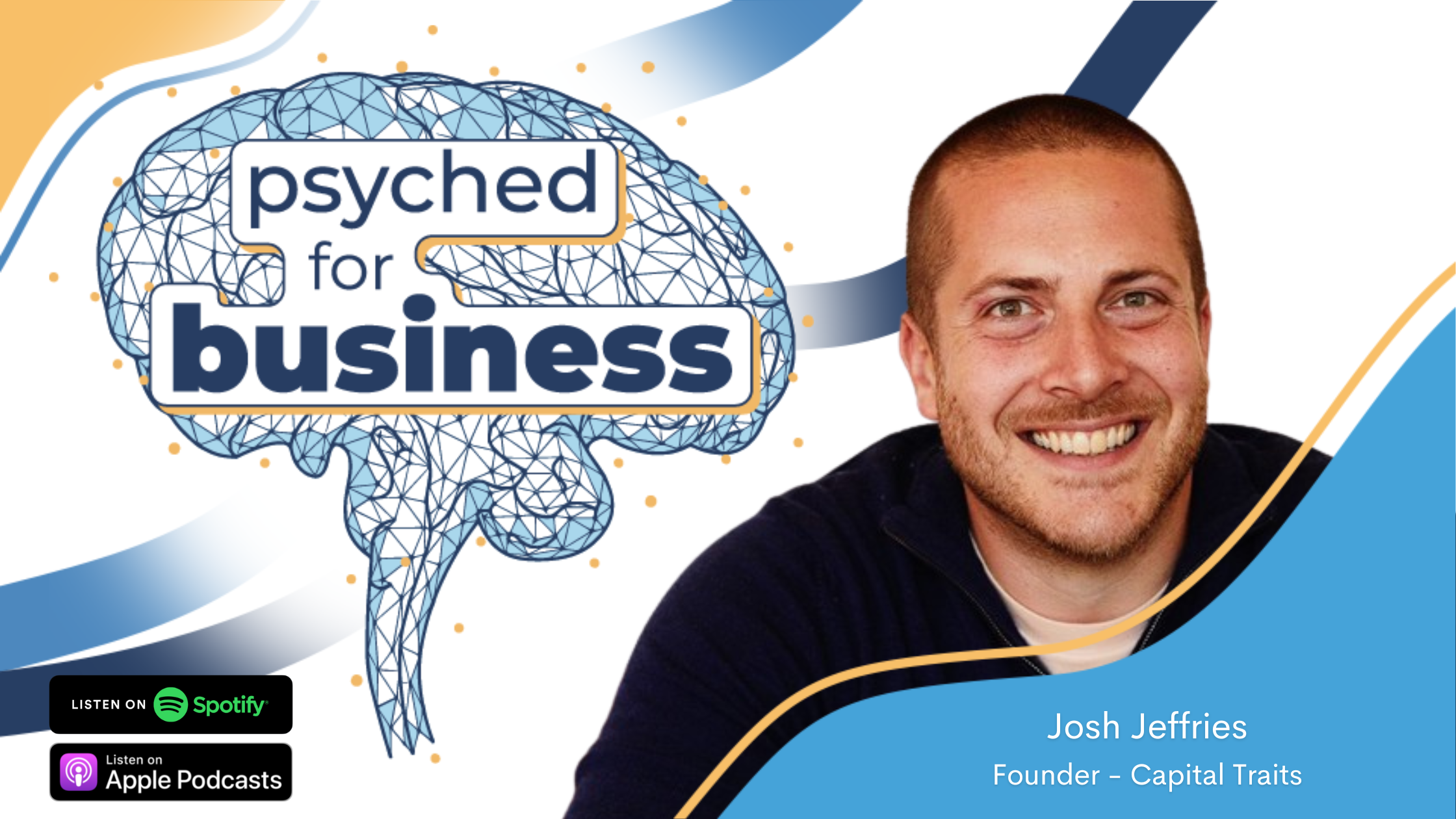
    An extrovert’s journey to starting a solopreneur coaching business with Josh Jeffries

    Richard Anderson is joined by Josh Jeffries, a self proclaimed extrovert who started his own coaching business.

    In a world where distractions and the fast pace of life have made it harder for us to listen to each other, Josh believes that coaching provides a sacred space where people can be heard and listened to deeply.

    As an extrovert, Josh initially struggled with his impulse to speak during his coaching training, but he was challenged to suspend his judgment and practice deep listening, a skill that he believes is essential for an effective coach.

    In this episode, we’ll learn more about Josh’s journey and the insights he has gained throughout his coaching experience. So sit back, relax, and join us as we explore the power of listening in coaching, and how it can benefit entrepreneurs and business owners. Thank you for tuning in.

    Subscribe to the podcast on your favourite platform:

    Apple Podcasts

    Spotify

    Amazon/Audible

    Pocketcasts

    Other Platforms


    Episode 12 – Transcript 

    Voiceover:
    Welcome to Psyched For Business, helping business leaders understand and apply cutting edge business psychology principles in the workplace.

    Richard Anderson:
    Hi, and welcome to Psyched For Business. I’m Richard Anderson, thanks for joining me. In this episode, we’re joined by Josh Jeffries, who is an extrovert, who started his own coaching business. We find out why he did that, and some of the things that he’d found out throughout the experience. I hope you enjoy, thanks again for listening.
    Josh Jeffries, welcome to Psyched For Business. How are you doing? Thank-you for joining me.

    Josh Jeffries:
    Yeah, no, thanks for having me. I’m good, thanks. A little bit disheveled. Got a toddler who’s not sleeping very well, so apologies for the eye bags. But yeah, I’m well.

    Richard Anderson:
    You never have to apologize for anything like that with me, Josh. I’ve been through that twice myself. It’s a difficult time, but a fun one, isn’t it?

    Josh Jeffries:
    It certainly is, yeah.

    Richard Anderson:
    Fantastic. Well thanks again Josh, for making the time. I’ve enjoyed getting to know you over the last few weeks. I know that we share a number of things in common. I know that you’re an extrovert. You started a business. You’re a solopreneur, as I was at one stage. We’ve both got toddlers. There’s a lot that we’ve got in common.
    I think for the listeners, they’ll be really interested in hearing more about your journey. That’s obviously what this podcast is going to be all about, you taking us through that journey. But as a bit of a start, would you be happy to tell us a little bit about yourself, and how you got into the world of coaching?

    Josh Jeffries:
    Yeah, sure. I’m originally from Oxford. Now a south Londoner. Which is touch, being an Arsenal fan, so usually I’ve spend a lot of my time north of the river over the last few years. But now I reside in south London. I’m married to Ellie, got a little daughter. I’ve been coaching full time, coaching for about seven years. It’s quite an interesting route in, I suppose.
    I first heard about coaching through a friend of mine who invited me up to Scotland, to work on his estate. Which sounds very bougie, but my mate was the office manager on a consultancy up in Scotland. He was training as a psychologist, and as a coach. I went up to work the grounds during my first summer as a student. I was just working the grounds with this groundskeeper in Scotland, which was unbelievable. It was on Loch Tay, up in Perthshire.

    Richard Anderson:
    Lovely.

    Josh Jeffries:
    Yeah, so it was incredible. I didn’t really know anything about coaching. I think like a lot of people, I didn’t really know coaching existed as a profession. When I heard about it, learned a bit about the psychology behind it, some of the theories behind it, and what coaching could do, I was just fascinated by it to be honest. I knew, I think I was 21 at the time, I knew then that if there was any chance that I could become a coach, then I would take it. So I did. That was my first exposure to it.
    Then I went to uni, went through uni, and then I worked for an amazing charity in London, actually as a trainee coach. So my first experience of coaching was working with young people at risk of social exclusion. So 16 to 25 year olds who were out of work, and struggling just in life, and struggling to get back into work, or into education. Essentially we would recruit them at job centers, and then onto a six week pre-employability course. We’d coach them in groups, and one to one, to help them with mindset. Help them with CV writing, with interview preparation, with job applications.
    A lot of mindset though is really helping them actually get job ready. So that when they actually get into work, they can sustain employment. Then we would also coach them for a year after they got into work, to help them sustain employment. An amazing charity, I still follow them today. I’m still in touch with lost of people who work there. They’re called Spear. Well, the charity is called Resurgo, but the Spear program is where I worked.
    During my time there, I did a course called Coaching For Leadership, which was essentially a crash course in coaching. Actually, to this day, it’s hands down some of the best training I’ve ever had. Even after seven years of doing it full time, it was amazing. So that was my introduction. A window into coaching up in Scotland, and then it was an opportunity to actually start coaching with Spear. Then I did that, and really fell in love with it, and knew that that was what I wanted to do.

    Richard Anderson:
    I think it’s brilliant as well, at such a young age. You said you were 21 when you went up to Scotland, and you did that. It’s nice to know what you want to do, and stay true to that, and obviously you’ve done that. You obviously had a stage working for other organizations in coaching. You’ve mentioned one already. But then you’ve gone off, and you’re now a solopreneur, so you started your own business, earlier on this year? Back end of last year?

    Josh Jeffries:
    Yeah, March this year, yeah.

    Richard Anderson:
    March of this year, brilliant. You’ve called it Capital Traits. Why don’t you tell us why you’ve called it Capital Traits, and what’s it all about?

    Josh Jeffries:
    So just quickly going back, after I left Spear, I joined a company called Acre. They’re an amazing global recruitment consultancy, who operate in sustainability. They had a learning and development that they had just launched. I’d been there for two years in a recruitment capacity, so training as a recruitment consultant. Just cutting my teeth in the world of sales and recruitment, which is good. Good fun.
    I got an opportunity to join their L&D startup. It was called Acre Framework. So I joined them after two years at Acre. One of the first things I did as part of my training there was to take some training with SHL’s occupational personality questionnaire, the OPQ. Which is a trait based psychometric tool. So we would use the OPQ. We also had a bespoke competency framework, which we used to support leadership development. We would assess people, give them feedback on their results, and help them formulate a development plan with that.
    Then from there, we grew out a coaching business, which I helped to spearhead. I did a transformational coaching diploma with Animas, which is a center for coaching. So I had this psychometric qualification. I had this coaching diploma, and then did that for five years. I absolutely loved it. Over the course of my career, and a relatively short one, I appreciate, but I’ve had exposure to different assessments. Type based indicators, trait based indicators, Myers-Briggs insights. You name it, I’ve been through it.
    I just fell in love with the OPQ as a really powerful tool, which I felt was a really good launchpad for an amazing conversation about self awareness. About personality. About working styles. About strengths, development gaps, all kinds of things. I’d never used it as an in or an out, too predictive a measure, or definitive a measure, but as a launchpad for a conversation.
    I really enjoyed the world of trait based assessments. So when I came to start my own business, I was thinking about names, and what do I want to call it? I thought, “Well, Capital Traits made sense,” because I guess you could say my business is about helping people to capitalize on their key traits that make them uniquely them. We all have capital traits. Traits that come more naturally to us, that make us uniquely us. I think the more we can play to those, whilst also of course growing your self awareness, and mitigating things that don’t come so naturally to us, the more effective we can be, and the more likely we are to thrive, in life and at work. So Capital Traits had a ring to it, and I just went for it.

    Richard Anderson:
    It sounds brilliant. It rolls off the tongue, and makes complete sense when you explain it. You started talking about psychometrics, so I wouldn’t mind touching on that for another minute or two, if you’re happy to. So trait based tools, type based tools, I’ve actually recorded a couple of these podcasts where we’ve looked at the differences between these tools. It’s a really interesting topic, for anybody who’s not familiar with type versus trait.
    But you mentioned the OPQ, the SHL occupational personality questionnaire. What do you love about that particular tool? When you say it acts as a launchpad for discussion, in what capacity? How does that normally work?

    Josh Jeffries:
    Yeah, so most of your listeners will be way more familiar with this stuff than I am, to be honest. I’m not a psychometrician. I wouldn’t call myself a psychometrician, because I don’t have a clinical or business psychology background. I’m a bit of a black sheep, to be honest. I’m a coach who trained with how to use the OPQ.
    What I love about it is that it doesn’t put anyone in a box. Maybe that’s a bias that I have. I don’t like being put in a box, or being told that this is who I am. I’ve seen it in the past, where that can be a little bit dangerous. I think personality type tools are super interesting, and actually usually very accurate. My concern with them is that people start over-identifying with their types, or the caricatures that they’ve been placed with.
    I’ve seen it before. It becomes a self fulfilling prophecy. People are like, “Oh, I’m so red,” or, “That’s such a yellow thing to do. That’s so blue of you. Oh, you’re a classic ENFP,” or whatever. This is not me slighting those type based indicators, because I think they’re great and useful. I just think they’ve got to be taken with a pinch of salt.
    What I like about the OPQ in particular, is that puts your personality on a continuum of one to ten, based on reference. There are 32 different behaviors, so it’s quite granular. It’s quite light touch. It’s not too deep and predictive. I’ve seen it evolve over time as well. How you report on the OPQ depends on where you’re at, your mindset, the environment you’re in, how candid you’ve been with the questionnaire. So there’s a number of factors, and it can change. It can evolve slightly. Some things don’t evolve much, because we are relatively fixed in some ways. But some things do change, if you’re intentional about them. I just feel like it gives you quite a lot of room for maneuver. Quite interesting to work with.

    Richard Anderson:
    It’s coming from a place of genuine curiosity, because I’ve never sat the OPQ. It’s funny, because you said before, “I’m not a psychometrician. I’m not an absolute expert in psychometrics.” But Josh, we’ve developed a psychometric platform, and I’m nowhere near as expert as I probably should be in these things. It’s fine to talk about the technology, from my perspective, but when it comes to the ins and outs of the tools, so it is just genuinely interesting. I think I could probably do with sitting a number of these types of tools, and maybe having some coaching delivered myself.

    Josh Jeffries:
    I’ll pay one out to you and Matt.

    Richard Anderson:
    There you go, fantastic stuff. Brilliant, okay. So what I’m really interested in, and I probably should have asked you this before, but I’ll ask it now. You talked, how you got into coaching, and how your initial experience or observation of coaching. What do you love best about it? You mentioned trying to get people into jobs before. Was it the satisfaction of them getting into jobs, based on the coaching that you provided them? Was it that? What do you love best about coaching, Josh?

    Josh Jeffries:
    So I’ll give you quite a philosophical answer.

    Richard Anderson:
    Go for it.

    Josh Jeffries:
    I’ll be interested to hear if you agree with this or not, because it could make for an interesting discussion. But I’m of the feeling that generally in life, in society, we’re getting worse at listening to each other. I think there’s a number of factors. We’re constantly distracted. Our phones, digitalization, work emails, life is busy. The world’s uncertain and volatile, and complex and all of that. It’s pretty hectic times. I think there’s a knock-on effect on the quality of relationships. There’s a knock-on effect on the quality of listening. I’ve felt it, certainly as a friend. Just the way, from what I observe.
    What I love about coaching is that, it is this uninterrupted space, where people get to speak. They get to think out loud. They get to be listened to, and listened for. I listen to my clients, and I listen for my clients, and it’s deep listening you’re doing. Clients love it, and I love it. I’ve got a coach that I see once a month. Selfishly, it’s my time just to brain dump, to think out loud. To bounce ideas back and forth. To have my assumptions challenged. I just think it’s a wonderful, quite a sacred space.
    The answer really, what do I love about it, is I find it’s an incredible privilege to hold that space for people. If what I think is true, that generally we’re getting worse at listening, then as a coach, I get to hold an amazing space for people to be listened to. That’s a profound privilege.

    Richard Anderson:
    Yeah, I think that’s a great answer. You asked me what I thought, whether I agreed or not. I certainly do. I think listening skills, they’re not what they once were. I wonder how much of that’s down to mobile phones, and being addicted to things like Instagram, Twitter, and whatever it might be. That you just become immersed in your phone. Therefore …
    I was listening to a podcast fairly recently, I can’t remember the name of the podcast. But it was along those lines, where it was talking about listening skills, or concentration skills, or skills that have to be practiced. They can’t just be taken for granted. I wonder how much mobile phones and computers, or whatever it might be, are having an effect on those skills that we probably should have just naturally, but maybe struggle with. So I do agree with that. Would you therefore say that, for a coach to be effective, you need to be an incredible listener?

    Josh Jeffries:
    Yeah, 100%. This is funny though, because I think in a way, my coaching training was exactly what I needed to help me, with respect to my natural preferences and personality type. I’m an extrovert. We’ll talk about this in a bit. I’m an extrovert, but I’m also really outspoken. I’m quite chatty. I interject, or try not to. But yeah, I interject, I speak up. I’m quick to speak up. I have a lot of ideas. I get very energized, and very passionate. So actually, when I went through my coaching training, I was massively struck and challenged by my impulse to speak.
    Actually, it was a real disciplined training for me, to bite my tongue. To suspend my judgment. To really listen, and listen at a deep level, and do what they call third person listening. Listening to and for, and from different perspectives. It’s quite a deep practice. It was exactly what I needed.

    Richard Anderson:
    Third person listening? Sorry, Josh, just dissect that. What does that mean, please?

    Josh Jeffries:
    Yeah, so third person listening, there’s me and you. There’s what would be called a transactional conversation. I speak, you speak. Then third person listening is almost like you’re the third person in the room, observing what’s being said. You hold a more objective position to the exchange. So as a coach, you practice third person listening, or global listening some people call it. There’s different terms for it, but it’s essentially listening on a deeper level.
    So when I say I listen to you, and I’ve listened for you, I’m listening to what you’re saying. But I’m also, as I get to know you, and according to my intuition, etc, I’m listening on your behalf as well.

    Richard Anderson:
    Yeah, brilliant. So a coach has to be a superb listener. What do you think about the coachee, or the person who is being coached? How much do they have to be willing to talk? Do you find that that’s ever an issue? Because I think we hear a lot these days, particularly when it comes to our mental health, and fitness, and those types of things, that people aren’t willing to speak. Do you find that that’s ever a challenge? Is that a prerequisite to having good coaching? I’m listening, but you’ve got to have someone who’s willing to talk?

    Josh Jeffries:
    Yeah, definitely. It’s interesting, because when I first started coaching for Acre, when I was at Acre Frameworks before, it was a slightly different business model to the one I operate. We would partner with clients, big clients, often with global teams. The client would make coaching available to a whole team. An amazingly generous gift to give to your team. “Here’s six sessions to use with a coach.”
    It was really interesting, noticing the people that would jump at that, and take it up, and others that you would have to nudge and chase, and say, “You haven’t booked in a session. Would you like to book in a session?” It just went to show for me, that some people, they’re a bit more, not suspicious, but they don’t feel they need it. Or they personally find the one to one space a little bit intimidating, or a bit much. Maybe it’s just not what they need right there, in that moment in their life or career, so they’re a bit more hesitant or whatever.
    So yeah, you do. So I’m a bit different, in that I wouldn’t sell a coaching package now, and make it available to a whole team. Or prescribe coaching, and say, “You’ve got to go to six sessions.” Not that Acre did, but it’s a bit different. I really want to work with people that really want to work with me, and really value the space.
    But equally, I think some people need a little bit of a nudge sometimes to open up. I’m working with someone at the moment who took me up on the offer of coaching. He came and asked to do coaching. But actually, in our sessions, for the first few sessions really struggled to speak freely. Just because he’d never had to do it before. He’d never done it before.
    You can create as psychologically safe an environment as you like. You can be as approachable and friendly as you’d like. But some people, it just takes time, and actually you just need to go at their pace. Just because you’ve got a session, it’s confidential, and no one’s going to interrupt you, doesn’t mean you’re suddenly going to start going for it, and bring loads of ideas and goals to the session.

    Richard Anderson:
    Yeah, of course. I think the reason I ask that is because, I’ve told you this fairly recently, I started some coaching myself this year, for the first time ever. It wasn’t until I was sat in the room with my coach, who’s been absolutely brilliant, and sat down with her, and was asked questions, or given the opportunity to have a forum there to speak. Even until I was in that situation, I thought, “Well this isn’t going to be for me. Why would somebody coach me? Am I good enough to be coached?” Maybe there’s the imposter syndrome that kicks in. Or, “I only need a coach if I’ve got a massive worry that’s in the back of my head.”
    But now, I genuinely would encourage, based on the experience that I’ve had, anybody to go and seek the services of a coach. Because I think there’s always areas that you can improve. It might be imposter syndrome for one person, and it has been for me, and catastrophizing. I’m very open with these things, so I think it’s important to talk about a worse case scenario, which is often with business. What if there’s a problem with a business? Or difficult conversations, or whatever it has to be. But I think it’s massively important for everybody.
    But one thing that has always struck me, and I don’t know how much you see of this, or even if you’ve got a view on it. But coaching is often reserved for leadership within a lot of organizations. A lot of the budgets go towards developing leaders, rather than individual contributors. But I can see the merits of putting it across the business. Josh, I don’t know how you feel about that?

    Josh Jeffries:
    Yeah, you’re singing from the same hymn sheet. Just quickly, on what you’ve just said about what you bring to a session. What’s really useful, so in your sessions you might want to do some journaling before you go to your session. Because it might help you to formulate your ideas. Ultimately, sometimes it’s just nice to go into a session, blank canvas, see where it goes. I find sometimes I do that with my coach, and it’s great. I send out coaching preparation forms for some people, because we’re all different. We all think differently-

    Richard Anderson:
    Yeah, of course.

    Josh Jeffries:
    Some people like to reflect and write, and then they come and they share their ideas. Coaching ultimately is different to counseling. Coaching, it should have a fairly forward momentum to it. There should be a thrust. There should be some goals. You should know, a coach and a client should know what you’re aiming for. It’s usually good to have a bit of a game plan, or some goals, objectives, and a bit of preparation really helps that. So I would always encourage clients, if you’re seeing a coach, you get out what you put in, so go prepared for your session, knowing what you want to talk about, as often as you can.
    Then yeah, on the latter point, yeah, I’m totally with you. My strap line, or my mission, and I’ve recently come up with this mission. A few weeks ago, it dropped into my consciousness. I was like, “Yes, that’s why I’m doing this business.” It’s to democratize leadership development. Capital Traits exists to democratize leadership development.
    What that means is, it’s exactly what you’ve just said. Coaching is often a luxury reserved for senior professionals at the twilight of their careers. Don’t get me wrong, that’s great, because as leaders in your businesses, you are the culture carriers. You’re often the gatekeepers of the business. You role model a lot. Often what you role model is going to form and shape the culture and the environment of your business. So it’s hugely important that leaders are getting coaching, and are growing in self awareness, etc.
    But I’d say potentially more important is that you develop a culture of coaching in your business, by making things like a personality assessment and coaching accessible to as many people as possible. If you think about it, the earlier you sew that into your business, over time you’re going to reap the benefits. It sounds a bit harsh on leaders, or senior people, and I don’t mean it this way. But you could argue that by the time you’ve reached a certain point in your career, you’ve been successful, and you’re now a leader in a business. Spending loads of money on leadership teams, and investing heavily in leadership teams, sometimes can be a little bit of a wasted resource.
    Because leaders are successful for a reason, right? They’re there for a reason. But they maybe haven’t all got into those positions because of their natural leadership ability. A lot of them have gotten there because of longevity, and because they’re experts in their field, so they become leaders in the business. Maybe they’re not thinking so much about culture, behaviors, how to develop a coaching culture and a leadership culture. They’re maybe not thinking so much about that. But they’re business leaders in their own right, and they’re great.
    So it’s, you’ve got to do both, I personally think. You’ve got to do both. I think the businesses that do more at the junior level, at the entry level, and really sew in at that level, will reap the benefits. The only problem is, as you know, coaching is just ridiculously expensive a lot of the time. Personality assessments are so expensive. So it makes it really difficult for businesses to invest in making coaching accessible to everyone. But that’s one of the things that I’m trying to change. I don’t think it needs to be as expensive as it has been.

    Richard Anderson:
    I know that you’re hugely passionate about that, and I completely agree with you. I love that, coaching-

    Josh Jeffries:
    I sound like a sales person if you get me-

    Richard Anderson:
    No, I-

    Josh Jeffries:
    … like I’m selling it, if I get too into it. But it’s crazy what people are charging, and I don’t think it needs to be the case.

    Richard Anderson:
    No, absolutely. It’s funny, when you talk about coaching culture, because again, not to labor the point. But until this year, when I started my own coaching, and I saw the benefits, and reaped the rewards and the results of that, where I thought, “Well, if this is working for me, why can’t this work across my team?” Obviously we’re a small business, and one of the things that you’re always thinking about as a small business is expenditure. How expensive things are. Return on investment. All of that stuff. I know what the return on investment on these types of tools are. But I guess not everybody will know that.
    I think part of the reason that I know that is because I live in this world, and we work with a number of different coaches, and people who, L&D practitioners, and those sorts of things. But I think for small businesses as well Josh, in particular there’s massive opportunity out there for people to buy into that whole coaching culture.

    Josh Jeffries:
    Return on investment in L&D is the white whale. Even really seeing L&D practitioners that I’ve spoken to, I’m talking 30 years in the industry, leading L&D for some of the biggest companies in the world. Even they really struggle to tell a really compelling story on the return on investment for L&D. Because it is quite abstract, ultimately. It’s always going to be difficult.
    You often see relatively vague statistics about engagement levels, and productivity, and that kind of thing. But really, the proof of the pudding is in talking to people. It’s in qualitative insights around how people are feeling, how they’re performing, how they’re doing, what’s changed? Then you will, if you track it, you will see the return on investment. But yeah, it’s challenging.

    Richard Anderson:
    It is, absolutely.

    Josh Jeffries:
    Having to quantify, yeah.

    Richard Anderson:
    Of course. You’ve given some really good insight so far, Josh, into the world of coaching, and how you got into that. But I’m really interested in why you’ve started your business, and why now of all times?

    Josh Jeffries:
    Yeah, well it was a really bizarre time to start my business, actually. I mean on paper. On paper it was a bizarre time. It wasn’t bizarre to me. But from the outside in, it might look strange. I’m really lucky to have had a really amazing relationship with my former employer. I still work with Acre in an associate capacity. I don’t have a bad word to say about them. They’re an incredible business, and I had an amazing relationship with my previous line manager as well, Anna Keen. I’ll make sure I send this to her, so she hears this. But yeah, so she was a great mentor to me, and a formidable businesswoman. A great role model.
    She and I had a very transparent relationship, in terms of where I was going within the company, where my ambitions lay, etc. So it was really open and honest. I told her years ago, that I wanted to start my own practice one day. We used to talk regularly about it. It would come up in what we called alliance conversations, which was appraisal conversations. So we’d check in on it every now and again.
    Then in my fifth year, sixth year working with her, we just sat down. I said, “I think it’s time.” She said, “I had a feeling you might say that,” and said, “What can we do to help?” It was really freeing, actually. We agreed an end date, and I launched. So I was really lucky. But in terms of why, there were a few factors.
    I was working from home, like the rest of the world, or many certainly in professional services. So I was working from home, in my spare room. I’m a massive extrovert, and I wasn’t getting any of the benefits of being an extrovert in the workplace. IE, I wasn’t going in, seeing my team. I wasn’t in the office having water cooler chats, as the Americans call it, or just coffee chats, or after work beers, which I used to love. So all the benefits of being an extrovert in the workplace had gone, with lockdown and work from home and stuff.
    I found myself actually really busy with work, and I was spending a lot more time one to one, over camera, doing virtual coaching or assessments. It was just a case of, “I could be doing this for myself. I’ve always wanted to do it for myself. Why don’t I just do it?” It was a weird time, in that I’d just lost my mom. It was really out of the blue. A really tough time for me and the family. But the silver lining meant that we had a modest windfall coming, some inheritance coming, and I knew that there was a safety blanket coming for me and my family, that meant that for the next year, if it didn’t work out, I could afford to pay for the heating, and put food on the table if need be.
    So I had this security blanket. I thought, “Do you know what? Now is as good a time as any.” I had a vision for it. I’d always been thinking about what it would look like, what I’d do. So I just went for it, and it’s been amazing, honestly. It’s been so cool. Loved it. I love being a solopreneur. I always get that name wrong, as a solo business owner. I think I-

    Richard Anderson:
    Yeah, [inaudible 00:29:23].

    Josh Jeffries:
    But yeah, not without its challenges, as you and I have discussed.

    Richard Anderson:
    Yeah, of course. It’s brilliant that you had a really supportive previous employer in Acre as well, that knew that that was your dream, and that was your aspiration and ambition, and supported you with that. Obviously you’ve still got a great relationship. I think that’s massively important. I had a very similar experience with my previous company, a company called Perfect Image, since we’re naming names. A couple of those guys might listen to that, who knows? But yeah, I think that’s massively important.
    You mentioned the fact that you’re a massive extrovert. So I guess it was, you might as well be doing this for yourself if you’re not getting those benefits. Like you say, that’s really-

    Josh Jeffries:
    Kind of, yeah.

    Richard Anderson:
    Yeah, that’s really interesting. Being a massive extrovert, and now being a solopreneur, which I think is the right term. It sounds good anyway. You’ve said it’s been a fantastic experience. But is there any element of working for yourself that you have found difficult, given that you are an extrovert?

    Josh Jeffries:
    The obvious one, I work in a garden office at the bottom of my garden. An amazing little space we’ve created. Sometimes I just wish there was someone just over there, that I could just have a quick chat with, or distract. I was on a webinar recently with a psychologist called Nikita, who I really admire. Again, it’s important that we nod to people that have played an impact. Had an impact-

    Richard Anderson:
    I know Nikita.

    Josh Jeffries:
    Oh yeah, he’s amazing. I learned so much from him. But he was saying, he was describing extroverts as like meerkats. He said you can always spot an extrovert in the office, because every now and again, they’ll just pop their head up above. Just see who they can distract, just for a couple of minutes. I was that guy. I love coaching, I love the one to one stuff. I like to think I can be disciplined when I need to be. But I also love to just have a quick chat, distract someone, have a laugh. That’s what I miss. I really miss that.
    I miss, I’m getting better now, but I miss having a network of like minded people in the same boat as me. I’m going now, finding those people, and joining network groups and stuff like that. I’ve found a guy who was a friend of a friend, who we meet up with every couple of weeks now. We meet up and work in a BrewDog, Waterloo, which has a coworking space. So we’re there together. Which is always dangerous, because you work in this coworking space, and then the bar is just downstairs. But it’s so fun.
    When we work together, I actually get loads done. But we’re in the same world. We chat psychology. We chat assessments, and startup life. It has just been great working with him. His name is Mike Brown, might as well say that. Hello, Mike. Yeah, so that’s the main one. How about you? Because you’re now, you’ve got a team, but-

    Richard Anderson:
    Yeah, we do now. I have a team now, and I was very keen to get one as soon as I was able to afford one, really. That was the crux of it. When I started, as you know, I’ve got a co-founder, Matt. But there was only me full time at the business for quite some time. I would say probably for the first, maybe eight months or thereabouts. Because I’m an extrovert too, and I’d been so used to being office based.
    When I was working from home at the beginning, when we started Evolve, that was in the days where it wasn’t normal to work from home. Most people worked at … I won’t say it wasn’t normal, but the majority of people in my world worked in an office, so I found that really difficult, because everyone was, my wife was going out to work every day. Friends were always out and about at work. I was moving from the bedroom, to the kitchen, to the dining room where I worked. I was in a really small dining room. It wasn’t set up as a-

    Josh Jeffries:
    Did you have kids at this point?

    Richard Anderson:
    We’d just had our first. He was three months when I did it. So is there ever a right time to do it, Josh? There you go.

    Josh Jeffries:
    Yeah, I know. No.

    Richard Anderson:
    You could say there’s never a right time.

    Josh Jeffries:
    But that you described there, with a three month old, moving from the dining room to the kitchen to the spare room, whatever, that is one of the toughest things about working from home, I think for anyone. Everyone’s got their challenges. I had a couple of mates who were in flats with housemates, and they only had one communal area. So their kitchen and dining room was quite pokey. They worked in their bedroom, and they lived in their bedroom basically. So everyone’s got their challenges. But I think parenting during lockdown, and starting up your own business, must have been very interesting.

    Richard Anderson:
    Yes, it was very interesting. It was very difficult. I didn’t, or I don’t, I do now actually, because the kids are in bunk beds, but I didn’t have a spare room. So I was working basically in the kitchen. We’ve moved houses, and I should have probably thought, given that I didn’t really have a spare area the previous time, I should have just gotten a bigger house. But anyway, there you go. That’s another story for another time. But yeah, working in the kitchen, and then having, at the time, a three year old as he was, and a fairly newborn. Because my second was born in May 2020, so right in the middle of lockdown. So that was good fun.
    But I have to be honest, Josh. As soon as I was able to go back to the office, I took the opportunity. So in the July or August, or whatever. I took the necessary precautions, but I just needed to get out of the house, and get a bit more normality. So what’s the plan for you, as time goes on? I don’t know whether you’ve got one of those five year plans in place or whatever. But I just mean in terms of they next year or two. Do you think you’ll look to recruit? Or will you stay solo? Or coworking spots permanently?

    Josh Jeffries:
    It’s the golden question, isn’t it? Firstly, I’m learning every day right now, so it’s hard to think about the five year plan. But what I will say is, I personally think that, again this would be an interesting one for you to disagree with or not. But a bit idealistic of me, I think that the purpose of work, or the purpose of work, is employment. I think businesses exist to employ people, and I think it’s an incredible privilege, if you have a viable business, what an amazing privilege to be able to provide employment for people. I think that’s what makes the world go round.
    So yeah, I think starting my own business, if I didn’t have plans to hire someone, that would be disingenuous of me. But that said, it’s slowly slowly, right? I’ve got lots to work on, but lots of great clients right now. I say lots. I’ve got good clients right now. I’m relaxed. But I need a lot more clients, and a lot more of a viable revenue stream, and replicable lower hanging fruit, to justify bringing someone in to help. But that said, I’d love to. I’d love to bring someone in.
    I often meet people, and I think, “You’d be an amazing coach.” Or, “You’d be great at what I do. I’d love to take you under my wing, or just bring you in somehow,” and I can’t right now. It’s frustrating. But yeah, so the answer is yes, I’d love to hire someone. Right now though, it’s about nine months in. It’s about just building things out-

    Richard Anderson:
    Building the business.

    Josh Jeffries:
    Yeah.

    Richard Anderson:
    It’s really exciting, isn’t it? I’m sure people like this exist. Maybe I should have done some research before I say what I’m about to say. But it would be nice as well, I think, if there were coaches for entrepreneurs, or people who have started their own business-

    Josh Jeffries:
    Oh yeah, [inaudible 00:36:32]-

    Richard Anderson:
    I did a few LinkedIn videos, just to give some of my thoughts about all my experiences of starting a business. What I did well, what I didn’t do so well. What I would have preferred to do if I had my time again. Those types of things. Because I feel as though the support maybe isn’t out there for people who have never done it before. They’ve always worked for somebody else. They’ve always wanted to have their own business, for whatever reason that might be. Then they end up in that position, and you think, “Well crikey, what am I going to do now?” That was what it was like for me.
    I know that there will be mentors out there. But I think to have the ability to seek the services of a coach maybe that you could just sit down and, “This is really hard.” You know, “Let me give you some tips.” All of that stuff. I think that would be quite cool.

    Josh Jeffries:
    There’s loads out there. In fact, in some sense, sometimes you go on LinkedIn and you think, “God, it’s a really saturated market, isn’t it? Everyone seems to be a coach these days.” But that’s probably just because of my network. But there’s loads out there. I would say that with specific coaching, business coaching, startup coaching, you want a coach or a mentor who’s been there and done it. It’s really worth doing your research on where they’re coming from, and why they have niched into that world. Because if you’ve niched as a coach to help entrepreneurs, or to help scale startups, then hopefully you’ve got a track record, and you can say, “Meet this CEO who I worked with, and hear it from the horse’s mouth.”
    So I think, yeah, there’s loads out there. I think now, more important than ever to do your research on who you’re working with. Meet them, sense check them, and really get to know each other, and understand each other’s aims before you commit. But yeah, definitely something. I lean on someone who knows a lot more about coaching than I do. I’ll meet with him once a month, and he’s been great for me.

    Richard Anderson:
    It’s brilliant. I think the education piece needs to be there as well as the people, because you probably have a load of coaches in your network on LinkedIn, and those types of things. I probably do as well now, but at one stage I didn’t, and at one stage I didn’t realize that that was even a thing. I knew that coaching existed, but coaching for startups and entrepreneurs. It’s only been with the benefit of hindsight, and a few years experience under my belt, that I thought, “Well if I’d known about that at the time.” So maybe that education piece needs to be a bit more out there.
    I know that doing things like this, podcasts talking about the benefits of coaching, and all of that sort of stuff are going to help. But the more people that can get out to, I think the better for me.

    Josh Jeffries:
    For sure.

    Richard Anderson:
    Brilliant. Josh, I’m really grateful for all of the insights that you’ve given throughout the last 40 minutes or so. It’s been really, really interesting. I, as always, want to give you the opportunity to talk a little bit more about Capital Traits. Maybe for any listeners who might be interested in contacting you, or picking your brains about these things. The floor is yours. Give us a little bit more about Capital Traits, and how people can contact you.

    Josh Jeffries:
    Gosh, I should have rehearsed an elevator pitch for this moment. So if you contact me on LinkedIn, or just get through to me on the website, which is capitaltraits.com, I’d love to speak to anyone with whom the mission resonates. So if you are a business owner, or a leader with a budget, and you resonate with that mission to democratize leadership development, and make coaching and support in a form of assessments to help develop self awareness, and leadership competence in your business, get in touch. Because it doesn’t need to break the bank, and I’d love to work with anyone who’s keen to hear more.
    I don’t have a powerful marketing suite behind me, or a sales funnel. So the best way to get to know me is to reach out. Drop me a message. We can arrange a quick call, and see how we can work together. But yeah, thanks so much for having me on the podcast, Richard. It’s my first time podcasting. It’s been great. I need to work on not rambling, which I’m doing now. Something, I need to be probably more succinct. But no, it’s been really fun. Really, really fun. Thank-you.

    Richard Anderson:
    You would never think it’s your first one, believe you me. But no, I really, really appreciate your time, Josh. It’s really interesting to hear about your story as well. I’m always keen. You know that it’s a big passion of mine, people starting businesses, and also coaching is a big passion of mine now as well. So it’s really, really interesting for me personally, and I know that the listeners will feel the same. So just to say, thank-you very much, and we’ll speak soon.

    Josh Jeffries:
    Cheers, Richard. See you soon.

    Richard Anderson:
    Take care, Josh. Thanks.

    Speaker 1:
    Thanks for listening to Psyched For Business. For show notes, resources, and more, visit evolveassess.com.

    S
  • Psyched For Business Podcast Episode 11

    Psyched For Business Podcast Episode 11

    Episode 11:
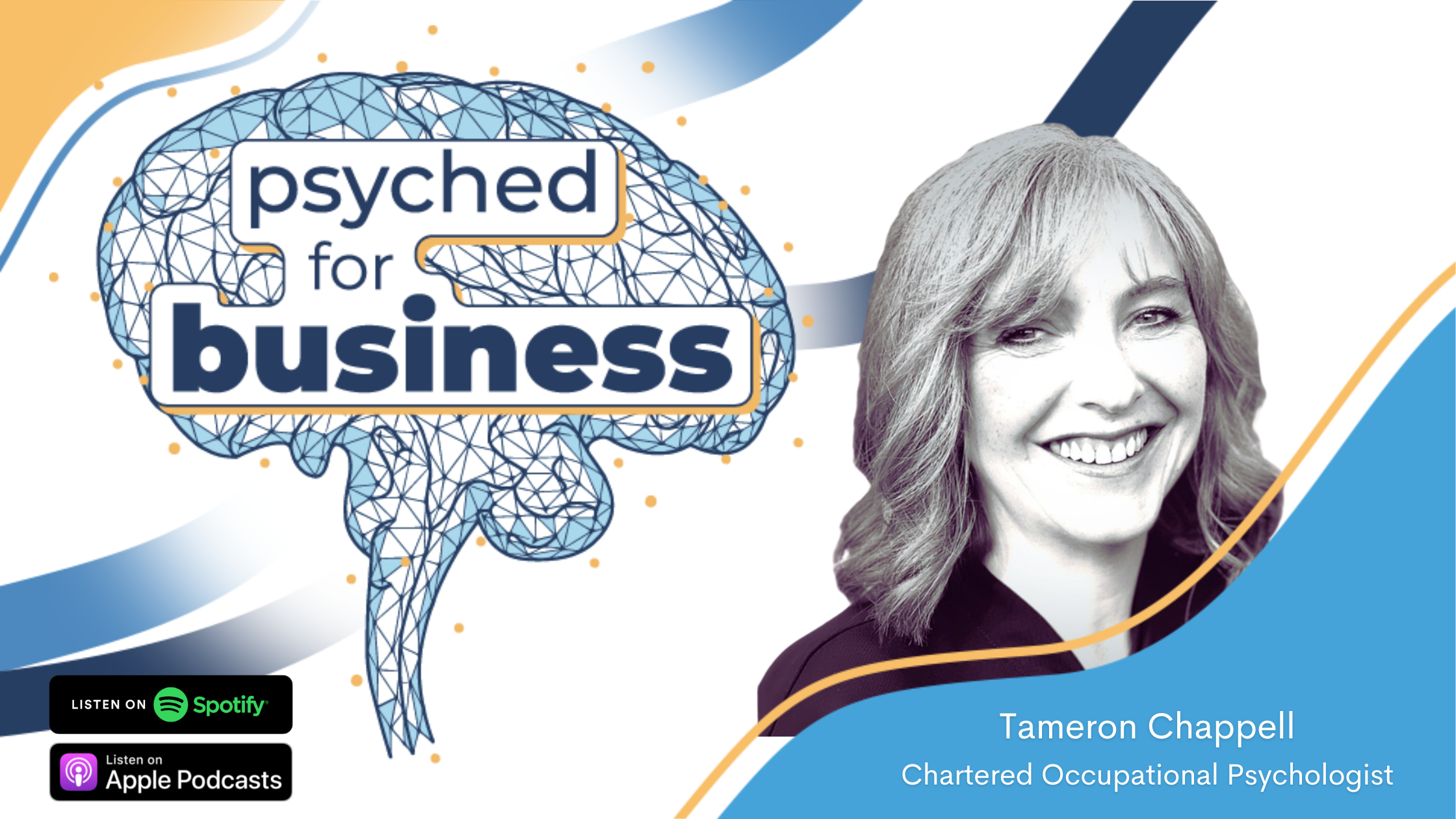
    Everything you wanted to know about Psychometrics but were afraid to ask with Tameron Chappell

    Discover the answers to all your unanswered questions about psychometrics on this episode of Psyched for Business.

    Host Richard Anderson sits down with expert occupational psychologist Tameron Chappell to explore the topic in depth. With Tameron’s extensive experience in consulting and applying psychometric tools in businesses, she sheds light on a range of subjects that listeners may have been curious about but hesitant to ask.

    Tune in for a comprehensive and engaging discussion on the ins and outs of psychometrics in this enlightening episode of Psyched For Business.

    Subscribe to the podcast on your favourite platform:

    Apple Podcasts

    Spotify

    Amazon/Audible

    Pocketcasts

    Other Platforms


    Episode 11 – Transcript 

    Voiceover  0:00  
    Welcome to Psyched for Business, helping business leaders understand and apply cutting edge business psychology principles in the workplace. 

    Richard Anderson  0:11  
    Hi, and welcome to Psyched for Business. My name is Richard Anderson. Thank you for joining me. In this episode I sit down with occupational psychologist Tamron Chappell and pick her brains about all things psychometrics. Tameron is a psychometric specialist who was consulted and applied psychometric tools across many businesses for both recruitment and development. So this is everything you’ve always wanted to know about psychometrics, but were too afraid to ask. I hope you enjoy. Thanks again for listening. Tamron Chappell thank you very much for joining me. Welcome to Psyched for Business.

    Tameron Chappell  0:42  
    Lovely to be here.

    Richard Anderson  0:44  
    Great. I’ve been very much looking forward to having you on because we’ve got to what I think is a very interesting topic today. And I was just certainly before we started recording there that that I am the layman when it comes to psychometrics, obviously, we’ve developed psychometric software. But I’m brand new to this when it comes to the ins and outs of all these different tests, questionnaires, assessments, and I think in the world of psychometrics, there’s probably a lot of dare I say jargon or terminology that’s used that is often assumed that everybody understands. And for a lot of people that use psychometrics or are looking to use psychometrics, it’s quite daunting, I think. So we’re going to use this time Tameron with an expert as you are to, I guess, demystify psychometrics or everything we wanted to know about psychometrics for such a long period of time, but we’re too afraid to ask. So we’ll get into that. But before we do all of that time, and would you just be happy to introduce yourself, so kind of who you are and what you do.

    Tameron Chappell  1:37  
    My official title is a chartered occupational psychologist, which for those in the know and know about our profession, it just means that I’m registered with the HCPC, as well as the Association for Business Psychologists and the British Psychological Society. So I’m registered with all of them. So I can call myself that protected title. But basically, what it means is, I focus on using the models and ideas and theories from psychology in the place of work to help people be more effective at work. And I pull on different ideas too, because I’m also trained in a psychodynamic approach. So I use transactional analysis and systemic constellations and internal family systems, which are all kind of from the psychotherapeutic side of the world. And I am quite happy for those to sit alongside that had numbers of psychometrics. So I’d like what they can both offer.

    Richard Anderson  2:30  
    So the psychodynamic stuff that sounds really interesting. It’s maybe we’ll maybe get into that later on, or it’s probably a full new topic. Of course, it is. Brilliant. So you’re obviously well qualified to speak about psychometrics. How long have you been working in the world of, how long have you been expert in psychometrics?

    Tameron Chappell  2:46  
    Well, expert’s an interesting title as well, it implies that I have all the knowledge and the power, I think I would say, I’m a specialist. So I’ve maybe read more books and read more LinkedIn articles and been to more conferences, shall we say? But I started out in academia. So I was really interested in psychology and the psychology of language particularly, and how language influences how you think what happens to your language when you’ve had trauma. So research and ideas and models and knowledge have always been really interesting. But I wanted to have more of a practical focus to it. So it’s great to have a theory, but then how does it actually work? So I set up my own consultancy, which sounds grand it was me it was moving out of academia into as my mum calls it, the real world. But so I’ve always had part of my own practice, I guess it’s called and a job as well. So I’ve worked in various places in a in a psychometrics publisher briefly, in a company that was helping to create change in the NHS, in a tech recruitment firm in leadership consulting firms in learning and development organisations. So that’s allowed me to have quite a broad range of experiences and clients, different professions and different approaches. And I think it’s that wealth of experience and exposure to different organisations, different people, different ways of working in the professional background that they bring. That means they can feel comfortable saying I’m a specialist and have a lot of knowledge but the expert bit I was supposed to say that my LinkedIn profile, and I haven’t got it in there for the search terms, but it does sit a little uncomfortable because of the power dynamics.

    Richard Anderson  4:40  
    Okay, we’ve got a thought leader in there yet.

    Tameron Chappell  4:42  
    Oh, no, I don’t think I

    Richard Anderson  4:44  
    that’s another one akin to expert, I guess. But I’ll use specialist respectfully, of course, it’s more

    Tameron Chappell  4:48  
    about my own analysis and psychodynamics as to whether I want to be viewed as the expert or not. I have a lot of knowledge and I’m happy to share it.

    Richard Anderson  4:57  
    Brilliant. Well, look, we look forward to that. I think Probably the easiest place to start, or the most obvious place to start is what do we mean by psychometric metrics?

    Tameron Chappell  5:06  
    It’s both an inclusive and exclusive word, isn’t it? It’s a good conversation opener if people go, Wow, what are those? In essence, it means psychological measurement. So psychometrics is just the measurement of psychological concepts. Personality, basically, splitting the word up, personality measurement. That’s what it is. But the common all language use of the word cycle has all of that baggage that we bring to it. I think lots of people in business particularly think, all psychometrics, they’re a scary word, I don’t know about them, I project onto them that they’re really detailed and excluding. So it depends what you bring to the word, but it basically just means measuring personality.

    Richard Anderson  6:00  
    Brilliant, so measuring personality through psychometrics. We know that they’re used for both recruitment and development, but I guess very differently.

    Tameron Chappell  6:09  
    Well, this is the big question that is totally, always debated on LinkedIn in various stages. And it points to another question that we’re going to come to which is difference between type and trait and Myers Briggs, and why everyone, so it all sort of comes together in some way. So strap in.

    Richard Anderson  6:29  
    So why in that case, why do we use psychometrics? Why is it a good thing for a business to implement a psychometric?

    Tameron Chappell  6:36  
    So let’s start there, and then explain why because it’s a way of measuring something that’s consistent in order to predict future. So businesses want to predict what’s happening, right, because then you can plan, then you can adjust, you can manage, so they want to be able to predict what’s going on, we live in a really chaotic place, even more so in the last few years than we thought was possible. So predicting how people will behave in certain environments has value to it, because you want to be able to plan and know what to expect. So in essence, psychometrics are useful because it helps you make better predictions about how people will behave in a role. It’s not perfect. I’m married to a nuclear physicist, and we have had many a discussion over the years about the social psychology and personality, and how can you predict sort of things. So we talked about correlations. And we’ve got validity and all of the terminology, that basically saying mathematically, we can be certain about what it is we’re saying here. But he kind of laughs and scoffs as a nuclear physicist going, there’s no predictability there. But I remind him, we’re dealing with people, not laws of nature. So it’s as good as we can get. But there is a whole range of ways of measuring people’s factory settings, looking at what they how they’re likely to behave. And that’s not to say that you want then be able to change and learn different ways of behaving, because that’s in essence, what we’re doing as we go through our working lives, we are learning how to behave in different roles in different situations. That doesn’t mean the fundamental who you are in your personality shifts. But it does mean that you learn to apply it in different roles, and you learn to extend your kind of corridor of comfort about where you can work. So if you’re looking at the heart theory, personality does not really change from the age of about 30, late 20s, early 30s. So if you’re looking at the research, and you look at a population level of of all of the data together, there aren’t large shifts in personality, once you hit that kind of age 30. But if you speak to individuals, anecdotally, they say, Oh, I’ve, I’ve really changed in my career, or something happened in my life that really was pivotal for me. And I changed how I did things. So it depends on and this is an age old debate, whether you view personality is more mobile and human brains is able to change more, or whether there really is a genetic component that’s there. That’s for a whole different talk, we won’t go to from my point of view, I think that we’re knowing more and more about how plastic brains are in terms of being able to learn and adapt, and that’s as what we are as humans. I think we have factory settings is the way I describe it. So that’s the trait level of personality. So the things that the evidence base says, if you look at one point in time, and you look in two years time or three years time, there’s a pretty good likelihood that they’ll be pretty similar, especially when they get to be older. So that’s the trait based approach where you’re comparing someone to everyone else around them. So you know how much of something somebody’s got. So it’s like height, we all have a height, we all sit somewhere on a continuum of our height, and the majority of us are about the same height. So the lowest people are average, and average doesn’t mean mediocre, right? It means about the same. And then there are some who are a bit taller and a little bit shorter, and some who are really tall and some are really short. So it gets narrower towards the end, like the bell curve of Absolutely, it’s the bell shaped curve. So that’s what trait personality has, as its underpinning assumption, we all have some level of this bit of personality. And we sit on that curve somewhere. So we’re either like everyone else in the middle, or we’re at the extremes. And the more extreme you are, the more that’s likely to be a standout strength, because there’s not as many people as you have got it. And the less likely it is for you to be able to flex your style to work in a different way, or to work with people who are at the opposite end of the scale, say,

    Richard Anderson  11:13  
    so maybe that’s a strength on the development area, because I suppose as a layman, from the outside looking in, he would imagine if somebody’s right at the end there, and they’re fantastic at one trade for one of a better expression, then that’s a great thing. But if they can’t adapt their personalities or behaviours to the other things, it’s gonna be a bit of a challenge.

    Tameron Chappell  11:30  
    So that’s why when you’re looking for either development, but particularly for recruitment, you’re looking at the individual and their makeup, their factory settings, what their personalities like. And it has to be within the context of where they’re operating. So someone could have a standout strength, that’s fabulous in the job they’ve done so far, really not fit for purpose in the context of the job that they’re applying for. Because of the nature of the work, the people they’re working with the long term expectations in the role, whole manner of things. So trait personality allows you to have that conversation with, say, the hiring manager and the organisation to think beyond the individual. And think about the context in which they’re going to be working and operating, and also who their colleagues might be, and what their personalities might be like, and whether that’s a good fit or not. Because we know from the research that diversity, cognitive diversity, thinking differently, is valuable for an organisation for innovation, for responding to changing context for customers, all of those reasons. But if you haven’t got the right situation set up. So you haven’t got the right culture that allows people to bring that cognitive diversity to bear to share it, if you haven’t got the right psychological safety in place, then it doesn’t matter how diverse your team is, in some ways, they won’t share

    Richard Anderson  12:56  
    that ideas to the table, and all of that sort of stuff

    Tameron Chappell  12:59  
    shouted down because it’s negative or whatever reason. And similarly, we know that diversity is good for a team. So we could recruit people that are really different. But when you’re working with someone who’s really different from you, it’s really hard, right? It’s harder than working with someone who’s similar. And so cognitive diversity is something we need diversity of personalities, something we need in a team. And by its very nature that makes it harder to work well together in a team. So trait personality can really help predict that for a organisation, type personality is not to be used in recruitment.

    Richard Anderson  13:44  
    And the questions I was going to ask you,

    Tameron Chappell  13:46  
    in essence, the reason is, and I think most people who just dip a little bit into this area will know that for some reason, you know, you’re not supposed to use one, and you’re supposed to use another but they might not know why. And they might not know and type and try. Which one is it not quite sure. In essence, we talked about that bell shaped curve, the track tool allows you to be somewhere along there. And so you can compare with other people, a type tool takes a line down the middle, and forces you to decide which side of the fence you’re on. You’re one type or you’re another. And so by doing that, you’re minimising the construct of personality, because you’re one thing or another as opposed to, oh, all manner of things on this

    Richard Anderson  14:35  
    person. You’re forcing somebody down on one particular Yeah.

    Tameron Chappell  14:38  
    And if you remember about what we said, the way that mathematically a bell shaped curve works, the majority of people are average. So the majority of people will go, sometimes I’m not sad. Sometimes I’m not. So it’s not really very strong for me, whereas the ones that the extreme will go, Yes, I am that type. I am an extrovert, hurray. MBTI I don’t like that at all. I’m an introvert and I know that this is some of the problems I’ve experienced. And because all those extroverts are talking and doing whatever it is, that is definitely me. And then the majority of people who are average go, sometimes I am sometimes I’m not, which is why on LinkedIn, you get this, I’m an introverted extrovert, or am an extrovert introvert. Actually, you’re just somewhere along that extrovert curve, but you’re probably average. And so you can do a bit of both, whereas those at the extremes go, that’s me. It’s recognised me, it’s awesome. It’s not predictable enough. And it’s not nuanced enough to use for a recruitment decision, because it’s not reproducible enough. So for those people who are at the extreme ends, type tools are probably quite reliable. Because they say, I’m still

    Richard Anderson  15:53  
    really, really it’s fairly obvious that you’re going to be one side or the other. Yeah. Whereas if

    Tameron Chappell  15:56  
    you’re in the middle, which most people are, sometimes I am, sometimes I’m not. And the thing about type tools is they can also ask about your whole self inside work outside work. And they don’t always narrow down to how am I in the work setting. And because we have many roles that we play, we may be in the average on, say, extraversion, but in a work setting, were slightly more extroverted than how we are when we’re at home. It’s just not as predictable. It’s not as robust in terms of how confident you can be to say, when you look again, at this person, they’ll still be in that same spot. Whereas trade does that a bit better,

    Richard Anderson  16:39  
    much more, like consistent, probably I would imagine, legally defensible from a recruitment point of view as well, because I would imagine if you’re selecting somebody based on the results of a personality type questionnaire, you could probably have a few problems.

    Tameron Chappell  16:52  
    You should not select the one. No, it’s a definite no, no. But people don’t explain why it’s not a no as in, oh, you idiot, why would you use that because that doesn’t explain it at all. It’s because of the way the nature of the tool doesn’t allow you to have someone who’s a little bit like this or a little bit more like that. Or it’s a reductionist view of personality, in essence. So it’s almost like you’re making a decision about someone with a blindfold on and one arm behind your back, you’re not using the fool tool to find out where they are. They’re often used for development brilliantly, because it’s about team interaction, because sometimes, this is the first time that people have come across the idea that, Oh, there’s something like personality, and we can be really different in our factory settings. And that might be why I really don’t get on with John at work because he’s at the opposite end. So for a development tool for a team building tool, they’re amazing. And it’s usually the first encounter people have with these kinds of tools. But they don’t really look at emotional reactivity, which is one aspect of trait tools that look at the whole of personality. emotional reactivity are, as many models call it neuroticism, psychologist, favourite. Everybody’s neurotic because of that normal distribution, we are all neurotic to some level, but because of the stigma around that particular word, everyday use neurotic means a certain thing and we only expect it to mean people who are very highly emotionally reactive. So tend to use in polite company emotional reactivity as the descriptor. So type tools don’t usually look at emotional reactivity. They’re looking for a much more positivist viewpoint about the rest of personality, about how you make decisions, how you connect with others, about how you organise yourselves, it’s looking at that side of personality, it depends on the tool, some dip a bit more in, but as a as a broad brushstroke type tools, look at less of the personality range, and they look at it in a reductionist way to put you in a bucket. And they are less predictable and less consistent over time, because you can move move from buckets.

    Richard Anderson  19:23  
    I mean, I’m really, really interested in everything that you’ve gone through so far, I’ve probably got a lot of questions and quite a bit to unpack. So I’ll just find a way to get I am really interested in going back to the types of that you’ve just talked about, because I want to give a quick story about when I’ve used them before, and I got a lot of benefit from a development perspective. But just to go back to the trait type assessments that are typically used, often used for recruitment as psychologists and psychometricians. How do we demonstrate the trade best tools of which I’m sure there are very many, how do we prove that they are predictive? What are the types of measures that you would undertake to say that this is doing what it shouldn’t be doing.

    Tameron Chappell  20:03  
    That’s both an interesting and a tricky question, in some ways, happy to launch in on my opinion on this. There are some amazing publishers out there that devote their whole time and energy into creating really statistically robust ways of showing that there tool is solid, predictable, consistent. And there’s a whole range of jargon of return. Okay? Yeah. Terminology, reliability, validity, construct validity, there are there as to whether you’re measuring what you say you’re measuring, whether you’re measuring it, first time you measure it, you’re measuring it the same way, the second way, whether what you’re measuring is actually measuring what you think you’re measuring. So if you say you’re looking at emotional intelligence, are you really looking at emotional intelligence? Or is your questionnaire just very consistent and asking about something completely different, right? So there’s lots of statistical jargon terms, and I’m not trying to minimise them, because they are very solid. And they’re there mathematically, to look at that. That is usually the area that when I work with HR colleagues, and then people who are less psychometrically, knowledgeable, shall we say, not interested, they know that these things exist. And they really just want to know, is your test the same as the others in terms of consistent all of those things? So I don’t personally think that the big decision maker, although if you go on a course, they often say look at the reliability, look at the validity, look at the figure it should be within this range. If it’s a well known test, if it’s an established publisher, you can almost bet that they’ve got all of their work and the solid Ness behind

    Richard Anderson  21:55  
    1000s of completions of these things and so much data to

    Tameron Chappell  21:59  
    absolutely, I think often when I’m talking to clients about this, yes, that’s important. And I don’t want to minimise it. But it’s the conversation I find is more useful to say, what do you want to use the tool for? How do you want to use it in your organisation? What’s your view of leadership competencies frameworks, so that, then you choose the test that best aligns with what they’re trying to do, how they want to work, whether they’ve got people who are trained in the use of it, whether they haven’t whether, so there’s so many tools there in the market, some very, very good and solid, some developing and growing, and some that actually have a great facade of robustness. And when you poke around, it’s not there. But if you go with a view of what’s your credibility and questioning, to say, what’s your background, in your tool? Where do you come from? How do you deal with this? Have you, for instance, got British Psychological Society? Yeah, exactly. But that is a process as well, that’s quite involved. So some of them are newer tools that are just stablishing haven’t got the data yet. But that doesn’t mean you can’t use them. It’s about going in mindfully knowing that it’s a tool to start a conversation or a process. And if you use it as a tool to help you do something, and you’re clear on your purpose, then they are fantastic. And you can, I wouldn’t advocate it, but you can even use some of the less robust tools, if it means, you know, the limits of what it can do in its predictability. And it’s just for the start of the conversation with your team. Yeah, it’s about the application of it. But unfortunately, because of the way the businesses and because of the way we are in business and who we are as individuals, it’s hard to say. So why is your why is this tool better than the other one, and publishers are trying to sell their own tool? And if they’re doing their job? Well, they should all be measuring the same thing, which is the Big Five trait personalities are variations of search. So they should be looking at the same stuff. So therefore, it’s how are they asking about it? What do their reports look like? Does it fit with my organisational view? Can I get good support from the publisher? There’s all manner of other reasons that you need to take into account when choosing a personality tool.

    Richard Anderson  24:40  
    Yes, I’ve seen a lot of these things. And prior to that we host a lot of these newer tools as well that are going through the process of trying to be might be trying to become accredited or certified through the British Psychological Society. And obviously that’s a big task in and of itself. And I guess as long as they follow the principles of that the likelihood is that eventually there will be a career Did you mentioned just there the Big Five personality traits? The big red personality traits? Yeah, I was gonna say titles mature all the terminology. But and somebody once said, I mean, I can’t remember who it was the psychologists don’t often agree on a lot, but they agree that they also agree on the five personality traits. So would you say that for the tread based tools that we’ve been focusing on? The majority of them focused around those five areas? And what are those five areas?

    Tameron Chappell  25:25  
    Yeah, yeah, listeners might not be old enough to get this reference is that the ROM seal approach to personality? If you remember those, it does exactly what it says on the tin. So the big five, five, of overarching descriptions, domains of personality, they are universal. They’re across gender, they’re across ethnicity, they’re across nationalities, they’re across age, there are exceptions, but we know about them. On the whole, we’re pretty sure after about 4050 years worth of research building up that the Big Five, the big five. Now, there’s subtleties around it. And if people are interested, there’s actually a meta two that sits above it. There’s research that’s emerged, that there’s sort of plasticity and stability, and then the five sit underneath, which fits more with your neuro psychology and dopamine receptors. So the theory is still evolving and developing, but the big five has been more consistent than many psychology theories. So you’re absolutely right. We don’t agree on many things. We’ve all got opinions, but we do sort of agree on that. And still, there’s a little disagreement around the corners and the edges, but it’s consistent enough that it’s a good benchmark, to then explore. What does this mean, and it’s nuances for you. So the big five is about personality and predictability. But one of the things that can be off putting are confusing, that’s not always explained properly, is that the big five are talking about personality behaviours, how you’re likely to manifest, but then we move into competencies. So that’s more behaviorally focused, how do I actually manifest my extraversion in a leader ship position, for instance. So they’re similar, there is an overlap between facets and personality and competencies. The good publishers that have been around for a while and established and have got a great data set will have their own competency models where they’ve got the personality behind it, the five, and then they’ve got what they know, from research, predicting what kind of behaviours, those are going to show up as in the workplace. And they’ve triangulated and confirmed that by looking at other people’s view of you, and performance ratings, and how you actually output because personality is a theoretical construct in that sense. And so businesses often go it’s all well and good. But so what, what does this mean for how people are going to actually do things in their business. So that interface between traits, personality and competencies, some publishers do that for you. So they give you their competency based model, which absolutely can be used in recruitment, and it helps organisations that kind of kind of does the thinking for them to know they look at the competencies and say, These are the ones that we know this role needs. So then you can question against those and assess against those in the recruitment process, knowing that what sits underneath them is the predictability of personality. But not all publishers have that. So in answer to one of the questions that we discussed before, we’ll talk about this, why is a psychologist useful? Why should we go to someone who specialist specialises in this? Because it doesn’t have to be a psychologist, it can be someone who is just psychology and formed. So ABP does a great job of talking about business psychology, and using the models of it. It’s about understanding, the personality sits underneath this. And the behaviours are things that you want to see and predict. And it’s not 100% link, but you know, which ones are more consistent than others? And you know that the way some of them fit together, a little cluster of those can point to a certain nuance or a certain trickiness for a certain role. So it’s more about seeing them as a predictive tool to use as a conversation as opposed to what they might experience often people who’ve gone away without that personality knowledge or that psychology knowledge or that assessment knowledge backing them up. We’ll think I’ve worked with people. I’m pretty good at reading people. I’ll go on one of the publishers courses Does that give me access to this tool? And then I’ll go out there and apply it to everybody and everything. Whereas I think someone who’s got a background in personality and psychology and assessment in that way will say, there are a number of tools that sit behind me, and I will pick the one that works best. Whilst I’ve understood what the client needs is rather than I’ve been other costs are paid for this tool and get to use this tool in every situation, which is polarising. But that’s often where people are coming from if they’ve come to psychometrics later, because they’re expensive, right? They’re expensive to buy expensive to training. So you want to get your money’s worth if you’ve gone on that training. And it’s hard to then apply another one that, of course,

    Richard Anderson  30:49  
    even what you’re explaining there. Tamron, in terms of the differences between personalities, and behaviours, and behaviours are the manifestation of the personality traits that you display. In a law. I think even that there, that’s what I need a psychologist to explain that a specialist in the area that differences between those things, I think that’s crucially important. And I guess as well, if you’re a psychologist, and you’re supporting a client, with recruiting leadership, whoever it is, across the organisation, the you can, I guess, from from the outside looking into, you can be a little bit more objective in the process, you’ve got the expertise of how to interpret the psychometric reports, and results, and also have that level of objectivity as well, from outside.

    Tameron Chappell  31:28  
    Yeah, my view and I work with clients is I try to advise, so it’s not about saying, or right and wrong, because no one learns that way. It’s a here’s from my experience, this works well, here’s the questions you need to consider when you make a decision. And then it’s down to the client to make that decision. But I would often advocate using a trait tool for recruitment that you then use for onboarding development. So quite like a bug off a buy one, get one free offer. And so if you use a recruitment tool, so it’s just a trick tool, because you won’t use the Type tool, use the recruitment tool, then you’re missing a trick, really, if you’re not then using that information, to help you create a great onboarding experience for that person. Also identify development goals as they come in, in that role, and then use that for the whole team to help them fit together. So it’s all about a joined up process. As an organisation, if you use psychometrics well, then it’s part of your recruitment process, which is where the high risk decisions and the costs are right, you get the wrong people in, it’s costly in money terms, but also in the people impact and the resource. So it’s often easier to have a conversation with a client, and they’re more willing to use a psychometric at recruitment. But then it’s, it’s sort of tidied away in a box in the recruitment only zone. And then they might go use the Type tool or something completely different for development, because they need it to be more fun. Whereas there are some recruitment tools that are specifically created now to make that bridge to be able to work as a development tool as well. And I think why wouldn’t you use the same tool if you can, because then you’ve got the language embedded in the organisation, and you’re helping your line managers to understand how teams fit together, and individuals fit together. And they can take that knowledge into the recruitment decision. Whereas if you’re using a type tool to make those development decisions, it’s not robust enough to take that into a recruitment decision, because it just doesn’t have the nuances of it. So why not use the tool that’s more in depth to start with, and then just apply it in a development way and depend, but I think that’s where the skill comes. Because the team tools, the typing tools, and you said, I’m not sure which way it is, basically, do you think are you one type or another, then that’s the type tool. And then the other one is the trade one. So the typing tools have great marketing collateral, they have merchandise, they have mats on the floor, they have all the things that make them fun and team development II. So you want to use them, you want to use those more. And a trade tool is often more worthy and more academically solid and doesn’t and people can’t feel the fun in it, but you can still apply it in the same way and some of the some of the tools on the market specifically bridge that gap and do it very well. So that’s where I look for if I’m advising an organisation, in adopting recruitment practices, then it’s I would say look at these tools that you can still use for development because you want to connect those functions which often are separate in an organisation as well so it helps to join up the organisation to

    Richard Anderson  34:57  
    I guess that’s the beauty of the position that you hold as well with the Client is that you can make recommendations based on what you think is going to be best for them. And if it’s going to be one that bridges the gap, you’ve probably got access to multiple tools. And you can give them pros and cons and all that sort of stuff around those two, just to recap the personality traits, the Big Five, openness, I’m testing myself here.

    Tameron Chappell  35:18  
    Sorry, I didn’t tell you what they were ocean. So the big five is also called the ocean model. So ocean the acronym is Oh, for openness, C for conscientiousness, E for extraversion, a for agreeableness, and the psychologist, favourite and neuroticism. So, openness is on that dimension. It’s about openness to new ideas, new values, depending on which model which Big Five model you want to go through, but it’s mostly about that strategic thinking at the top end to the more operational here and now practical, focused piece to that bigger picture, blue sky thinking versus operational deliveries where it sits in a business sense. And I work at the C suite. So I forget people coming in saying, right, we need a new chief operating officer, they need to be able to set this strategy blue sky thinking that they need to roll up their sleeves, and actually make sure our systems work. And you say, okay, great, they sit at opposite ends of the same personality dimension. So let’s have a conversation about what this will actually need. Do you need blue sky strategic thinking? Isn’t there no one that set the strategy already, you need that wide open view about the future and difference? Or do you need someone that’s more about take what we have and improve it and tweak it continuous improvement, because then that helps me know when a candidate comes, and I look at their psychometrics, whether they’re someone who’s going to be at that blue sky end, who is less likely not unlikely, less likely to be able to do the rolling the sleeves up and paying attention to processes but whereas if you’ve got someone who’s brilliant at the process side of things, there’s not necessarily a muscle that they’ve used very often to do that strategic setting piece. And often I find people are promoted through their technical skills, their ability to get stuff done, make money for the business, pull the team together, even but with the focus of output, and then as they get more senior in the organisation, it’s all well known, we need you to move out of that stuff that you’re good at, and move into strategy and think about strategy. But what you’ve done is we’ve spent the whole of your career practising down at one end of that openness, dimension, and then they’re going now now you’ve got to step up to the C suite and the strategic piece. And that’s a different things. And some people can do that because their personality underpins it. And some find it much harder. And so you need to set the expectations of the line manager as to what will be possible, but also help them understand what development to put in place to help them be successful in the role. So psychometrics are useful for that conversation. So yeah, openness, conscientiousness is as we think it’s about how structured you are, how long you take to make decisions, how self confident you are, in terms of meeting your goals. So it’s not just confidence and ambition, which is extraversion, it’s about confidence in competence. In that sense. conscientiousness extraversion is the one that most people have heard of, because we talk endlessly on LinkedIn about extraversion and introversion. But in a in a big five way, extraversion is about energy, where you get it from and where you get to. So ambition sits in there as well, that drive to achieve sits in extraversion in some models, but it is about energy and connection. So it’s often about optimism and pace, how speedy you are at getting things done, and how much you like to connect with people depending on model again, which is different from agreeableness which is about interpersonal sensitivity, and quality and investment in relationship. So you can have extroverts who are really good at connecting with people less interested in investing time in the relationship. And what you see on LinkedIn is people saying I’m an introverted extrovert, I build relationships all you know, and it’s like, actually, no, you’re, you’re confounding extraversion, and it’s pure sense and interpersonal sensitivity. You can have an introvert who is very good at building relationships because they have great interpersonal skills in that agreeableness side. Similarly, you can get an extrovert who’s great at connecting with people less interested in carrying on that relationship, and they’re usually the ones you meet at conferences. It’s great to meet you connect, never see them again, or they see someone over your over your shoulder who they think is more important. And they go off that way.

    Richard Anderson  40:08  
    I suppose for my perspective, I would assume that extroverts would always want to be building relationships and maintain and the politics, it’s really good point that you make.

    Tameron Chappell  40:16  
    It’s about the connection. So it’s like a Duracell bunny. In some ways, an extrovert needs to connect with their external environment, in order to keep their energy levels up. So they’re the ones that tend to chat more, talk more, connect more with people. But whether they’re then invested in the quality of the relationship is within that agreeableness piece, whether I asked you questions whether I really speak to you whether I’ve got good levels of trust that’s in the agreeableness side of things. So they all fit together. But they’re artistically more separate, so that you can look at where someone is high on one and low on the other. If they’re high in both, then it kind of all fits with that typing approach. Yes, you’re a extrovert. But most people have quite a spiky profile in that they’ve got high on one low on another average on some. And so it’s that pulling it all together. That’s the bit this endlessly fascinating. I think, from my point of view,

    Richard Anderson  41:15  
    it really is one of the things I was going to chat to you about. And I’ve loved the conversation so far. But I was thinking just from a type personality type perspective. So when you and I had a conversation a few weeks ago, I said, you know, I’m a little bit ashamed to admit this. But I haven’t done a great deal of personality tests, assessments questionnaires, but we did one with the team. And the intention is, by the way, the caveat here is I am going to do more that is 100%, the intensive, the least I can do given what I do for a living. But I know that there’s a number of different tools that are available. And we took on one of the type tools, it wasn’t the MBTI. But it was the 32 personality types, tools. And we had a great time as a team. And we’re a small team timer. And there was there was maybe six of us did this exercise, and we had the reports dissected and gone through and I came out as for what this means an EN F p that was my personality types to you will probably explain what these things mean, in a second, but but one thing that struck a chord with what you said before, is how you work with both people that might have different personality types to you. And I realised that my business partner, and also Ashley, who I work I’ve worked very closely with for years, they are pretty much the direct opposite personality types. To me, I think at least one of them was an ISTJ. It opened up a really fascinating discussion about how we started to learn more about each other. And it’s probably things that each of us do in a small environment that get on each other’s nerves on occasion. Chairman, right. Yeah, exactly. One of the examples that that was given in the session was that if I get an email pop up, and I always thought this was because I’d always kind of work in business development, if I got an email am I going to seal in or something like that? I was always desperate to read it straight away. Whereas my colleague, Ashley, it distracts her. So she they ignore the emails. So I’m thinking why should I not reply to that email? Yeah, because that’s what I would do. It’s just different. And I thought that was really, really interesting. So I wonder if you would mind you spending a couple of minutes on these type tools. So let’s say I’m an ENFP, Ashley or Matt? And is TJ. And so you mentioned about the differences before? But I mean, what would you do with a, you know, a small team or the recommendation would be for people using the Type tool.

    Tameron Chappell  43:26  
    There are some great tech tools in the market, there are some less than great ones and and measure greatness in terms of how well what they’re asking you to do to file yourself into one bucket or another is true to the concept of what they’re trying to fall you into in that sense. So I use type tools all the time with teams ones, particularly that it’s there, we move to this, we want to come together, we want to explore what this means for us. And we don’t want to go too deep yet, because I’ve read on your list that you’re a psychologist. And so we’re not going down the psychodynamic route, but we’ll we’ll start with this. It’s about an exploration, it’s about a conversation. So it’s there as a lens to basically bring into awareness, some of the things that people knew already, that I do it differently from you, and sometimes that you’re successful at it, and sometimes I am, because there’s different contexts out there. But what happens is, because of the psychodynamics, we often move into blame and I’m okay you’re not okay. Or if there’s no psychological safety, it’s, we should do what we’re told to do. So there’s all of those are the layers that sit on top of personality. So personality is a very good, safe way in to whatever you need to discuss and wherever you’re ready as a team to discuss. So I’m often called in by clients when teams are not working very effectively, usually because they’ve tried various things first and It’s not, it’s not helped. It’s not done something to help shift. But I do sometimes get to work with just normal old teams. And that’s a joyous because if you’re right, we’re going to use the Type tool, let’s get in there and just explain what it means. So the way I go about it is, I usually have plenty of conversations upfront with individuals to help them understand where they are first, before they come into the team. So the way that you set up the conversation is, I think, where the USP is, in some ways for being a psychologist or for having this kind of people knowledge partner, bring to him, because we know about safety, as in personal safety, about risk. And so you can structure your interventions with a team, knowing that that feels on the surface, like it’s a trivial decision, but it actually makes a fundamental difference. So for each one of these is, if I’m new to working with a team, who if they don’t know me, necessarily, and I don’t necessarily know about them, but they’re curious enough to do something with a personality to, then there’s lots of conversations up front to explain what the tool is to answer the questions that you’re asking. There’s no stupid question, just where’s your curiosity come? And I’ll answer that in the best way I can in a pragmatic way. But they are not perfect. And they are not to judge. So you sort of setting the scene of this is an exploration and we’re coming together to explore what this means. They’re not right or wrong. There’s no right or wrong and personality. It’s how far along the extremes Am I so I know how much I can change or not. And how much I’m going to be different from everyone else, that’s really useful. So if you’re at an extreme, that means there are far fewer people out there that are like you, and the majority of people you work with are going to be really different. So that’s good to know. And I’ve had many people go, I always knew that. But I didn’t realise I was on the 98th percentile, say. So that makes a lot of sense. So then you go right from your awareness, everyone’s going to be, say, less conscientious than you. So that allows you to then have the conversation with your colleagues to let I know where I am. And know this is what I need for myself for my work. You’re at the opposite end, you like to get things done at the last minute, how are we going to actually productively work together about this, and what all this mean, that we put in place for ourselves, so that we have done that before? It gets tricky. I’m originally from the Lake District, and when he went out walking, so we used to go with the school trips, you’d always have a foul weather alternative route. So if the weather was really crummy, which is often the latest, you had to give somebody your fall weather alternative route, so you might be going up on the fell. But if the weather was really crummy, you were going to come down the valley. So it was before mobile phones, if you got lost, they’d know the two places to look for you. So I often use that as a foul weather alternative route is, you have the conversations up front about what we’re going to do when it gets tricky. How are we going to figure out how we make decisions together, given that we’ve got different decision making styles. And so all of that thing around setting a team charter, you can label it as that in a leadership book development approach. But what he’s trying to do is create some resilience in the team, when the going is good when you’ve got that good relationship, because the good times people get along with it. And bumble along it’s when things are tricky. So when you’re under pressure when you’re stressed when you’re not feeling so well when the business is doing not so well. When you meet someone who’s really different and it’s an it throws the team. And so thinking about this in a transactional way up front, that gives you not only permission to raise it as a topic when it gets tricky, but it also gives you a bit of resilience in their plan, a foul weather alternative route.

    Richard Anderson  49:10  
    I love the analogy. Yeah, I absolutely see that. And that’s fantastic tamarind. From my perspective, if I look at the six or seven members of my team, and I’ve already already told you the the examples of people having the direct opposite personality types to me to ensure that we work as productively as we possibly can. And we all get on in harmony and all that sort of stuff. What would your recommendations be to a small team, for example, that have lots of different personality types?

    Tameron Chappell  49:37  
    Yeah, that stuff we were just talking about around the team charter and the resilience and the fairweather alternatives that is all valuable time spent for a team at any stage, but definitely when they’re coming together. So that etiquette of how will we work together that sort of meta discussion with Greg coming together and talking about our outputs, and who’s going to tell At what tasks, but the conversation around? How will we go about this? How will we communicate can always be done even around a project? How are we going to manage this together knowing our styles, but I think there’s something really useful just to take away in some ways around meetings. So for me, in the many years I’ve been working with teams, meetings are sort of the make or break place, and in many ways, and so there are some quite fundamental things you can do in a meeting, which speaks to the inclusion piece as well, if you’re trying to create, if you’re bringing cognitive diversity as well as visible diversity to your organisation, then it’s about whether people feel like they belong or not, whether they’re welcome. So psychological safety is crucial to setup. But some of the practical things you can do is to know about extraversion introversion is key one and conscientiousness. So that kind of P and J in MBTI, speak at some level, but the extraversion introversion, one knowing how extroverts think and talk and act, and how introverts do can help you structure a more productive meeting that is inclusive for everyone. And if you’re looking at the inclusivity, from the lens of personality, then we all have personalities, we all have somewhere along that bell shaped curve, our personality. So if you’re thinking about it that way, then inclusivity can sometimes bridge the gap of where the polarizations are in diversity in other ways. But that’s for another conversation. Some of the examples practically are extroverts and conscientiousness, because it’s confounded, because that’s about how organised you like to be in some ways, and how structured you are. Extroverts are usually able to think on their feet, talk things out. And in fact, the talking itself, formulates ideas, and the connecting with others allows them to have those ideas. So extroverts often don’t finish their sentence and go somewhere else if they’re high on openness and ideas as well. And so in a meeting, they can blank, a meeting, they can wing it, they can discuss and chat, which means if they’re lower in conscientiousness, they might not have read all the papers about the meeting, they might not have got the agenda out in time, if they’re the one leading it, they might not have prepared enough and thought about what do we want to get out of this meeting, and it becomes a talking shop. And so the more reflective thinkers, either they can’t get a word in edgeways, or they haven’t been given enough information in advance to start to process and think so they can’t bring their contribution to the meeting. So sometimes we see people who are new on this journey, and they go, I have been on a course or I’ve watched a TED talk or something, me as the extrovert. That’s enough for me. What about you, introvert? What’s your thinking on this? And it’s like the internet goes on. I had time to think yet. Come on, just give me a fresh thinking, you know, it’s a fundamental, different process. And you need to have brought some preparation in advance for everyone, actually, not just for more reflective thinkers. Everybody, I think, will appreciate a well run meeting, that you know, what you’re going to focus on, there’s an agenda somewhere, even if it’s a loose one. But you’ve all agreed in advance, and you’ve got some information you come, it’s got a clear structure, you know what you want to get out of it, you check in with people, you allow a bit of chitchat at the beginning, because that’s good for connection and for building trust and humanity. And the extroverts can do that chat, and those who are higher on agreeableness can connect and ask people, but you’ve also got the structure for those who like to stay task focus that 10 minutes in, we start the agenda. So I would say, once you’ve just explored and had a conversation with your colleague and said, Oh, look where I am on whatever scale or two you choose, oh, that’s where you are, oh, let’s talk about where we go. That focusing on a really good quality meeting, is where I think you can make the biggest games for different personalities, I think means is

    Richard Anderson  54:23  
    is a huge thing. And I think a lot of this as well. Tamron is, is knowledge of the importance of these tools. And you know, I would imagine a lot a lot of larger organisations and big established businesses will all know the benefits and the merits of personality traits, types, questionnaires, whatever that might be. But I think for small businesses, in spite of the fact that we build technology to deliver these things, actually using them, it wasn’t until I’d use them and seen how beneficial they could be that I’ve now decided this is massively important that we need to keep to keep on there. So I think, for people to be equipped with that knowledge of how important these things are as massively On hopefully podcasts like this will be helping people, right when people do that. But retirement listen to that, thanks so much for talking through that. It’s been really, really interesting to listen to, I’ve certainly learned a huge amount in the last hour or so. And I’m sure the audience will have done as well. You’ve talked a little bit throughout, but tell us a little bit about how you can support businesses and the types of projects you get involved with. Yeah,

    Tameron Chappell  55:22  
    so I called in at various levels, really, for recruitment purposes. So I write personality profiles for hiring practices, I tend to do that as an associate, because organisations aren’t doing that all the time, especially at the senior level, where they tend to buy someone in because it’s a high risk decision, and they will go okay, this is the one where we’ll go and find a psychologist to help us with this. I would love to do more further down the organisation. But I know there’s restrictions in terms of costing and price. But there are newer tools that are coming on the market that embed the same philosophy and the same robustness. But their price point is a bit lower. And I think people creating their own psychometric tools, which is what you offer, give some of that opportunity as well. So I go in at the recruitment piece. And I love that bit. It’s like fitting people jigsaws together, but my passion lies in working with teams in how they fit together, how effective they are. And I really like working in startups, particularly tech startups, or engineering, places, traditionally, where there might not have had access to the ideas of personality. And where they have, they might have been dismissive, because as I’m married to a nuclear physicist, you know, it’s like the load of rubbish that is soft skills, it’s outside, I actually really, really like working in that space. Because the simple conversations around how to make teams work better together, how to help people fit better together, is often really, really appreciated and can make quite radical changes for a technology team say, or for an IT function, then I’ve got to try and work with those, those people in the rest of the organisation. So I think psychometrics are really useful in that space, to have a bit of data to go, here you are, you’re on the 98th percentile, so 97% of the population are going to be quite different from you on this. So this is why you might need to adjust. And you might need to do this. I like working with teams in that way. But particularly around startups, because it can add so much value. There’s lots of money in startup land, particularly in tech space at the moment. And so investment is thrown at people who are ambitious and driven and have an idea. And there’s not enough knowledge out there around the interpersonal dynamics, and how people fit together in small teams. There’s nowhere to hide, if you don’t get on with a colleague. And it’s such a fast changing world that there are so many pressures that I think personality and a knowledge about personality would make the biggest difference in that space fully agree with that. Yeah, that’s where I like to work. But usually where I’m bought into work is in big corporates and in recruitment, because they’re further along the journey and knowing what these tools do. They know the business value of it, they know the risks associated with it, and they have a budget that they will allocate to it. So that’s where I am mostly.

    Richard Anderson  58:37  
    Well, that’s fantastic time and we’ll put your details as part of the blog post. We’ll be happy for us to and this will go out alongside a transcript blog, and I’ll tidy it up because we’ll be using some AI transcript software and on one of them or two on your horse Richard Anderson instead of it’s still not perfect yet, or I do. I do have a few laughs and hopefully the majority of people know that it’s a transcript and it’s not my written English but anyway. Well, thanks so much for the

    Tameron Chappell  59:03  
    vowels, I think no, don’t always translate

    Richard Anderson  59:08  
    quite clearly. Brilliant. Thanks, Tam and enjoy the rest.

    Tameron Chappell  59:12  
    Thank you for letting me extrovertedly talk at you. With you alongside you. I’ve really enjoyed it.

    Voiceover  59:21  
    Thanks for listening to Psyched for Business,  for show notes resources and more visit evolveassess.com

  • Psyched For Business Podcast Episode 10

    Psyched For Business Podcast Episode 10

    Episode 10:
    The journey to Africa’s first psychometric with Nankhonde Kasonde-van den Broek

    Richard is joined by Nankhonde Kasonde-van den Broek founder of Zanga African Metrics, who has pioneered the first psychometric assessment specifically for the continent of Africa.  In this episode Nankhonde and Richard discuss her vision, the journey, and the process to building the first African psychometric.

    Subscribe to the podcast on your favourite platform:

    Apple Podcasts

    Spotify

    Amazon/Audible

    Pocketcasts

    Other Platforms


    Episode 10 – Transcript 

    Voiceover  0:00  
    Welcome to Psyched for Business, helping business leaders understand and apply cutting edge business psychology principles in the workplace.

    Richard Anderson  0:10  
    Hi and welcome to Psyched for Business. My name is Richard Anderson, thank you for joining. In this episode I’m joined by Nankhonde Kasonde-van den Broek, founder at Zanga African Metrics, and she’s pioneered the first psychometric assessment specifically for the continent of Africa. In this episode, Nankhonde talks us through her vision, that journey and the process to building the first African psychometric. Enjoy the episode. Nankhonde, welcome to the show. Thank you very much for your time. How are you today? Happy Friday.

    Nankhonde Kasonde-van den Broek  0:44  
    Happy Friday, Richard. I’m great. And it’s a pleasure to be on your show.

    Richard Anderson  0:48  
    Now, it’s a pleasure to have you and I love that T shirt, the Zanga African metrics t shirt that you’re supporting. And people will see that when we release the clips of the podcast. But I’ve been really excited to have you on Nankhonde  , I’ve had the pleasure of getting to know you probably over the last couple of years, and you’ve done something incredibly pioneering and you’ve built Africa’s first psychometric, which I’m really, really keen to get into throughout the duration of this podcast and all the listeners will be really interested in that. So we’ll do that in a second. But as a bit of a starting point, would you be happy to just introduce yourself, Nankhonde, who you are and what you do.

    Nankhonde Kasonde-van den Broek  1:24  
    So I am Nankhonde Kasonde-van den Broek, and I am an executive coach based in Lusaka, Zambia, which is in southern Africa. And I’ve been a coach for about 12 years now. It’s been a privilege to practice transformation, change management and leadership development in my country. And this has been really a follow on to my first if I want to call it that way, my first career in international development, globally.

    Richard Anderson  1:54  
    Brilliant. And, and obviously, you’ve been doing that for a long period of time. And I remember a couple of years ago, when we first started having conversations, you said to me, Richard, I’ve got a vision, I’ve got a clear vision. And I want to develop the first psychometric test, not just to be used, of course, in Zambia, but across the continent of Africa. And I know that you told me the reasons for that but I think it’d be really good to let the listeners hear what what those were. So what was the vision? What was the vision in the first instance Nankhonde? Why did you want to build psychometrics specifically for Africa?

    Unknown Speaker  2:27  
    You know, I’ve been an executive coach for 12 years here, and not just in Zambia, working across eight African countries over this period. And I think initially, I was starting to understand that through my coaching, the way that I was able to observe impact was linked to my ability to translate, if I can call it the Western tools and methods that I had been trained in to the local culture. And this was very intriguing for me, because I had been using different tools to support coaching and organisations and started to realise that there were differences in the coaching experiences, where the culture was allowed to come forward, and actually be part of the conversation and the exploration, should I if I can put it that way, and trying to get to the bottom of understanding what was happening in particular coaching scenarios. And through that, I clearly started to pick up and code, these behaviours that were coming through, and their source and the source was the culture. And it was very interesting for me, because I’ve been trained in the West. And I really appreciated being grounded International, international best practice in management and leadership development, in terms of understanding psychology from a coaching perspective, and organisational behaviour, this grounding for me needed to be taken a step further, in my practice, to reflect the people I was coaching, the fact that they’re African. And the fact that they their experience is really driven by the cultural influences and nuances. And so I had been using psychometric assessments to help establish baselines to measure growth, because I was always influenced by being able to not only have a create the safety in the container, understand the objectives for the change. But eventually, over the years in my practice, metrics, and measuring transformation became even more important. And so the psychometric tools helped me to do that. And so I put the pieces together and got these tools that helped me establish a baseline have got this lens that’s looking into the culture, and it’s not being reflected in the tools so why not build the tool? So I was trying to solve my own problem and add more value to my clients by actually seeing them and seeing them in the session. Meaning that I see you as an African I see all of you, I don’t just see the professional you I see the culture and the environment that emerging market contexts are coming from. And that all has a role to play in this transformation. 

    Richard Anderson  5:06  
    Culture is such an important thing Nankhonde we’re hearing about it more and more. And I love that the you’ve been trained in the psychometrics that were potentially built for a western audience or using Western methodologies. But you want it to adapt that for an African cultural standpoint. What did you build in that case? So you’ve talked about kind of the why and why there was a need for this, but what did you go about doing what is what is Zanga Metrics?

    Nankhonde Kasonde-van den Broek  5:31  
    So Zanga African Metrics is a pursuit. And it’s a vision to provide solutions that help change in individuals and in teams and organisations from an African lens, I really wanted to appreciate and respect the international theories and tools that I have been trained in, but give them a local face, and give them the opportunity to really be leveraged to be optimised in this context and environment. So Zanga African metrics is about that. This company has been built and established to develop a tangible tool that can be used to establish a baseline from a management and leadership perspective, that not only gives feedback on performance and potential around cognitive and behavioural competencies, but layers it will five cultural dimensions, and those five cultural dimensions that I eventually came down to, because there were quite a few initially, when we started looking at the different aspects of the culture coming forward in the coaching sessions, I had about 15 of them. And I kept sort of trying to understand the linkages and the connections and the duplications and eventually came down to five. And these five cultural dimensions that are layered in the tool, beliefs, community, loyalty, respect, and pride. And so we’ve got our competency framework that has four pillars, it looks at your mindset, how you think relationships, how you relate with others, leadership, how you lead yourself, and how you lead and develop others. And finally, execution, how you get the job done, so the psychometric assessment that we built, looks at management and leadership competencies that I think are relevant and important in an organisational setting in an African context. And it’s really designed towards developing people. And so with that lens, the five dimensions are cross cutting, and through the design of the assessment, you can actually pick up the relationship to the five cultural dimensions in terms of how they influence decision making in an organisational context. And we don’t say that it’s right or wrong, we just say that it’s present. And if we’re going to really add value to our audience, who are African clients, then we recognise and see them through these cultural dimensions, and support them to appreciate how they’re influencing their decision making. 

    Richard Anderson  7:56  
    Of course it’s much more fit for purpose now that you’ve got to specifically towards those those cultural dimensions that you’ve talked about. And at what stage in the process, I guess, in the development process on the typically used Nankhonde, would you would you place these assessments in advance of going through training programmes, and maybe afterwards, how does that typically occur?

    Nankhonde Kasonde-van den Broek  8:15  
    So the assessment itself is actually developed to use either for recruitment, it does give you feedback, and it gives you feedback in terms of how you are performing against currently, and it doesn’t define you, it just gives you a status quo at this point in time about how you are performing in these four areas that we address through our competency frameworks that can be used for recruitment. And that is because we do have raw scores behind it, that we have been able to map to standard scores. And so that allows us to give a ranking of people in a particular cohort for recruitment of particular positions. At the same time, our initial vision for this, in terms of my work as a coach was with for development, for allowing managers and leaders to have a baseline that helps them appreciate who they are and where they are at any stage in their career and how best to develop them.

    Richard Anderson  9:09  
    Brilliant. And I think even though, you know, we’ve talked about recruitment and development and even though tool can be used for either aspect, and obviously working with leaders to develop leaders within an organisation, even from a recruitment standpoint, if you’re providing people with a little bit of feedback and information about where they’re at on the dimension, that’s a development tool in and of itself, even though it’s being used the application is for recruitment. So what you’ve done is fantastic. Brilliant. So you’ve talked through the why and the what behind Zanga African Metrics. I’m really keen and I know the audience will be because we have a lot of people that are considering developing their own psychometrics, and they’ll want to hear it from somebody who’s been there and literally worn the t shirt. So I’d be really keen to get into the process. So you were new to psychometrics. You know, you’d worked as a as a coach or consultant for a long time. You weren’t new to psychometric by using them, but building your own, it was a new process. So where did you start? Blank Slate,

    Nankhonde Kasonde-van den Broek  10:07  
    I think sometimes that I do get to ideas that I have to implement. I searched initially for a psychometric assessment that has a lens through the African culture and some cultural dimensions. And so I didn’t initially set out to build my own, I looked at the work of Philip Brzezinski. And I tried to find other tools that had taken that into account. I couldn’t find it, I couldn’t find anywhere on the continent. And maybe they’re there. And I wasn’t able to find them in my search. But it was quite a thorough search. And we realised that the number of assessments for management and leadership development tailored to the African culture and context are limited. And also it means that the norm group, so the comparison groups behind the assessments that help the understand the population, you’re being compared against, skewed towards the west. And so all this started, it was like peeling an onion went through solving this problem. And so I decided, then, well, if it doesn’t exist, let’s do it. Let’s build it, let’s contribute to the knowledge. And let’s contribute to African thought leadership in this space, and build the tool. And so that was the first exciting idea, then the process started, how and with whom, and I must say that I’m really delighted with the process, because it started by looking for people who can help me build this. And I identified first Sten10, Ben Williams, at Sten10 through LinkedIn, and through LinkedIn, I started engaging him on my idea, and we got an a call. And one of his great team members at the time, Kiki was brilliant, because Ben immediately knew that the cultural aspect was important in here to find somebody from his team of business psychologists who could relate and appreciate what I was trying to communicate. And so I worked very well with Kiki. Kiki helped me basically take out what was in my mind, and bring her expertise and her training through business psychology, to help us come up with what is now the Zangha, African Metrics and Zangha 1.0. And, in fact, in at the time, it was 1.0. But when we’re now on Zangha 2.0, because we’ve incorporated some of the feedback, so the process required relationships, and the relationships, search started through my networks and understanding who can I find who is in this space who can help me having connected to Ben, Ben, Ben introduced me to you, Richard, because once we had designed it, we now needed to develop it. And my relationship in the design and work with Sten10, I would say, was really a mutual partnership. Because when I came to them, I was quite clear that I had done my homework, I had sort of narrowed down my cultural dimensions, I had looked at the competency framework that I wanted to work with and narrowed down to those four pillars. And under each for each of the four pillars, there are four areas that they look at, in the questionnaire, we designed the assessment built in the cultural dimensions, then we had to develop the platform itself and the tool. And that’s where the relationship introduced evolve assessment solutions. I think what is key is that at every stage of the process, from the design into the development, there has been a mutual respect for each other. And there has been an appreciation that we are doing something new. And because we’re doing something new, there’s going to be a lot of questions, and we’re ready to figure them out together. And for me, that was brilliant. I wanted to work with people I knew had experience in the different areas, even looking on the continent, I did search from a Zambian perspective and not from an African continent perspective, for the skills that would help me design and develop this. And because of my global networks, and I think this is why it’s so important to serve and and be supported by local and global networks, is because the opportunity came to then work with the local team, I put together to make sure that my ideas and my categorization of the culture into these five dimensions made sense locally. And then I was able to bring the Global Partnership to the local team, and actually go from design to development with evolve assessment solutions. And that process was really over a period, you know, as you’re aware, it took us time to, to work from the design to the development to the testing.

    Richard Anderson  14:44  
    It’s been an absolute pleasure working on the project. And it’s funny because with projects of this nature, and when I say with projects of this nature, this is incredibly unique. You’ve got to be able to share the vision as well together I think and and obviously you’ve got a very entrepreneurial mindset with this. There’s this really a gap there that we’re looking to try and fill. And one of the things you were talking then Nankhonde that struck a chord. And it’s probably something that I’ve taken for granted a little bit because at this stage that I get involved, or we get involved as a company in these types of processes, all of the very, very hard work has been done, you could say, and obviously, we do a lot of hard work with building software to deliver. But there’s the questions and the items that go into a psychometric questionnaire, or psychometric test. But one thing I never considered was how much work you’d have to put into creating the dimensions and the behaviours that you want them to assess as well. But that wasn’t something that just happened overnight.

    Nankhonde Kasonde-van den Broek  15:37  
    No, it didn’t. And I must say, the other assessment tools that I’m certified in, really did some of the groundwork for me, because I didn’t study industrial psychology. My background is management. So I studied management. And I’ve always been fascinated by you know, how do people manage resources and organisations to achieve results. And so I had to then appreciate that the tools I’m accredited in, introduced me to the design of assessments, because the certification process takes you through the training in understanding what the assessment is designed to measure, and how to apply it and use it for impact with clients. And so I had that foundation, but really, I had to learn. And that’s what took me also to, to register to do the BPS test user certification training, the British Psychological Society test user certification training, to understand some of the terms that later clicky went on to use in our work, the validity, the credibility, the items, standard scores. So I had to do a lot of work myself, just to be able to come to the table with enough knowledge that could help me make decisions. And as an entrepreneur, I carry this mindset in everything I do, if I have to learn something, I’ll do it, I’ll study it. And I’ll be obsessed by it. And really, I think we the assessment development process became an obsession, because I would come out of the different sessions of development, design and development. And I would literally have to go online, and literally have to have calls with other colleagues who use assessments and solutions to just help understand what we were building and what I was understanding. So I did a lot of groundwork myself, I taught myself a lot of what I was then able to bring to the table, but knew that my knowledge and capacity really reached its limit, you know, the Peter Principle, and that’s where leveraging the other people’s skills in the network became very important.

    Richard Anderson  17:44  
    And you talked about the network and finding initially Ben through LinkedIn, it’s these tools are fantastic on the and the fact that we, you know, we’ve managed to build this relationship on different continents and using tools such as the ones that we’re using today. It’s incredible, we’re very fortunate in 2022, I think for the types of relationships that we can build because of the technology that we have at our disposal. And I guess as well Nankhonde, probably a, an iterative process. And it’s probably something that you’re constantly going to be reviewing the psychometrics or the results, the benchmarking the norms, potentially different versions of it, as time goes on.

    Nankhonde Kasonde-van den Broek  18:18  
    I had four objectives in the vision for this. And it was what does success look like? Success, for me looks like an assessment solution that is reflective of the population I’m trying to support. So make it relevant, make it accessible, and sustainable. So that meant actually ensuring that it was available on different platforms or devices. So whether it’s a laptop, or smartphone, you know, because the context here also is that not everybody will easily have access to device, or the internet. So I really wanted to address that, that make it relevant was the first thing I was trying to achieve. And also put it at a price point. That means that it’s not only used at middle to senior executive levels and organisations, it can be used throughout and much earlier. And this is because at every level, because we want people to arrive into the C suite, having built a solid foundation that has been prepared at each stage. And it’s so important in this African culture and context because people are coming from different experiences. And the nature of the of developing countries is that you can’t assume that the foundation people come into management and supervisory roles is is the same and that’s relevant globally. But even more so here. So you want to have this this playing field that we use tools to help even as people progress in their careers, so make it relevant and accessible. The second area was make it have impact in this context, it must be able to provide data for transformation, data for organisational change on performance and potential and linkage to then analytics that will help not just ELA and learning and development teams but So CEOs make decisions around how to manage and support their talent. And so collect the data. Even more important within that data is the first African norm group has the data, this population, but it’s actually, for the first time, when we look at the backgrounds to assessments, it says 90% is Western, maybe another 5% is African and often Africa is grouped in Middle East and Africa. So let’s reverse that. Let’s make a population that’s 90%. African, but still also have those benchmarks of Middle Eastern and possibly Europe and North America. This is important for me, because we want to be able to see what are the game changers in terms of human capital development on this continent, I want to be measured against the growth of the continent, we’re going through the Africa free trade agreement process, where Africa is actually opening doors to its markets to itself, we’ve looked externally for so long. And we’re finally figuring out how to leverage our relationships, and create a picture of the potential to not only trade but also grow and develop in a different way. And so for me, this data means let’s assess then each other in terms of leadership development, for for somebody in Zambia, let’s map you and compare you to somebody in Rwanda, or in Guyana, or in Kenya. And let’s see how we’re doing. Let’s create that data of development across the continent. And then let’s see how we can then live it with Western data. Because we still want benchmarks we all want to grow. And so for me, the data is so key and that data being generated is wealth, it’s gold. Because I think for the first time, we’re going to fully appreciate how some of these cultural nuances that the assessment captures, are actually reflected in the day to day and can support more impact.

    Richard Anderson  21:57  
    I mean, it’s so important to have a norm group or a benchmark group, a group in which somebody individual is compared against that’s a relevant group can’t be a completely irrelevant group, because it’s not going to measure what it’s supposed to measure. If it’s not against the, you know, an appropriate groups, I think what you’re doing is absolutely fantastic. I’m keen to find out a little bit more Nankhonde about the impact that this has had so far on what you’ve seen so far with rolling out Zanga African metrics and how it’s gone down in Africa so far.

    Nankhonde Kasonde-van den Broek  22:27  
    Interesting. So when we were doing the testing, we did approach respondents from seven African countries. And that was important, because we wanted to get the demographics that reflect not just Zambia, but also different regions across Africa, it was very important to understand that if we’re going to be able to have a credible assessment tool that speaks to the African context, we would need to ensure that other African regions are also included in the process, even though Zambia is the anchor and the home of the solution. And so impact wise, the feedback I’ve received is that this is pioneering this is new, because the fact that it is anchored in international best practice in management and leadership means that already, there’s some credibility. And there’s some references in terms of the theoretical frameworks behind what we’re trying to assess and measure. Now the cultural dimension is where I think the next level and the perspective changes. Because the perspective then goes from this tool that is robust and is credible, to the fact that it is now not as robust and credible, it is reflective, and it is relevant. And so that combination for me was really what I had an idea for what success should look like, the feedback I wanted to receive from the either coaches who were part of supporting the development, or the respondents who have used it and the clients we’ve worked with, has to understand, does it help you achieve your objectives at the end of the day, we’re trying to help you manage your talent. But we want to help you manage your talent in a way that you can create create learning pathways to success, that are reflective of your population or your employees. And the feedback we’ve had so far has been that the cultural dimensions really speak to some of the challenges that have ended up having people on performance improvement plans for the wrong reasons. It hasn’t been because they’re not competent. It is because when we look at some of the multinationals, we’re working with some of the insights into what growth should look like. And the predictability of behaviour from a management and leadership perspective, leaves out some of these lenses into the culture and so their blind spots into some of the reasons why people end up on performance improvement plans. And through the coaching and the conversations. The feedback has been that you’ve picked it up. And in fact, we have people who have been able to appreciate better what they need to do to To Change to achieve the results that the organisation is not seeing. And it hasn’t always been because of competence, it has been sometimes increased awareness around how some of the choices and decisions are being influenced by the culture. And to see where it’s present this when the assessment we call this application, meaning that it’s present, we all have a cultural aspects that are reflective in how we show up at work. So awareness is that its present, we move to application, meaning that you can see it’s more in the way this person makes decisions. And then adaptation is that it’s present in a way that it’s going to have an influence and impact in an organisational setting on the final outcome. That’s where the predictability of what the person is going to do changes. And so the feedback we’ve received from our clients, and I’m so happy that we’ve been able to implement Zenga, 1.0 and Xanga, 2.0, with clients in two financial institutions, one government department and one MnO. And we’re currently in the process of rolling out the Xanga, one point or 360 feedback assessments tool that has already been pre requested by three clients. And so it’s been really exciting to understand that the awareness and visibility of what we’ve built is coming forward. And as that increases, we’re now getting more requests to understand what is this tool that we’re using that is on the continent? And how can we actually get more information and how in terms of how we could potentially apply it in our organisation. And I think what has supported the timing of the birth of Xander African metrics is the global movement around cultural and diversity, if we’re going to really work on being more inclusive in organisations bringing equity and equality, we also need tools that we use as a standard that help us do that, and help us see the differences, not to focus too much on the differences in terms of why people are different, but rather use the differences as a lens to compliment. And I think the fact that we are able to bring in the cultural dimensions recognises that we are different. And in our differences. There are different factors that influence how we make decisions, and surely those perspectives can enrich an outcome. And so I’m really excited to be part of conversations about cultural and the diversity and inclusion globally. But even more so on the continent, because it’s interesting that from an African perspective, for example, Zambia, we have 73 ethnic groups. And although we have, the main languages that we use in some of our work is other seven main languages, we have always had diversity, or even within this culture. So this is a given, we have to build these tools, because it is who we are. And this is how we have learned to coexist.

    Richard Anderson  28:05  
    I mean, you speak so passionately about it Nankhonde. I love the fact that the feedback that you’ve received, is probably the very feedback that you were hoping to receive that the cultural component to this, which is all the hard work that you’ve put in all of that research. That’s the bit that’s getting the best, the best feedback and the fact that it’s relevant culturally. And I know of all the great conversations that you’ve been having. So you touched on looking at building the 360 tool. You’ve also mentioned the fact that you’ve built you initially had Zanga, 1.0. And now you have 2.0. And that’s based on feedback that you’ve been receiving from from clients and people that you’re speaking to, what’s the future look like? So, you know, if you look, five years into the future, what do you see for Zanga African metrics?

    Nankhonde Kasonde-van den Broek  28:48  
    So five years from now, interesting question. And what I see is an acquisition. From a business perspective, I believe, what we have built is a very valuable solution that will eventually become part of the suite of tools that a larger firm will acquire. And I do believe in partnerships, I believe in mergers and acquisitions. I think we create something good alone, but we create something great together. And so for me, in the next five years, I do see us merged or acquired by a larger firm, who is going to bring their size to a whole new level for Xanga. And the opportunity for this conversation that we’ve ignited in so many ways. At the same time. I also see as producing quite a lot of data about performance and potential from a management and leadership development perspective in organisations across Africa. So adding to not only the statistical qualitative, but also quantitative information about how change happens in this culture and this context on the continent. but also how to develop leaders to drive results. And I think it’s also speaking to in the next five years, what I believe is a shift in terms of, I believe what financial digital solutions did for the financial sector. Technology is doing for human capital development. And so I see more use of technology to facilitate and enable human capital development in a different way. And I think that’s where the fact that the assessment solutions being online means that they can be used by anybody anywhere. And so I do think there’s an opportunity for Sangha African metrics to even go beyond the African continent. When I gave, I received feedback from other cultures, I was interested to find out that because of the way we design the assessment solution, it’s not specific to Africa. And the cultural dimensions don’t tend to give you feedback to say, like I mentioned earlier that it’s right or wrong, it just says it’s there. And it is what it is, we’re using it as a almost a frame through which to see and support development. Because of that, the next five years, also has possibly Zanga metrics being Zanka metrics, from the Middle East, and Zanga metrics from Asia. Because those five cultural dimensions, the feedback I’ve received is that they’re so relevant, and speak into those cultures. And so I do see us over the next five years, going beyond the African continent, and being part of a much wider and larger solution, and contribution to the world.

    Richard Anderson  31:34  
    There’s an enormous amount of growth opportunity by the sounds of it. And I know that from what you’ve told me previously, as well, listen, Nankhonde just looking at the time, but that’s been absolutely fantastic. Thank you so much for making the time is there is there anything else that I haven’t asked that you would like to you would like to mention, while while you’re here,

    Nankhonde Kasonde-van den Broek  31:52  
    The only thing that I want to say is to say, really thank you to you, when we engage, you stepped into new territory, same same as Ben, it was so fascinating to bring you into my world. And as I brought you into my world, I also feel that I learned more about the sort of assessment solutions that you’ve been building for different for different clients, and how there was an opportunity to learn from here from an African perspective, and develop this global conversation around assessment solutions. And I really appreciate the fact that we have the story, we’ve built the story together. And I hope it’s going to inspire others to be a bit more daring. And to also understand that you can do it, I remember when I gave feedback to Ben and Kiki, that I want the rating scale to change, I don’t want to work zero to five or one to five, I actually wanted to have opposing statements, which forced people to determine first which statement is more like them, and then which one is less or more or more like them. through that whole process. I was given the evidence and the story and the theory behind why the Likert scales are developed and how this may not work. And I said it’s going to work because we’re gonna make it work. Because in this culture, you have to understand that social desirability is very high. And so we have to put people into a perspective where they have to choose. And so that world and stepping into it with me, is something that I want to thank you for. And Ben, because we have pioneered and created something new. And it did require some stretching of your understanding of how we were going to do this. But every time you both came back to me and said, Okay, well look into it, and came back with a solution. So I love that. And I really want to share with anybody who wants to do something like this, maybe not as as broad or as different. But working with Evolve Assessment Solutions and Sten10, for me, was the perfect partnership.

    Richard Anderson  33:55  
    Perfect Nankhonde. We didn’t script that at all. I didn’t ask you to do that. Didn’t you? Volunteer that so thank you so much. Absolutely. I’ve loved been involved in the project, you know, and having played a small part in it and can’t wait to see what the future brings. And I’m sure we your dreams will come true with it. But listen, Nankhonde thank you very, very much for making the time and thanks for coming to be a guest on Psyched For Business. I’ve loved having you on here in terms of how people can contact you if they want to find out a little bit more about Zanga African Metrics. Are you happy for me to put that your LinkedIn or website address on the blog post?

    Nankhonde Kasonde-van den Broek  34:29  
    You can put our LinkedIn and our websites link on the post in the podcast.

    Richard Anderson  34:34  
    Well, thanks for the time Nankhonde.

    Nankhonde Kasonde-van den Broek  34:36  
    It’s been a pleasure. Thanks.

    Voiceover  34:39  
    Thanks for listening to psych for business for show notes resources and more visit www.evolveassess.com

  • Psyched For Business Podcast Episode 9

    Psyched For Business Podcast Episode 9

    Episode 9:
    An overview of Neurodiversity in Assessments with Rob Dominic

    Richard is joined by Rob Dominic, an occupational psychologist and Founder of Viewpoint Psychology. In this episode, Rob gives us a great overview into neurodiversity and assessment.


    They cover:
    ✔️ Defining Neurodiversity
    ✔️ The importance of inclusion 
    ✔️ How employers can become a more accommodating neurodiverse workplace
    ✔️ Situational judgement tests, fairness, and neurodiversity
    and much more besides.

    Subscribe to the podcast on your favourite platform:

    Apple Podcasts

    Spotify

    Amazon/Audible

    Pocketcasts

    Other Platforms


    Episode 09 – Transcript 

    Voiceover (00:00:00):
    Welcome to Psyched for Business, helping Business Leaders understand and apply cutting edge business psychology principles in the workplace.

    Richard Anderson (00:00:11):
    Hi, and welcome to Psych for Business. I’m Richard Anderson. Thank you for joining me. In this episode, I’m joined by Rob Dominic. Rob is an occupational psychologist and Founder of Viewpoint Psychology. In this episode, Rob gives us a great overview into neurodiversity and assessment. I hope you enjoy and thanks for listening. So Rob Dominic, welcome to the show. Thanks for joining me. How are you doing?

    Rob Dominic (00:00:33):
    I’m good, thank you.

    Richard Anderson (00:00:34):
    Brilliant. Well, I’m really glad to have you on. I know that we’ve been talking about this for some time. We’ve also got to know each other fairly well, I would say this year, and I know that you’ve got a lot of insights to share, so I’ve been looking forward to this one. We’re going to talk, Rob, about neurodiversity and specifically about neurodiversity when it comes to assessment, which is a very, very important topic. But before we get into that, would you be happy just to give a bit of an introduction to yourself and your background and what you do?

    Rob Dominic (00:01:05):
    So, Rob Dominic, I’m a occupational psychologist by background. I have been for about 23 or 24 years. Mainly my focus, I mean it’s changed over the years, but mainly it’s around assessment, particularly in the last sort of 12, 15 years. So whether that’s designing assessment tools such as sort of ability tests or personality questionnaires, or whether it’s actually performing kind of deep dive interviews typically with kind of one-to-one, but leaders for two and a half hours to understand their kind of leadership qualities. So, I’d say assessments probably quite a big area for me.

    Richard Anderson (00:01:40):
    Brilliant. And we share that of course, in common mean less so on the consultancy and the development of these things, but certainly on the technology. So Rob, let’s go into the topic of neurodiversity. It’s funny because it’s a topic that we’re hearing more and more about for very good reason of course. You get a lot of influences on social media and LinkedIn and those types of platforms talking about this and bringing this subject into the forefront of people’s minds, which like I say is a really important thing. But what about just a bit of a definition to begin with, Rob, what do we mean by neurodiversity?

    Rob Dominic (00:02:17):
    Yeah, so I think neurodiversity is based on this idea that there are neurological variances within the brain and essentially that those should be recognized and if you like, respected, just like any other kind of human variation that we might have, like gender or eye colour, et cetera. What’s kind of important to recognize is that there isn’t really a standard human brain. There’s no one brain that we can then compare all other brains against to say, look, this is how it should be. A little bit like our fingerprint being unique for each individual. 

    So our brains, they are so complex that there isn’t one exactly alike another. So I think it’s those quite wide range, sort of natural neurological differences in the brain that affect the way we learn, how we think and how we kind of process information. So everyone’s brains wired differently. We all have our own unique way of thinking, interacting, and experiencing the world. So those kind of differences, I guess from a neurodiversity perspective means that what one person may find easy, another person might struggle with or vice versa. And I think ultimately it’s really about inclusion and ensuring that people in society are treated equally, if you like.

    Richard Anderson (00:03:45):
    Yeah, and you mentioned that word inclusion there. So we know that there’s a lot of businesses out there that are putting diversity inclusion strategies in place and they’re being measured against those. We’ve known for quite some time or I feel like we’ve known for quite some time about inclusion when it comes to things like gender, ethnicity, age, they’re fairly established I would say. Would you say that maybe neurodiversity is the new kid on the block?

    Rob Dominic (00:04:09):
    Yeah, yeah, absolutely. If I reflect on what we’re kind of asked to do as assessment experts in our work is that often organizations want to know for example, say how a test is performing and they’ll ask questions around gender, they’ll ask questions on ethnicity and on age grouping. And recently we actually submitted some of our tests to the British Psychological Society for their review. And that’s considered to be the kind of gold standard in terms of how tests are evaluated. 

    That’s the information amongst some other things that they want, but there’s no request for information around kind of neurodiversity. So I think you’re right in that, as you say, that kind of new kid on the block here it is, I think we’ve known about differences in terms of like learning differences in individuals some time. But actually it’s only recently that there’s a kind of lens that’s been put on this and organizations are starting to see it’s something that they need to take very seriously and I think that’s happening. But they’re also starting to ask questions about what can they do to make sure that they are as inclusive as possible in terms of attracting candidates that are neurodiverse.

    Richard Anderson (00:05:22):
    Yeah, because ultimately neurodivergence is an asset of course to any business. So we talked a little bit about the brain being different in each individual. So when it comes to neurodiversity, we’re talking things like autism, ADHD, dyslexia, dyspraxia, these are all kind of labels you might see within that umbrella term of neurodiversity. But, you know, when it comes to assessment, is there a one size fits all or do you have to treat all of these different areas within neurodiversity very, very differently.

    Rob Dominic (00:05:55):
    I mean, you hit a lot of the common sort of categories if you like, or labels. Tourette’s syndrome would probably be the only other one I’d add to that as the kind of really common ones. But I think what we are seeing in terms of assessment is that there isn’t exactly a one size fits all. That’s for us a kind of systematically removing barriers from an assessment would be the kind of gold standard. That’s what we really want is that therefore it’s one and actually it doesn’t impact on any one individual differently to others. 

    So that’s our gold standard. What we tend to actually do is really focus around making a kind of accommodations or reasonable adjustments to test and make sure that actually that they reduce the impact, if you like, on individuals that have a part of a kind of neurominority.
    What we see is a more spiky profile when it comes to that neurodiversity because there are greater highs and greater lows in terms of some of the strengths. If we go to that kind of the list that you went through around the more common labels, so ADHD, you’re looking at around about 4% of the population that have ADHD and there are potential strengths that come with that and there are sort of potential differences too. So things like creativity, passion, authenticity of what some other kind of real strengths. I think Greta Thunberg talked a bit about it from my own perspective, calling it, you know, superpower.

    But some of the differences are that inattention are the hyperactivity, there’s a kind of impulsiveness that sort of comes with that. Whereas autism, they think now that’s a roundabout 2% of the population that are autistic. You get with that kind of honesty, you get the kind of concentration, you get that kind of fine detail processing often have great memories particularly for the sort of detail, but they perceive the world differently.

    If you are an organization that’s perhaps using an interview as part of its kind of recruitment process like many other organizations will do, if you are expecting someone particularly that’s autistic to be able to present themselves kind of fluently, to be able to read the room in terms of some other body language that people might be demonstrating and sort of pick up on more of the kind of social aspects of that, then chances are that these candidates aren’t going to do that and in effect you would be discriminating against them on that basis. They perceive the world very differently. Social cues, sensory difficulties, so just things like fluorescent lighting as well can be quite challenging for some people who are autistic and they can often come across as being quite sort of blunt and direct.

    Dyslexia is probably another big one. About 10% of the population are dyslexic. Interestingly, some other kind of research that I’ve seen on dyslexia and entrepreneurs, is that they estimate around about 35% of entrepreneurs are dyslexic. Again, some other, if you like, the superpowers that come with those are creativity, sort of visual thinking, you’ve got mechanical skills. You again, that authenticity that comes with it, but perhaps less in terms of the language processing, organization, motor skills. 

    Dyspraxia is another one if you wanted to think about that one. 6% of the population often have great verbal skills, empathy, intuition, honesty or kind of positive traits that come with them, but might be quite clumsy. The fine motor and gross motor skills tend not to be the best. Can struggle with eye contact. So again, in an interview setting, their eyes can kind of move around much more and can be a little disorganized.

    Richard Anderson (00:09:47):
    So very different superpowers but very different challenges in each of the groups.

    Rob Dominic (00:09:52):
    If you really kind of focus on something like autism, Alan Turing, I think one of the quotes that he’s quite famous for is that he said, “Sometimes it’s the people that no one imagines anything of who do the things no one can imagine.” He was autistic. And I think what we’ve seen in society is that autistic people of largely been overlooked in terms of the contribution that they can make. I think the majority of autistic adults are unemployed. They tend to have poor mental health whilst kind of being unemployed and poor mental health might be linked. Actually they’re not linked to autism and we’ve tended to view autism really as a disease.

    Richard Anderson (00:10:35):
    So the mental health is probably or could be attributed to the way that they’ve either been treated or the life experiences that they’ve had because they’ve not been given the same opportunities as neurotypical people.

    Rob Dominic (00:10:44):
    Yeah. And suicide rates or attempted suicide rates are extremely high in autistic individuals but yet they have fantastic attention to detail that kind of detail, that strong interest in systems, understanding how things work, interested in experimentation, modifying systems. And I think that’s where things like invention or being able to kind of think really differently about something kind of comes into play. We often call it like pattern recognition. And so it’s the things that are predictable and once you’ve kind of got that pattern, being able to flip it and turn it round and look at it differently and play with it, means that actually you can start to think very differently about something. So a little bit like Alan Turing in terms of the kind of code breaking often considered as the kind of founding sort of father of kind of the early computer.

    Richard Anderson (00:11:39):
    Well yeah. Where would we be without him? That’s a hugely important message. It’s really interesting and important stuff, Rob. I think when we use assessments for recruitment selection, especially with bigger organizations, sometimes we need to be practical in the sense that you get hundreds, potentially thousands of applicants for certain roles with certain organizations and more often than not there needs to be some sort of sift put in there and often that’s some type of psychometric assessment. So how do we strike the balance between ensuring that we’re giving neurodiverse or neurodivergent individuals the opportunity to get through to the next stage after that assessment, but at the same time knowing that as businesses they have a job on responsibility to be able to sift and get X amount of people through the process. So how do we strike the balance? Ultimately it’s about making the assessments fair and inclusive, presumably for neurodivergent individuals.

    Rob Dominic (00:12:33):
    A lot of testing in this aspect requires what we would refer to as kind of reasonable adjustments or accommodations. And that doesn’t just kind of end with assessment. That kind of is then taken into the workplace as well. So there are certain accommodations that need to be made just as you would for someone that was physically disabled. We kind of accept that and make certain adjustments about the desk and et cetera, but also therefore need to be made for individuals that are neurodivergent and have specific needs. But if you like, your sort of invisible needs there. 

    So typically it is about kind of adjustments. That can be something as simple as extending the time of a test to redesigning an alternative form of that test in order to get at the kind of qualities that you are really looking for.

    So if I go back to that example of the interview where you might expect someone to be kind of fluent holding eye contact, being able to pick up on the kind of cues of sort of the behaviour of the interviewer. If those are the things that you are expecting and you’re not seeing those, then actually you might be making a judgement on. So devising a new assessment for them, is it really about focusing on what are the skills that you really need? So it might be around coding or depending on the role, whatever the kind of qualities you’re looking for. So it’s really about focusing on what you want to assess and finding a way of doing that that works for the individual and removing everything else from it. 

    As I said before, it’s kind of ultimately what you want in your assessment process or from your assessment tools is systematic fairness in that actually the test itself doesn’t require reasonable adjustment because it doesn’t have that impact. And I think what we are seeing as one of, you know, an opportunity to gain as much of that kind of systematic fairness from a test is the situational judgement test, which is really about kind of presenting different scenarios to candidates about a particular role and then giving them some options to look at and evaluate and to decide which are the most appropriate or least appropriate kind of responses to take in those situations. 

    So some of the work that we’ve been doing with Mencap over the last few months has been really valuable for us. It’s really given us some different things to think about. For example, the kind of use of the language that you’ve got within your test need to be simple, need to avoid where you can kind of long words, and I don’t mean sort of just words that are uncommon, but actually the length of the words with all the letters was really about kind of keeping it simple but also another thing that we’ve done to all of our tests now is kind of included the use of illustrations because what became really clear is if your situational judgement test either had a video of the scenario and therefore doesn’t require any reading, that was seen as hugely positive or if you had some sort of illustration of the situation that kind of brought it to life, reduced the requirement to kind of use, if you like, your own imagination and put yourself into that situation because you can see it sort of more visually in front of you. And those help to convey the meaning of the situation more fluently for individuals that were neurodiverse.

    Richard Anderson (00:16:03):
    So adding those extra layers if you like, so that video or that imagery to the question, give it a bit of a level playing field there for those neurodivergent individuals. That’s interesting Rob. So situational judgement tests have been shown to be the fairest. Is there still, because I mean I’ve had a podcast that I’ve recorded fairly recently about the, the concept of intelligence, just general intelligence and we’re talking about IQ tests and then ability tests, numerical verbal reasoning, those types of things. Has there been any research in terms of how those types of tests might either discriminate or not offer a level playing field to neurodivergent individuals? ‘Cause they’re timed and those types of things. I can imagine there’ll be immense pressure there for somebody sitting it

    Rob Dominic (00:16:47):
    The moment we time a test or that we have something which is cognitively loaded. So it’s kind of, you know, challenging and you know, there’s a right or wrong kind of response to it, then you are at risk of having some sort of adverse impact on a group or a category of individuals, so that there’s always a risk of that because of those two kind of elements that come with the testing. The history or the kind of the back dropping which kind of we are now looking at sort of individuals that are neurodiverse versus, I mean it’s a really unpleasant one, in terms of how individuals that are or autistic or neurodiverse in general have been treated. 

    So we’ve tried to, in our history as well as other countries in a sense try to prevent individuals that have learning difficulties from reproducing. I mean there’s a lot in terms of the historical kind of understanding of this, which I think needs to be kind of taken into perspective when we start thinking about it because it’s quite ugly in terms of, you know, some of the actions that have been taken against people. And if you think about Alan Turing in terms of how he was treated for things that were, he was different for at the time and we perhaps think it’s kind of not acceptable today, but as you say, also we’re still learning. 

    So there are still discoveries being made and differences that are being found. And as I said at the beginning, the brain, there isn’t one kind of template to say, look, this is normal, we are all wired differently. And I think what we really need is kind of much more research into it, a better understanding. And what we really want to move towards is actually seeing this as something which is kind of every day because as I said, 20% of the population are classified as neurodivergent, even the term neurodivergent, really what we’re talking neurominorities is probably better terminology for it. So we need to find a language around it, how we express it that is also inclusive, that celebrates some of those kind of differences rather than shame them. And I think too much of our history has been around kind of shaming. As I say, we kind of considered autism a disease. I mean that’s just a terrible sort of start point in terms of a language for it. 

    So what we really need is more studies and build our understanding of it. And so Simon Baron-Cohen has probably been one of the kind of pioneers, particularly around autism, and we want big data and one of the kind of studies that he’s done that comes to mind is they took 600,000 people and then 36,000 autistic people in their study. So that is big data and they’ve actually given them three questionnaires. 

    So one was a measure of EQ, so if you like empathy. Another was a measure around kind of systems interests, so that kind of understanding systems. And then the final one was around autistic traits because we all have some level of autism or autistic traits are within us, it’s just some are much more severe than others. So it’s not like we don’t have any of it because actually we’ve all got bits. And what they then did is that they divided the people into those that were STEM versus non-STEM. So that’s the kind of science technology, engineering, mathematics kind of careers. And what they found is that people in STEM have more autistic traits. 

    So in terms of that autism sort of questionnaire that they completed they had more autistic traits and they also found that females tended to be higher on the empathy and males more on the systematizing. And this isn’t about kind of stereotyping because it wasn’t that they were trying to say that all males and all females have these differences. Gender wasn’t the predictor, but there was a difference there that was kind of noticed. 
    And what they also found is that autistic people were either quite high on systemizing or extremely high on systemizing. So they have that difficulty with empathizing. So in terms of kind of managing relationships, so which must make it hugely challenging for them to show up at an interview in an organization and present themselves in the best possible way because so much of an interview relies on the ability to kind of relate to another person around kind of communicating fluently, getting your kind of best side across, understanding if you like, what the individual is implying through the way they’re saying things, the kind of social cues and being able to miss that \ must make it hugely challenging.

    Richard Anderson (00:21:45):
    Yeah, I completely agree. I mean you need to have the appropriate, whether it’s assessment or interview in place for the individuals that you’re going to recruit into that particular role. So we’ve talked Rob about situational judgement tests and how we’re seeing that they’re more or they’re fairer or more inclusive. But what’s the reason for that? Why would you say they’re more inclusive above and beyond something like inability or cognitive ability test?

    Rob Dominic (00:22:14):
    So we’ve been developing situational judgement tests for quite a number of years now and we’ve built up good databases, so of tens of thousands of data of people that have completed tests that we’ve developed. Through a lot of that we’ve been able to track things like gender, ethnicity and age groups because again, organizations are very familiar with tracking that type of information to make sure their recruitment process is a fair one. So we’ve been able to get that data and what we are seeing is a kind of clear pattern across all of the different types of situational judgement tests that we’ve got and we’ve got some from customer service through to graduates and managers is that they tend to be a much fairer and a more inclusive type of test for gender, ethnicity and age. So you don’t observe the same sorts of differences that you might with other sort of more particularly say some of the cognitive test.

    We think that one of the reasons for that really comes down to the fact that they’re untimed. So you can take as long as you’d like if you’d like. So whereas the vast majority of cognitive tests are timed, so you are looking for someone’s what we refer to as kind of maximal performance. So you have 15 minutes or 20 minutes, however long the test is, do your best in that time period and you see a complete focus on a test. 

    So a test which is untimed obviously means that you can relax into it a little bit more. You don’t get the same sort of performance anxiety as you might do with something that is timed. And then I think the other particularly important part of a situational judgment test is they’re not cognitively complex. They assess behaviour and whilst they’re challenging in the sense that you don’t always kind of see them, you know, it’s not an obvious sort of responses that you’re looking for, they don’t have the same kind of right or wrong type response as you might do say with a numerical reasoning type test.

    So it’s really about assessing something which is much more accessible and you can make that more accessible in terms of the language that you use. So anyone, regardless of their experience that they’ve had can come at these sorts of tests, read the scenario, read the options there and fully understand it without having any experience of say being a leader, you could still complete a situational judgment, test focused on leadership skills and understand and respond to the items in a way that kind of represents you. And I think that accessibility of them is another tremendous sort of advantage that it has around making them more inclusive.

    Richard Anderson (00:24:55):
    So we talk about tests being discriminatory and I like that term adverse impact studies that are often or should be always undertaken on tests to make sure they’re not adversely impacting any particular group. And I know from my experience that’s typically been age, gender, ethnicity, those types of things. Do you ever think Rob will get to a point where we can do adverse impact studies on neurodiversity and if so, will we have to capture that information up front from candidates?

    Rob Dominic (00:25:26):
    I mean it’s a really good point and I think that’s actually what we need. We need more studies done on individuals and to understand kind of those that are neurodivergent versus those that aren’t and also the different types of neurodivergent categories because we need to understand how our assessments are impacting individuals so we can make better choices about changing them or better choices about the reasonable adjustments or accommodations that we would make for individuals. And then unfortunately, as you said at the beginning, neurodiversity is kind of the new kid on the block, so we don’t really … we’re not there in our thinking yet. Organizations seem to be very much aware of it, very much interested in it and want to be kind of doing the right thing. We’re having a lot of conversations with companies about it, but there’s still a sensitivity around asking questions for it.

    So individuals need to feel that if they are providing this information on themselves, that it’s a safe environment to do so and that they’re not going to be treated any differently. And as we’ve already talked about with some other kind of, you know, historical background to some of this, that’s not been the case. So you don’t have a sort of very open, willing group of individuals that are happy to share this information about themselves because typically it’s been used against them. If you’ve got Tourette’s and you went to school, chances are you would’ve been bullied. It’s not something that we have traditionally seen as a positive, but it is something we need to start embracing much more and understanding the kind of positives that come with it because that certainly has that impact.

    So we need to encourage organizations to start asking about this and we need to be able to include it in some of the validation studies that we’re doing with our tests because we would want to change them. And you want to make sure that everyone’s kind of treated fairly because it’s a basic human right.

    Richard Anderson (00:27:24):
    Of course it is. And it’s one thing for organizations to create that environment as part of that application process in which candidates can readily volunteer that information as part of that application, but also for the candidates to do it themselves. Because I suppose we can draw some solids from the fact that if you went back, and I’m guessing here, Rob, and correct me if I’m wrong, but if you went back 20, 30 years, we might have said the same thing about things like ethnicity, age, gender, but now we are getting that information and we are able to perform those adverse impact studies.

    Rob Dominic (00:27:58):
    And I think the more research that’s done on it, both in terms of organizations like mine that are building tests, but also within academia, more of that that’s done, the more collaboration that kind of happens with organizations, with companies but also with other organizations like Mencap that are interested in neurodiversity. I think that’s to our benefit and to everyone’s benefit, but it’s a sensitive topic at the moment and I think it’s one that we need to get much more used to it being something which is every day. I’d quite like to get to the point where we say my colleague’s autistic.

    Richard Anderson (00:28:39):
    Of course it would. Fully agree. Brilliant. Rob. I’ve really enjoyed that discussion. I think we’ve got lots of takeaways from it in terms of what we need to do, what the evidence or what you’ve seen so far is happening with neurodiversity and assessment, what we need to do, I’d be keen if you’re happy to just if you wouldn’t mind telling the listeners how they could contact you if they want any more information or they want to get in touch with it to any of the services that you provide, how do they do that?

    Rob Dominic (00:29:07):
    Obviously if they already have your email address, they can kind of reach out to you to get to me, but our website is viewpoint-psychology.com or you can contact me either through the website there or you can find me on LinkedIn is another easy way to get in contact with me.

    Richard Anderson (00:29:22):
    Brilliant. Rob, thank you very much for your time.

    Rob Dominic (00:29:26):
    Thank you.

    Voiceover (00:29:27):
    Thanks for listening to Psyched for Business. For show notes, resources and more, visit evolveassess.com.

  • Psyched For Business Podcast Episode 8

    Psyched For Business Podcast Episode 8

    Episode 8:
    Picking the brains of the assessment agony uncle

    In this podcast episode, Richard Anderson is joined by Ben Williams, a chartered occupational psychologist, assessment design expert and Managing Director at Sten10.


    In this episode, we cover:
    ✅ How Ben got started in the world of occupational psychology and assessment
    ✅ A whistle-stop tour of the range of bespoke assessment projects that he gets involved with.

    Subscribe to the podcast on your favourite platform:

    Apple Podcasts

    Spotify

    Amazon/Audible

    Pocketcasts

    Other Platforms


    Episode 08 – Transcript 

    [00:01]
    Welcome to Psyched for Business, helping Business Leaders understand and apply Cutting edge business psychology principles in the workplace.

    [00:10]
    Richard Anderson: Hi, and welcome to Psyched for Business. I’m Richard Anderson. Thank you very much for joining me. In this episode, I’m joined by Ben Williams, Managing Director at Sten10. Ben is a chartered occupational psychologist and assessment design expert. In this episode, Ben talks us through how he got into the world of assessment and psychology and also gives us a whistle stop tour of the various bespoke assessment projects that he gets involved with. Thanks again for listening. Ben Williams, what a delight to have you on. How are you doing?

    [00:41]
    Ben Williams: I’m very well, thanks Rich. I was up at 5:30 AM to speak to a client in Australia, so a little bit blurry eyed. So, apologies.

    [00:49]
    Richard Anderson: Then you’ve come after that directly from a talk, haven’t you? That you were given, the agony. What was that about?

    [00:54]
    Ben Williams: Initially, it was a new feature on LinkedIn that popped up audio events. So, a little bit like the clubhouse app where people can just talk into a microphone, chat, almost like a live podcast where you can pick a topic and you can all contribute in a more democratic way perhaps than a Zoom call where everyone’s just talking over each other and it’s a bit of a mess. Nice technology. But what I was doing was acting without wanting to blow one’s own trumpet an oracle on all things assessments. So people came with questions about rating scales. What kind of rating sales should you use at assessment center? People asked about personality questionnaires, should you use normative or positive for selection of development. There was people who are MSC students through to leadership consultants through to in-house people, questions about how do you measure empathy and develop people on that front. So, we had a little discussion about the skill of building upon one’s empathy, but also the motivation to do it. Because some people just won’t see the business case for it and they’ll just say on, I’m not going to spend all my time listening to people’s feelings. So yeah, it’s really interesting discussion.

    [02:00]
    Richard Anderson: You weren’t blowing your own children. I think it’s the very fact that you are an oracle in those things that I was very keen to speak and obviously, you and I have known each other for, I was trying to work this out recently, but it must be over 10 years, in the past life of mine. You were a kind of partner, organization of ours, I think when you were independent maybe before you started Sten10. And we probably haven’t had a full conversation about what got you into this world in the first place. So, I’d be keen if you’d be happy to just indulge me for a couple of minutes and kind of take me back to why psychology, to begin with business psychology, you know, that’s one area of psychology, but why did you decide to go into business psychology and then assessment? We’ll get on the assessment bit.

    [02:37]
    Ben Williams: I can go earlier than that if you like, Rich.

    [02:39]
    Richard Anderson: Yeah. Why not?

    [02:40]
    Ben Williams: When I was a baby, no, for my A Levels, I’d chosen English and history and they said, those are two tough subjects. You want an easy third subject? And they said, psychology’s easy. And I said, yeah, go on. I didn’t really know much about it. Then when I started it, and it’s interesting that I didn’t realize that even at 16 years old, what appealed to me then has led to my career now. It was about putting a number to things that I thought were not measurable. So, five factors of personality, seven chunks of information we can hold in our short term memory. And I was like, what? Like you can measure this stuff. So that got me more interested in that than dissecting Ted Hughes crow for the umpteenth time in English or reading about crop rotation in the 14th century with history. So, I then did my undergraduate in experimental psychology because I still thought maybe I’ll be a clinical psychologist. I learned about the full spectrum of psychology, but always everything that could be shown through evidence based rather than lie on this sofa. And talk to me about your childhood. So, it was less the psychoanalysis, more experimental. Tried out an experience in a prison as work experience rather than her majesty’s pleasure in the forensic psychology department. So, I thought might go into that. At the time, I was pretty young and I couldn’t quite separate out ethically shaking hands with someone who had murdered someone but also perhaps needed my help. And I thought I would struggle with that on a day basis to be able to switch off afterwards.

    [04:13]
    Richard Anderson: And was that an interesting, you think you’d still think the same now?

    [04:16]
    Ben Williams: I think I’d be a bit more mature now. I mean, especially since becoming a dad, I think my empathy levels have gone through the roof, especially given the behavior of my children. I can empathize with prisoners now. I think it would change, but it was quite interesting actually because that whole empathy piece and what you need in order to work in some of these settings. So, we looked at a study back when I was working at one of the test publishers that looked at what makes a good nurse. And actually having an empathy for others, whilst you might think is a good thing to have is actually quite tough to have because you can’t switch off after work. And these nurses find that they’re quite stressed if they can’t switch off after work. So actually if you’re working at a prison as a psychologist, you benefit from being able to switch off afterwards and not caring about these. So it’s really quite an interesting one. So, business psychology was basically because one of my other tutors was OPP, Oxford psychologist press, Robert McHenry, who was always like a really interesting tutor, but also he had a very exotic lifestyle. So, he’d be traveling around the world. He’d say to me, Ben, I will mark your essays soon, but I’m currently in Africa watching herds of elephant suite past my hotel suites. And he wore a blazer with gold buttons on the cufflink, which I always remembered. I thought that’s a sign of success. So yeah, then I did a master’s at Surrey and entered the world of business psychology that way. So that was, that was my journey into the field.

    [05:43]
    Richard Anderson: It’s a really interesting journey as well. It’s funny because when you talk about doing your A levels, English, history, I did something similar, but I went down the sociology route for the same reason because that’s what people said. Sociology would be an easy one. And I think, well I passed it, Ben and I found it interesting enough, but it was nothing. I think for me it was nothing more than that at that time. I think if I was to do it bit like what you were saying before, you know, with the benefit of a few years of experience, if I was to go and do that again, I think I’d find it much more enjoyable than Emily Brandie or whatever it was that I was studying in English. So that was the journey into business psychology. Obviously we know what you do now and we’ll give you the chance to explain that probably towards the end of the podcast. But what then took you into the world of assessment?

    [06:28]
    Ben Williams: So, there’s an official answer and then there’s a bit of a silly answer. So the kind of a silly answer, which I don’t usually kind of mention is love and I don’t mean love for psychometrics, I mean the love of a woman. So, my current wife and then girlfriend at the test publisher I work for had a particular passion for people development and coaching. One that’s kind of followed her through to today. And when we left the graduate portion of our training, they need to decide where to allocate us and my wife went into the people development team, but they felt, well these two in a relationship, maybe we should keep them separate. I’m not quite sure what they thought we’d be doing on company time if we were in the same team, but, so I was putting actually into the training team. So I trained people for about 18 months in how to use psychometrics and how to assess, which whilst being terrifying at first because you’re dealing with HR professionals who are far more experienced than I was. I took solace in the fact that I’m an expert in this one little niche area and I got every question under the sun thrown at me. I learned how to either bat them away, answer them, postpone them, always I guess just trying to be frank with people. And I guess that that follows through to the webinar thing I did this morning. It was just about listening to questions and responding to them in the moment. So I think that forged my skill in that area. And then I went into the assessment team, so assessment center design assessment, center delivery, before my other two roles after that where I kind of continued that but broadened it out into different client types. The love reason is I was being kept separate from the love of my life. But also I think it goes back to that a level thing. Like I’m intrinsically interested in measuring things that are really hard and intangible to assess. That’s what gets me excited and interesting. I do like the coaching and development side, but yeah, it’s the assessment side where my main interest is.

    [08:28]
    Richard Anderson: And I can imagine that at that fairly young age, which I imagine you were delivering training to HR professionals, that would’ve been a daunting thing. But the fact that you were able to give yourself that level of comfort that I’m an expert in this particular area, I guess that was probably a big learning cur for and that maybe put you on the path that you’ve gone on since.

    [08:47]
    Ben Williams: Yeah.

    [08:48]
    Richard Anderson: Because it can be intimidating, Ben, that sort of thing when you’re young, you’re standing in front of a room full of people and you’re delivering a training session and you’re getting stern looks.

    [08:56]
    Ben Williams: It probably did forge my whole approach to how I act as a consultant because if you blag, it quickly comes unraveled and you just end up being far more embarrassed than if you say, I don’t know that, but great question, I’ll look into it. And just showing that honesty and integrity and upfrontness not only I think leads to people just trusting you more, but it’s less hassle for me personally. So I’m not thinking I’m operating in an area that I’m not an expert in. I’m either in my zone or I’m saying, sorry, that’s not something I can help you with and here’s someone who can.

    [09:31]
    Richard Anderson: I definitely think it’s the right way to go. And so when it comes to assessment or when it came to assessment, particularly at that time or maybe even at this stage, are there any areas or were there any areas that interested you more than others when it came to assessment?

    [09:46]
    Ben Williams: At the time, I was more of an assessment center person, so I liked the idea of creating day, the life experiences. And I think as companies got bolder, we started hearing about things like branding the room in which the assessment center takes place, maybe putting in some fun elements. So, when I worked at TMP, they were busing candidates to the assessment center in a London Open top bus, which had nibbles and things on board. So, all part of the experience and I thought, oh that sounds really fun. And yeah, just trying to give them a, a preview but also sell the job to them. So that was probably my initial interest. And psychometrics were more, oh you use something off the shelf and it’d be interesting, but I wasn’t so much involved in their design. Then as a freelancer, that’s where I started get intense experience doing that, starting off with a bit of work through test publishers, but also through test practice sites. So, writing hundreds and hundreds of abstract reasoning, verbal reasoning, numerical reasoning questions, which I like designing them. Obviously, that number’s a bit of a challenge, but then again that kind of then takes a side step into personality. And now I think probably what’s most interesting to me is trying to assess something new and thinking the best way of doing that. So when a client says we’ve got a model of what makes a great leader, we don’t want to use more of a vanilla off the shelf personality tool, we want the language, the length, the reports all to feel very much like us. Can you help us to create that? So, that’s really interesting. It obviously has its own challenges, but yeah, that’s probably where my interest is at the moment.

    [11:24]
    Richard Anderson: Brilliant. And you’ve given me a few things there in the last minute or so, we could take this probably in a couple of different directions. Now, I’m going to come back to what you’ve just mentioned there when it comes to bespoke assessments, when you know psychometrics in line with somebody’s model or somebody’s brand or whatever it might be. And just take your step back to the assessment center stuff that you’ve just talked about, the open top bus or whatever on the way to the assessment center. So, talk me through a little bit of that because I’ve never done an assessment center in my life, ever. I mean I’ve only, as you know, I’ve only worked for small businesses. And I’m not saying that these are exclusive to large businesses, but I guess they’re more heavily used in larger organizations. So, how does an assessment center typically work and how is it different now compared to what it was at that time?

    [12:09]
    Ben Williams: Yeah, so an assessment center has its roots in the Second World War, I think. They were finding that those people they were promoting to being an officer on the basis upon what education they’d received or who their family was, wasn’t necessarily, or just personal recommendations, wasn’t leading to the best officers. So, they needed a structured way of assessing people against job relevant tasks. So, they instigated the first assessment centers. Over time, that transferred into the commercial world. And it’s really the idea of multiple assessments. You’ve got multiple different competencies. So, unlike an ability test, it’s not looking at just one thing, it’s looking at maybe 8, 10, 12 different competencies in one day or one half day. You’ve got multiple exercises in which to assess them. So, if someone feels they stuffed up the group exercise, they’ve always got a second chance to show that same competency maybe in the interview or even in the personality questionnaire. And then there’s multiple assessors as well. So, you’ve not just got one person’s judgment determining your success or failure with all of those biases that can come in with it. You’ve got multiple different assesses, multiple different perspectives that can then be challenged at the washup session. So, an assessment center is typically, you’ll arrive for the day, you’ll be presented with a brief, usually it’s a fictitious company you’ve joined, you get org chart financial information, some email threads, and then you’ve got a diary of meetings or deadlines you’ve got throughout the day. So, maybe there’s a report that’s due by five o’clock, maybe you’ve got a team discussion about a problem your company’s facing and you need to sort it out together. Maybe there’s a role play with a customer, an angry customer that you need to go to at two. So that’s how they work. And I think over the years, they’ve probably become a little bit more immersive and face valid. So previously there were independent exercises administered when you read off an admin card and time at the stopwatch. Now, they’re far more, this is a day at the office, you manage it as you want to.

    [14:05]
    Richard Anderson: I’m sorry, Ben, just in face valid meaning?

    [14:08]
    Ben Williams: Meaning it looks to be an accurate representation of what you’ll need to do on the job rather than it being set in a, I don’t know if you’re applying for a job in a bank sitting an assessment center exercise that’s set on an oil rig and you’re thinking, hmm, I can’t really see the link. Obviously, the big move was in the pandemic when for that most assessment centers were face to face and all of a sudden, 100% of them had to be either canceled or go online. There’s been challenges and benefits to that. So, some of the benefits obviously are reduced cost of travel and hotels and assessor time is far reduced because they don’t have to travel. There are, I guess mixed views on its fairness. Mostly it’s positive because they say, well look, people don’t need to take a day off work to travel somewhere to an assessment center. They can dial onto it from home. There are some concerns over new biases that might sneak in those. So, when you’re being assessed face to face, you’re at the company’s premises in a little side room. When you’re being assessed from home, I’ve got the world’s most boring background behind me now, but if I had a poster of pulp fiction up there, would that be damaging my credibility as an oracle of psychology and people saying, oh he’s a bit of a flake. Or if I had a poster of Donald Trump here, I love Donald. Could that be leading people to draw certain conclusions about my personality? So yeah, there’s an element of that. I think the big challenge that companies are facing now is that I think virtual assessment centers are here to stay, even if that’s sometimes hybrid and they might do a bit face to face, but its how do you get across what a great place a company is to work when it’s all being done virtually. So, you can’t do the London bus anymore, you can’t do free suites, you can’t do the football table, it’s log on, do eight hours worth of zoom calls and then we’ll tell you whether you’ve got a job or not, how do you entice them to join.

    [16:00]
    Richard Anderson: And how much of that, Ben, is just based on the world in which we live now. I was going to say the majority of companies and I should have some stats around, but many companies work exclusively from home now are certainly hybrid and maybe that’s just the world that we live in now, do you think?

    [16:16]
    Ben Williams: It is and I think that means there are different competencies we need now to when we used to. But whereas, at a face to face assessment center, you get to see the office, you get to see the coffee making machine, you get to maybe chat to a graduate in between. If the assessment center’s done very much at a distance there, there isn’t that human connection. Even if you’re only going to go into the office once a month or entirely remotely, you need to build in opportunities for discussions. You need to maybe have a video tour if you are going to be in the office occasionally, maybe you need that welcome from the CEO at the start of the day. They say, oh they really do care about me. Oh, this got that personal touch. So, it’s trying to win people’s hearts as well as their minds. This looks like a good job, good salary. It’s actually, I want to work here because I like these people.

    [17:01]
    Richard Anderson: So, maybe as the general consensus is often when we speak about the topic of working from home or working remotely, maybe hybrids are the best approach. Probably the same with assessments in there?

    [17:11]
    Ben Williams: Yeah, I mean it’s so different for different companies. I mean I’ve been kind of dragged on a little bit of a journey. I mean when I say dragged, I think we were probably ahead of the curve in that. We moved to four days in the office rather than five, like well before the pandemic thinking, oh well, let’s have Fridays as the day that we don’t have to commute back. And that was quite forward thinking, but then pandemic meant a hundred percent remote and I was a bit reluctant to then say, right now let’s continue that completely. So, we’ve gone from two days in the office a week, now we’re on one day in the office a week and a check-in, constant check-ins on messaging, but also on a Wednesday. But then other companies I know even in the same area, they’ll come in once a month or another company comes in five days a week, they’ve gone straight back to that. It’s really tough and it’s always a balance of, well how are we going to keep the idea generation going, the sense of loyalty and commitment amongst the employees, but also entice people to join us when our competitors are saying, you don’t need to spend any money on travel. You don’t need to devote any of your evenings to the commute back from central London.

    [18:10]
    Richard Anderson: It’s so difficult. And, you know, I share that with you because I don’t know what the right answer is. I wish I did. And, everyone’s got their own. There’s a lot of views on it, I have to say there’s a lot of views on it, but I don’t think anyone’s come up with a perfect solution just yet. That’s assessments center piece. I was just interested. That’s really insightful. It gives me a bit of an idea about how these things are structured because although I know that that’s an area of what you do that I don’t particularly get involved with, it’s nice to kind of hear how that works to reverse to maybe five minutes ago when you were talking about creating those bespoke assessments or a client will come to you with a very specific requirement, they’re looking to measure these leadership competencies or behaviors. How do we go about doing it? That’s something that you get involved with a lot, isn’t it?

    [18:54]
    Ben Williams: Yeah, the shape of Sten10’s businesses really shifts over the years. So at one point, situational judgment tests were over half of all of our work and they’re still a portion of our work, but a much smaller percentage now. But custom psychometrics, so personality questionnaires, motivation questionnaires are now quite a big part of our work. At the moment, it’s typically at the leadership level, a company that either already has a clearly defined model or wants to work with us on their own unique perspective or maybe they’ve written a book and they want to say, look, how can we turn that into a psychometric to a company that books philosophy to help embed our branding. And there’s always a bit of a balance to be struck. So, obviously you can go out and buy tests that have been around for years and will do a great job at assessing someone’s personality, but you’ll need to put in a bit of legwork to interpret the report in the way that you want to. The language might not be quite right. The norms might not be quite right. So, we worked with a company recently, I know that we collaborated on this based in Africa that said actually a lot of the psychometrics on the market have a western bias to the language that’s used, how they interpret competency scores off the back of that. So, we want to develop an Africa first psychometric. So, it’s those kinds of scenarios that people are finding either frustration with or they’ve seen a commercial opportunity to promote their brand that they come to us and they say, help us to create something.

    [20:20]
    Richard Anderson: Many of these types of businesses, they’re entrepreneurial, they’ve maybe spotted that gap in the market, and they think they can do things better and you are there and, of course we’re there to support. We hear that terms, Ben, in psychometrics in an assessment of reliability, validity, those types of things. And without making any assumptions audience wise probably, and I’ll be grateful if you could just kind of define what those terms mean, but how do you ensure that the assessments that you create from scratch are going to be reliable, they’re going to be valid, those types of things. How do you do that?

    [20:52]
    Ben Williams: Reliability is shorthand in layman’s terms for consistency. So just think of consistency. There’s different ways we can see how consistent a test is. It can be to see is it consistent over time? So if I answer this personality questionnaire today, then I go home, have a late night, maybe receive an email, feel a bit more stressed, sit it again tomorrow, will my response be wildly different or is it a bit resilient to that? Is it quite consistent as a measure? And you want that to be as high as possible? And, so I guess how you achieve that is going to be around your administration instructions, telling people in what environment to sit the test in and also how to interpret the question. So, whether you are saying, well look how are you feeling right this second versus how do you generally feel and also writing just very clear questions that can’t be misconstrued depending upon the perspective that you read it from. So, that’s one type of consistency. And the other common one is called internal consistency. So, if you’ve got a questionnaire in a personality tool that might say something like, I don’t know, measuring extroversion, how wild and outgoing and lively are you? And how much energy do you get from others? If you write 10 questions, they should all be measuring extroversion. What you don’t want is one of them sneaking in there that measures something else. So, another of the big five personality traits is agreeableness. So, it’s how much you tend to get on with people, whether you are a warm kind of outgoing person. Now, if you had a question that was meant to be for extroversion but actually talked about how warm and engaging and sympathetic you are, then you say that’s not the same thing and you’re going to find that internal consistency is low. Now you could say, is that just something that psychologists worry about and get themselves caught up in? And it shouldn’t be because if you have an inconsistent scale, if you tell someone, Richard, you are a real extrovert, what does that actually mean? If it’s a whole melting pot of how agreeable you are, how extroverted you are, how much you like persuading people, then it’s, well, what’s exactly going on there? Whereas, if it’s a really tight definition of lively, outgoing, gets energy from others, that means much more. That’s just good, good test question writing and piloting, that’s how you get that. And then validity, again, there’s many types but I’ll only talk about the two most popular, two most important. One is content validity. So, that is the lowest form of legally defensible validity in the UK and it’s generally described as saying, have you done appropriate job analysis? So, you are analyzing the right qualities required in the job. For a bespoke personality questionnaire, I’ll be wanting to see that the areas that they’re proposing measuring have a track record of leading to success for those people in the job so they can say we’ve been in this executive search industry for 15 years and our directors have pulled their collective wisdom and time after time again, these are the traits that lead to success. So you say, okay great, that seems solid. The second type, we often don’t get before launching and that’s because it’s quite tricky to get. So, what you want to do is to see whether a test is called criterion validity, but does a score in a test predict behavior in a job or tenure in a job or customer satisfaction or something like that. And you need to correlate, so you need to do some statistics on it, see how strong that relationship is and you need reasonable sample sizes for that. So, you need at least 50 people to do that and you generally need some time having elapsed because if you’re going to use an ability test to screen people, you need to say, look, are they the best ones six months down the line, a year down the line. So that’s usually done after it’s launched.

    [24:35]
    Richard Anderson: That makes sense. And how long after typically would that?

    [24:39]
    Ben Williams: You’d want to wait at least six months because if someone’s just new into a job, they’re going to need to get their feet under the table and getting to the rhythm of it before you start judging their performance. So yeah, at least six months, ideally a bit longer.

    [24:50]
    Richard Anderson: Okay, brilliant. And while we’re on this topic, I think it’s probably irrelevant to go down the route of scoring. So, how are these assessments typically scored, I know that we hear a lot about raw scores and percentiles and STEM scores of course, where your name came from, who decides and what forms the decision around how we’re going to score this particular test or questionnaire?

    [25:13]
    Ben Williams: Usually, the decision is made in the very early stages of the design when we come up with what’s called a test design blueprint and we talk about all the parameters of the design. If we take some of those ones that you mentioned, so a raw score on its own, you scored nine out of 12, isn’t that meaningful because you don’t know if that’s good, bad, or typical of most people. So, what we do is we norm the scores. So, we say a nine out of 12, how does that compare to most people have sat the test in the past? Usually we take a sample of about a hundred people and then we can report what’s called percentile. So we can say you did better than 30% of people who sat the test before. So nine out of 12 is actually quite bad or you did in the top 10% of people who sat the test before, in which case that’s outstanding. Well done. So, percentile are quite useful for feedback because you can see like the way I just fed it back to you, you can understand it and you can set cutoff points quite clearly. So percentile are good. If you want to start doing anything clever with your score, if you want to start waiting, one test is more or less important than another or you want to start averaging them across a few tests, you can’t do that with percentile because percentile are basically telling you what rank order you came in versus everyone that’s done it before. So, they’re not equal units of measurement. So, that’s where standardized scores come in and it’s like just saying, well look, here’s the bell curve of everyone that sat the test before. The percentile say whether you’re up this end or down that end or in the middle. A standard score is like putting a ruler along the bottom of that and saying, right, we’ve got equal units of measurement now, let’s see what point you came along. So common ones would be a T score, transform score for ability tests or a Sten score for personality questionnaires. And our name Sten10 came from that because Sten10 is about, well it is precisely 2.28% of the population fall at that point. But of course I didn’t realize about the cartoon character Ben 10 when I named the company Sten10 and that’s caused untold confusion when I’m being introduced as Ben 10’s clients. But yeah, so a Sten score is often used for personality because T scores are more granular, they’re more finely divided, but with personality a 1 to 10 is fine.

    [27:25]
    Richard Anderson: It’s really interesting. So I think we’ll put some links up in line with this podcast transcript or something for anybody who’s interested in kind of going into real granular detail with those scoring systems. One thing I’m very keen to speak to you about is a really important topic, of course, is that of diversity and inclusion, that we’re hearing more and more about, we know the importance of it, we hear this term adverse impact when it comes to assessment quite frequently. How do we go about ensuring, you know, if you were creating a test from scratch for a leadership development test, how do you ensure that it won’t adversely impact or an ability test or whatever it might be?

    [28:07]
    Ben Williams: There’s a whole toolkit of things that you can do to try to reduce it. First thing I’d say is that there are differences between certain groups. So, men tend to be more competitive than women on average. And if we come up with a questionnaire that looks at competitiveness and measures it properly, then men will always score a bit higher than women on that and women will always score a bit higher on the more compassionate, empathic scales. So there are group differences that have been seen before countless times and therefore, it doesn’t mean that necessarily your test is wrong, it’s reflecting a real difference. But if you’ve got an aim to equalize opportunity for people from those groups, then you can do things like you can weight certain questions as being more important than others or you can just be bit more modest with your cutoff scores. Because if you set your cutoff point really high, the adverse impact is going to be much larger. We were talking to a client the other day that set their cutoff point at the 80th percentile, but they also had a diversity agenda and you are kind of balancing it. Well yes, that helps get you the numbers down, but that’s not going to help your diversity agenda.

    [29:17]
    Richard Anderson: So it’s what’s dragging that balance?

    [29:20]
    Ben Williams: Yeah. Also, there are some certain, I guess, societal factors that are going to impact upon how people, let’s say from lower socioeconomic groups are going to do in some of these assessments. So, less access to practice materials, less coaching, less role models maybe. And this applies to different ethnic groups as well. Maybe a little bit of bit of stereotype threat, like people like me, I can’t see anyone like me employed here, do I fit? And there’s been quite a bit of research that shows that affects your test performance as well. So, trying to encourage people to reduce that stereotype threat to say, look, there are people of all walks of life and all different groups who work here and getting people to relax before they take it, etc., is all going to help. That’s part of it. When we write the questions, we can put them through gendered language checkers to make sure that they’re not overly biased one way or the other. Verbal reasoning tests tend to be the biggest offenders when it comes to ethnic group differences. And I think the key thing is to say, well look, what’s your test seeking to assess? Is it assessing reasoning skills? In which case, a nonverbal test is going to do that for you. So, instead maybe you should be using an abstract reasoning test. Is it looking at your English language speaking skills? In which case, a better test would be looking at qualifications in English language. So, from the CV or application form. If it is, no, it is verbal reasoning that we’re looking at and we do need to simulate this, then it’s a case of saying, right, well if it’s a genuine like requirement of the role, then making sure that the reading difficulty is as difficult as you need it to be, but no more. So you can look like in word, it has a complexity checker and you can set it at, you can say, well what’s the typical range expected for an A level individual or a 14 year old or a white collar professional. So you can start getting a sense of how complex your questions are and whether you’ve over egged it. So there’s that. There’s also in the design phase, it’s speaking to a diverse range of people in the design phase to make sure there’s nothing culturally specific, any idiomatic language in there, piloting it on a diverse group, norming it on a diverse group. So yeah, there’s a whole host of things that you can do also from a neurodiversity perspective. So what are we going to do with candidates who have dyslexia? Have we built in the facility to change the time? Have we built in the facility to change the color of the font? Does it have screen reader technology for people who are partially sighted? People who have autism actually find certain types of tests more of a challenge than others. So things like situational judgment tests, these hypothetical scenarios. Place yourself in this fictitious imaginary scenario and tell us what you would do. It isn’t so easy to relate to. And in that case, it might just be, well don’t use an SJT in that scenario, actually instead either move them through the process or have an interview to discuss the areas you want to. So yeah, a multifaceted approach.

    [32:27]
    Richard Anderson: No, it’s really interesting stuff, Ben, and I’m guessing here, and please correct me if I’m wrong, but the stuff that we’re talking about when it comes to, particularly with adverse impact and ability tests and those types of things that more often than not applied to recruitment scenarios, recruitment and selection. Are you finding at the minute, and you know, I’ve got my own views on this, are you finding at the minute that your assessments are being used as much in recruitment as they are in learning and development settings? How do you find that? You know, just since Evolve has started, it’s been ups and downs in terms of recruitment, you know, one year or for this six months, then more learning and development, obviously we had the pandemic, we had war for talent, all of those things. What are you finding at the minute?

    [33:11]
    Ben Williams: I think like you, it’s quite up and down. So we’ll be, heads down, recruitment, recruitment, recruitment. I think there are obviously certain cycles in the year for graduate recruitment. So a lot of that will be happening now. So we will have less graduate assessment center design right now because they’ve been rolled out. But that will pick up again in kind of quarter one, quarter two next year. I’d say that, yeah, a lot of the requests for bespoke psychometrics is for use in a selection setting at the moment or as a complimentary bit to a selection setting rather than saying, let’s use this purely as a development tool. It’s probably a side effect of the pandemic with people acquitting their roles, but then applying for new ones and maybe ones that best suited, maybe this is this greater attention to getting the person to job match, right? So they’ll stay for longer and feel satisfied. Maybe that’s driving some of it.

    [34:08]
    Richard Anderson: I guess just to finish off, if you’d be happy to, I know that we’ve talked about this of course throughout, but maybe just letting the audience know kind the different types of things that you do at Sten10. Again, I know that we talked a little bit about it, but maybe a quick whistle stop and how people can get in touch with you if you want to.

    [34:25]
    Ben Williams: Great. Thanks, Rich. So, I’ll just do really quick. We help you to identify what you want to assess. So we design competency frameworks, values frameworks, strengths frameworks, etc. So that’s the foundation. We then help to design people assessments at any stage in the selection process or for development purposes. So, we’ll do right up the front structured application forms, telephone interviews, ability tests, all the way through to the final stages like the assessment center. Whilst we do come up with bespoke assessments, that’s our specific area of expertise, we also publisher agnostic. So, if we think a quicker win is for you to use an off the shelf tool, then we’ll always recommend that. And we’ve got relationships with all of our test partners. We will train, train people how to interview, how to assess, and that’s often to accompany what our interventions, but it doesn’t have to be. And also covering things that unconscious bias and we will evaluate, so we’ll do statistical analyses that will help you to decide which parts of your assessment process are working the best or the hardest, where there might be adverse impact, where you could save time by removing duplication of effort in your assessment process, etc. So, I guess in a nutshell, one stop shop assessment experts. And get in touch at sten10.com.

    [35:41]
    Richard Anderson: There you go. Not Ben 10. Brilliant. We’ll obviously link your LinkedIn profile and the Sten10 website address as part of this blog. But thank you very much. Really, really appreciate your time. Its great catching up as always, and in this setting it was even more interesting for me. But there you go. Thanks, Ben.

    [36:00]
    Ben Williams: Brilliant. Thanks, Rich.

    [36:02]
    Thanks for listening to Psyched for Business. For show notes, resources and more, visit evolveassess.com.

  • Psyched For Business Podcast Episode 7

    Psyched For Business Podcast Episode 7

    Episode 7:
    Why Do Intelligent People Do Stupid Things? 

    In this podcast episode, Richard Anderson is joined by Andrew Munro.

    Andrew is a chartered psychologist with over 30 years experience in the corporate sector, a conference speaker, and author.
    In this episode, we cover:
    ✅ intelligence and IQ testing 
    ✅ the part that intelligence plays in overall success

    ✅ how intelligence can lead to poor decision making 

     Subscribe to the podcast on your favourite platform:

    Apple Podcasts

    Spotify

    Amazon/Audible

    Pocketcasts

    Other Platforms


    Episode 07 – Transcript 

    Voiceover 0:00
    Welcome to Psyched For Business, helping business leaders understand and apply cutting edge business psychology principles in the workplace.

    Richard Anderson 0:10
    Hi, and welcome to Psyched for Business. I’m your host, Richard Anderson, thank you very much for tuning in. In this episode, I’m joined by Andrew Munro. Andrew is a chartered psychologist with over 30 years experience in the corporate sector, as well as in consulting. He’s a conference speaker and author of many articles and books, including his latest A to Z and Back Again, Adventures and Misadventures in Talent World, which I have to say I’ve very much enjoyed. In this episode we’re going to be covering – Why do intelligent people do stupid things? I hope you enjoy it. Thanks again for listening.

    So Andrew Munro, thank you very much for joining me. How are you doing?

    Andrew Munro 0:49
    All good Richard. And thanks for the invitation to join in another of your podcasts.

    Richard Anderson 0:55
    I’ve been really looking forward to having you on, Andrew, I know that we’ve been in conversation about this and other things for quite some time. And there’s a load of things that we could have focused this podcast around. But we’ve chosen a particular topic, and I think it’s going to be one that might be a little bit contentious, but we’ll see. So this whole notion of why do intelligent people do stupid things? That’s what we’ve chosen as a title. Okay, let’s maybe start with intelligence. I know that you’ve got some strong opinions and a lot of knowledge, ironically, on the on the subject. Definitely been some confusion, some controversies over the years when it comes to intelligence. But would you mind maybe starting by briefly summarizing those issues and giving us a bit of a background in the topic of intelligence?

    Andrew Munro 1:37
    You’re right, there’s been no end of controversies. Where to start? One, the lack of an agreed definition, the absence of a decent theory. Ian Deary, one of the world class researchers in this field, who does fantastic work has pointed out, we’re still a bit iffy theoretical thoughts, lots of models about methodology for debates about the causes and consequences of intelligence, a social impact of testing. In a very strange, historical quirk, both Adolf Hitler and Joseph Stalin, banned intelligence testing. For Hitler, the tests were too Jewish; for Stalin, the tests were too Bourgeois. So when we move into the world of intelligence and testing, we’re also moving into the world of ideology.

    Richard Anderson 2:34
    Okay, I know that we don’t have time maybe on this podcast to work through the entire history of intelligence and testing, although I know that will be a very, very interesting topic. But having done some research, of course, for this podcast, my understanding is that intelligence testing began as a bit of an educational diagnostic tool, and it was all about identifying which children would need additional support. But then after that, the emphasis shifted and testing was deployed as more of an assessment to identify who was smarter or more intelligent or cleverer than others.

    Andrew Munro 3:08
    That’s right, it did originate within education. And then it has moved on. I’m sure all of our listeners will be familiar with the concept of IQ. So this is calculated by dividing the test takers mental age, from their test responses, by their chronological age, then multiplying this number by 100.

    Richard Anderson 3:31
    How did that work? Or how does an IQ test work?

    Andrew Munro 3:34
    So individuals complete a series of tasks, and they vary. An example would be – Day is to night as sun is to blank.

    Richard Anderson 3:47
    Don’t make me answer that…

    Andrew Munro 3:53
    Then there was all the unfolded cubes, number sequences, there was any number of different formats. The overall score was then calibrated to indicate the extent to which the score was above or below that expected from your chronological age. So that’s way back, things have moved on. And IQ scores are now compared with a reference group, a norm group that allows you to see how your score compares with others who’ve also completed the test.

    Richard Anderson 4:28
    Which seems on the face of it, a little bit more robust. So am I right in thinking that the 11 Plus tests so that was obviously the test that children had in their last year of primary school, and all about did we get into grammar school or not? That was a variation of the IQ test, wasn’t it?

    Andrew Munro 4:46
    It was. So what began as an educational diagnostic tool turned into a kind of Hogwarts Sorting Hats. So this was oh, here we go back to the 1940s, and the 11 Plus was phased out in the 60s, although variations are still in use.

    Richard Anderson 5:09
    You’ve still got high IQ societies now, I’m familiar – not hugely familiar – but I’m familiar with the concept of Mensa, which I think you’ve got to get above a certain threshold, maybe

    Andrew Munro 5:20
    To join Mensa, you need to be above the threshold of an IQ of 132. So that’s one in 50 of the population. If that’s not enough for you, you might want to join the Prometheus society. Here the requirement is an IQ of 164. So I know bear with me, bear with me. Here, you’re in one in 30,000 of the population, right? Again, if that’s not enough, there’s another society if the Mega Society were needed IQ of 175, which is a one in a million in the population.

    Richard Anderson 6:01
    I can see you’ve got the t shirt on.

    Andrew Munro 6:03
    No, no, no. To jump ahead a wee bit. What is fascinating is the amount of bickering that goes on within and between these societies. And also, and we’ll come on to this a significant amount of weirdness.

    Richard Anderson 6:23
    So can I then check, is intelligence no more than a marker of how good somebody is academically?

    Andrew Munro 6:30
    That has been the major criticism, conventional IQ tests might be good at predicting educational attainment, but not much more than that. What has been problematic for these critics, is that of all the traits that psychologists have attempted to measure IQ, or what is now commonly known as general mental stability, stands out head and shoulders above other traits, and its predictive power of life outcomes. We’re not looking at massive correlations, but enough for general mental ability to be seen as an important factor.

    Richard Anderson 7:12
    Okay, so when you talk there about predictive power of life outcomes, what sorts of things do you mean is that like, maybe work, financial, relationships?

    Andrew Munro 7:24
    Yeah, and even things like your likelihood of not going to prison. But here we get or we move into a bit of a messy worlds, and a whole bunch of socio economic factors need to be part of the mix. And I know, Richard, you don’t want me to stray into politics, but there is a sense that social mobility has reduced. There is a widening gap between the haves and the have nots. However flawed the 11 Plus was, it was one of those gaps intended to address.

    Richard Anderson 8:07
    And I mean, it’s interesting, because I mean, we’ll have maybe the political discussion when we get to the pub, but maybe a topic for another time. But aren’t there lots of different types of intelligence, not just general mental ability.

    Andrew Munro 8:21
    Perhaps the most ambitious project was led by psychologist Guilford back in the 1950s. And he mapped out a model that identifies 180 intellectual abilities. I’m not going to list them out now, mainly because most of them were never found. More recently, Howard Gardner, and a lot of our listeners will be aware of his concept of multiple intelligence. And he suggested eight different types spatial, bodily, kinesthetic, musical, interpersonal, and so on. Even more recently, Robert Sternberg, first class guy, he argues for three, practical, our ability to get along in different contexts creative, how we come up with new ideas, and analytical how we evaluate information and solve problems. And I guess the analytical has been the focus of previous IQ type intelligence tests.

    Richard Anderson 9:29
    Obviously, in our world under the world of assessment, the current trend, or what I often see is this whole general mental ability being broken down into very specific aptitudes. So verbal reasoning, numerical reasoning, those sorts of things. And I have to say, I think this is a pretty good idea. I like it above like a general type of reasoning test. I mean, for me, I’ve always thought that I’ve been decent, I’m not saying brilliant, but decent at English, but certainly not good at maths. So I think I personally would fare far better in verbal reasoning tests than I would in numerical reasoning. Is that often the case?

    Andrew Munro 10:07
    So put to the test tests have distinct specific cognitive aptitudes are highly correlated, but and this is the big but at a certain level of general mental ability, the G general factor breaks up, ie you get lower correlations across different attitudes. And I think that probably explains why, back to your point about assessment, why specific aptitude tests are used more often selection than general IQ type tests

    Richard Anderson 10:48
    Would you mind just really quickly, if we’re taking the direction of exploring some of the other areas of intelligence that again, in our world that we we hear about quite regularly that are maybe different to cognitive? I’m thinking, Daniel Goleman, emotional intelligence, or again, as we call it, EQ, and how much more predictive that is than IQ?

    Andrew Munro 11:08
    Yeah I remember this going back to the 80s. As a claim has not aged all that well. The evidence base of the last 20-30 years hasn’t been brilliant. I see that Daniel’s been backpedaling since. Having said all that, I did come across a piece of research, that indicated emotional intelligence might be more critical factor for entrepreneurial success. So you need to look into that. But you’re right. There’s a whole bunch of intelligence, there’s like it’s almost like an alphabet soup. From the adversity quotient, spiritual intelligence, Zen intelligence.

    Richard Anderson 11:54
    It’s quite topical. Because within the last couple of weeks, I read an article on I think it was called the six cues of leadership maybe with all of these different different ones.

    Andrew Munro 12:03
    Different quotients yeah. And at this point, the concept of intelligence is getting so stretched to the point where meaning is lost. Richard Flynn, one of the key researchers in this field, proposed humorously, but I hope it was humorously, there’s a new type of intelligence that’s waiting to be discovered called stuffing beans up your nose.

    Richard Anderson 12:33
    So Andrew, would you would you mind just quickly pulling back and getting a sense of intelligence as part of the bigger framework of success? We’ve talked separately about maybe doing a podcast in the future around the dynamics of success, the levels and types and those sorts of things? But what would you say, if not intelligence, what is the biggest factor of success for you?

    Andrew Munro 12:55
    Luck. So this is success, and as you see, Richard’s willing to be a little bit more specific about the definition of success, but broadly, success is about time and place to be born at the right time, in the right place. So Warren Buffett’s investor, one of the wealthiest people on the planet, he makes the very honest point, if I’d been born 10,000 years ago, I would have been some animals lunch, because I can’t run very fast. And I can’t climb trees. And what Warren is saying, his success is largely an outcome of the modern day context in which he finds himself and his skill set, analyzing company data, making tough investment decisions, he found a niche. That’s the reason for his success.

    Richard Anderson 13:58
    Very, very fair point. And he articulates it very well as do you. Would you say, Are there any other factors that we can look at maybe aside luck? 

    Andrew Munro 14:07
    Our listeners will be horrified if we just say, luck, full stop. Is that it? So again, Warren Buffett proposed three other factors, integrity, intelligence, which we’ve talked about and we will talk about a little bit more, and energy.

    Richard Anderson 14:29
    It’s funny because I know that you’re a big fan of Warren, and I have to say I am too and I’ve watched a few of his YouTube videos now. I watched a very specific interview where he really nailed it on that point, and he says something along the lines of you really don’t want to hire an intelligent and motivated individual if they’re lacking integrity, if they don’t have that integrity, that’s very last person you want to hire. Of course, they’re going to be really, really smart. They’re going to be incredibly ambitious, but doing probably the wrong thing. In the wrong way, usually for themselves and not for other people. I thought he was bang on with that.

    Andrew Munro 15:05
    Exactly. And lots of recent examples to draw on from the worlds of politics and business. But I suspect if we go down that rabbit hole, we’re gonna be talking for the next three hours.

    Richard Anderson 15:18
    I was gonna say, I guess let’s not name any names on that. But we can we move on to the word stupidity, which this is the bit that I thought might be a little bit contentious when we chose this as a podcast title, but it’s quite hard hitting word, isn’t it? What do we mean by it?

    Andrew Munro 15:36
    It is a hard hitting word Richard. And we don’t mean stupid people. We mean stupid behavior. Stupidity comes from a Latin word that basically means are to be stumped. So this is stupidity, not about not simply lack of intelligence, but a kind of mindset of befuddlement. And we all experienced this, you know, what was I thinking? How could I have been so stupid? Daft is the Scottish equivalent?

    Richard Anderson 16:09
    Yes, we use daft as well.

    Andrew Munro 16:13
    But I’m not sure how it translates globally,

    Richard Anderson 16:15
    Maybe not. So stupid. Yeah. Makes more sense. Yeah.

    Andrew Munro 16:19
    My interest in the psychology of stupidity, was triggered by a comment by Charlie Munger, sidekick of Warren Buffett as that happens. And he highlights it a fundamental life principle. Before we do the smart stuff, stop the stupid stuff. For example, never do anything that you even want to explain to the paramedics don’t drink and drive.

    Richard Anderson 16:46
    Yeah, it’s when you listen to you talk about those that reminds me of I don’t know how familiar you are with the Darwin Awards? It was brought to my attention a few years ago. And I have to say I can just sit and scroll through that and just laugh because basically, for anybody who doesn’t know what the Darwin Awards are, essentially, it’s a website that records examples of people doing absolutely extraordinarily stupid things, or daft things as we might say, and actions that unfortunately, sometimes are resulting in their death. It is a bit dark when I think about one like that, but it is also quite funny. I don’t know how familiar you are,  you’ve said you’re familiar Andrew, but and one of the examples that I looked on there was a guy who thought he was so astute at kung fu that he decided to try and take a lion on with his bare hands. And you probably guessed…

    Andrew Munro 17:34
    Oddly enough, I noticed in the paper yesterday, Richard, that 10% of the population think they could win a fight with a chimpanzee. Well good luck, good luck. My favorite is the guy who tied 45 helium balloons to his garden chair. He wanted to float up and hover maybe 50 feet over his neighborhoods. You know, he took a few sandwiches and beers. At 16,000 feet, and I have read this and I keep laughing, he was in trouble. So he frantically began popping the balloons ending up entangled in a power line that blacked out the neighborhoods he was planning to hover over. When asked why he did it, Larry said, Larry our helium guy said “a man just can’t sit around”.

    Richard Anderson 18:39
    Brilliant. I love that. Absolutely fantastic. You know, reviewing the examples on the website. I mean, I have to say it seems no coincidence that these Darwin Awards are often won by young men who have had a bit too much to drink.

    Andrew Munro 18:54
    Indeed. So alcohol is one factor in stupidity. Others includes a fixed belief system that is embedded within our personal identities. And there’s a whole set of cognitive biases Daniel Kahneman and a whole others have explored. We seem to have two decision making systems system one instinctive and automatic and it gets a lot of stuff done quickly. System two, more thoughtful and reflective and we get into trouble when system one emotional triggers take over our judgment and decisions on task four is not suited.

    Richard Anderson 19:43
    Like the work of Daniel Kahneman and I also liked the analogy of the car that you will not be familiar with. You might have a powerful engine your cognitive horsepower as we like to call it but if you don’t know how you’re going to use the gears or the how use it is you’re in big trouble.

    Andrew Munro 20:00
    Exactly. If we forget to take the handbrake off, you’ll simply burn rubber, or your car breaks down because you haven’t had it serviced.

    Richard Anderson 20:09
    I get that and then, you know, we all do stupid stuff. Why don’t we go back to the very essence of the podcast and the question that we’re asking at the beginning? What makes intelligent people do stupid things? Do you think they’re more prone to stupidity either maybe, let’s say the average person.

    Andrew Munro 20:29
    So here’s an example. We’ll call it the James Bond villain factor. There’s a terrific book, the heretics guide to management? And the author’s pose an interesting question. How is it that James Bond has stayed alive long enough to star in so many movies? I don’t know what the last count is 25, I don’t know. Bonce has to contend with powerful adversaries. Phenomenal intellects. But for all the smarts evil. Sorry, I can’t stop laughing at this thought, evil mega geniuses are actually pretty dumb. And that’s of course drama. But there’s a fantastic clip from the spoof Austin Powers.

    Richard Anderson 21:23
    We’ll go on and why might intelligent people in that case, be particularly vulnerable to the daft stuff?

    Andrew Munro 21:28
    Have a go Richard?

    Richard Anderson 21:31
    Right put me on the spot? Well, I’m thinking maybe off the top of my head. I don’t know what what you might call it. But intellectual arrogance, let’s say. I mean, there’s that, is that one? 

    Andrew Munro 21:43
    Yes. The first hazard is that smart people overreach themselves. So this is the problem of the individual whose glittering intellectual brilliance over extends itself to take on problems outside their circle of competence. Lots of examples, but here’s one from history an exchange between Arthur Conan Doyle, the writer of the Sherlock Holmes books, and Houdini the magician and illusionist, so Holmes is the detective who applies the power of intelligence, logical, objective reasoning to solve crimes. Conan Doyle was also interested in the paranormal. So he invited Houdini to attend a seance in which a medium made contact with the other sides.

    Richard Anderson 22:41
    I’m interested to find out how did that work out then.

    Andrew Munro 22:45
    Well, Houdini, the illusionist, he identified the tricks of the trade cut quite quickly through the whole charade. Conan Doyle, the exemplar of critical reasoning was having none of Houdini’s explanation. And sadly, in a bitter breakup, the peer ended their relationship

    Richard Anderson 23:09
    Ended their relationship so it was all because of, I guess Conan Doyle’s intellectual arrogance convinced that, he you know, his critical reasoning skills or whatever were far superior to Houdini’s explanation to this trick. What a sad situation. But yeah, that’s a great example of intellectual arrogance.

    Andrew Munro 23:28
    Yes. And Houdini, reflecting on this episode, remarked as a rule, I have found out, the greater the brain has, and the better educated they are. The easier has been to mystify them. There’s a lot of research on conmen conwomen and they target more intelligent people. Interesting, isn’t it? The technical term is earned dogmatism. We think our brilliance in one fields gives us the right to apply our brilliance in other fields. And there’s even more interesting research on Nobel Prize winners who went on to make absolutely daft claims about their speciality.

    Richard Anderson 24:20
    Right. Okay, so we’ve established the intellectual arrogance is one factor. And what else is there please don’t ask me, Andrew, because I’m at the limit my knowledge on this subject.

    Andrew Munro 24:33
    It’s a bit related. And motivated reasoning is a process in which we are drawing our arguments to disconfirm opposing views to defend our position. So here, we want to protect our existing beliefs. If we think of our beliefs as possessions, we don’t want to lose them.

    Richard Anderson 24:57
    I have to say on that point, you see a lot of it, don’t you? on social media and Twitter and places like that, where somebody’s so wedded to a particular view, it doesn’t matter what anybody says they’re not going to change their mind. You think it’s I think it’s a bit of a pride thing. Would you say high intelligence equals excessive pride? Maybe not wanting to admit you’re wrong?

    Andrew Munro 25:18
    Yep. I’m sure ego is a massive factor. But again, there’s a bit of nuance. What’s is often neglected is that the correlation between self reported measures of intelligence and aptitudes is in fact pretty low. Some highly intelligent individuals rate themselves as you know, not especially smart. And some have relatively low intelligence see themselves as highly intelligent. The latter is obviously not a good combination.

    Richard Anderson 25:52
    Doesn’t, doesn’t sound good. Doesn’t sound good. 

    Andrew Munro 25:55
    But coming back to your points Richard, motivated reasoning is a bit different. Unsurprisingly, those with higher levels of intelligence, particularly as defined by analytical, logical, critical reasoning, they are particularly skilled at this, after a debate on some topic of disagreement, and the facts are presented to challenge the motivating reason as arguments. They don’t change their minds, they become even more entrenched in their opposition.

    Richard Anderson 26:34
    Okay, and can you think of any maybe any examples of motivated reasoning that you might be able to draw upon?

    Andrew Munro 26:41
    This one’s a bit tragic, actually, but it’s also telling how motivated reasoning works. Steve Jobs, an individual of extraordinary intelligence, and creativity, he applied the equivalence of motivated reasoning. He called this his reality distortion field, and allowed him to block out inconvenient facts and challenges to his ideas. Don’t let the noise of others opinions drown out your own inner voice. He was convinced, and others was wrong. And as a purposeful push to innovation to revolutionize their technology. But this outlook backfires and his own personal life will happen. Steve Jobs was diagnosed with pancreatic cancer, he ignored the medical advice for treatments, he relied on a few quack remedies, herbal cures spiritual healing, a fruit juice diet, his extraordinary intelligence led him to believe unable to argue back to motivated reasoning and argue he knew better than adopters. And sadly, he died way, way before his time.

    Richard Anderson 28:09
    Yeah, of course he did. And yeah, I mean, that is a really, really sad example. But a good a good one for motivated reasoning. So you might be highly intelligent. But if you’ve got the wrong mindset, so we’ve talked, obviously, one based on arrogance, you mentioned before that expression entitled dogmatism, and also motivated reasoning, you might be your own worst enemy. We’ve talked about some really interesting things, in my view, and I hope the listeners feel the same, I’m sure they will. But can we conclude maybe, with the so what factor? So what does all this mean? What’s the practical implications of what we’ve discussed?

    Andrew Munro 28:51
    Lots. But three suggestions. The first is let’s not throw the baby out with the bathwater. intelligence matters, and it matters in most domains of life. But I would say we need to find more imaginative ways to measure it that are improvements on previous current cognitive tests.

    Richard Anderson 29:15
    Any ideas around how we could do that?

    Andrew Munro 29:19
    Well, we could go down the biological route, assess brain structures, physiological processes. Given the current state of neuro psychology, I would say we’re not remotely there yet. I can’t think of any candidates who would want to be shown down the corridor to be wired up to the electrodes as part of our selection process.

    Richard Anderson 29:47
    Yeah, you might get a bit of pushback on that one. But yeah, we’ll rule that one out and in that case, anything else?

    Andrew Munro 29:53
    Another direction to design tests that mirror more realistically, the requirements of the role within the selection process. Measures of abstract thinking, critical reasoning- they’re important, and they have their place. But we’ve had a century of test development and validation, and any number of advances in technology. And I’m sure we can do better scenarios based assessments, situational judgment tests, they all have promise. But I would say we’re not there yet.

    Richard Anderson 30:32
    Okay and how, obviously we’re not a test publisher, how are the test publishers, from what you see responding to this stuff?

    Andrew Munro 30:41
    Being candid, it’s not in their interest to change their operating model, or the legacy base of their clients, sunk cost investment and all of that, which is why I anticipate innovation, not through- in terms of cognitive testing- not through the psychometric tradition, but from I don’t know techie firms, who don’t have that history of past assumptions, and begin to look at the field with fresh eyes.

    Richard Anderson 31:15
    Yeah, so we talked about the biological route, not going to happen, potentially the test route showing some promise with the situational judgment test any any other recommendations,

    Andrew Munro 31:25
    We need our better decision making model to integrate different strands of information about the individual. So back to Warren Buffett’s- high levels of intelligence will not compensate for low levels of integrity, it only makes things worse. So we need to be a lot smarter, in how we build our understanding of individuals, whether it’s selection candidates, or promotion prospects, that factors in a whole range of requirements,

    Richard Anderson 32:05
    That’s a really good point, I have to say, in my experience, you’ll often see organizations throw a bunch of assessments at candidates, they’re not particularly systematic in any particular way, or how they weight the data from the assessment as part of a, like a proper coherent selection decision making strategy.

    Andrew Munro 32:25
    I have sat in so many selection reviews, Assessment Center wash ups, and the decision outcomes bore very little relationship to the assessment data. Yeah, I guess there’s a third theme Richard, which is one we should go beyond the individual to think of collective intelligence, and two sort of related thoughts. The days of personal intellectual heroics, are probably largely over, not completely. And it varies by discipline, but much of the focus, and this is about some of the work I’ve been doing in higher education, the focus is on collaboration. There’s no shortage of very smart people. But how can organizations create an environment that nurtures teams, not just within the university, but with other partnerships for greater creativity and innovation?

    Richard Anderson 33:30
    Yeah, and I have to say, that’s a pattern that I’m certainly seeing in a project or a lot of the projects that we get involved with of course the individual matters that’s that’s obvious. That’s read, that’s given. But the individual themselves can only optimize their impact within the workgroup. That part of it if you can’t be smart, by deploying others intelligence, you’re going to be you’re going to be constrained.

    Andrew Munro 33:54
    Exactly. And then over above the mutual work group, there’s the organizational context, and a context that can make stupidity, more or less likely. Lots of factors, foolish strategies, siloed functions, power dynamics, flawed incentive systems,

    Richard Anderson 34:19
    Obviously, as you would imagine, I did a bit of research for this podcast, and I do remember reading a book quite a long time ago, my memory was refreshed when I was doing that prep, and it’s called The Smartest Guys in the Room- Enron’s downfall. And for anybody listening who’s not familiar, but that was a firm that brought in the best the brightest from all these Ivy League universities and top tier consulting firms and the company was eventually brought down and it was not despite but because of its intelligence, but lack of integrity.

    Andrew Munro 34:57
    Yeah, brilliant example. The dynamics of organizational success and decline are complex. But here’s a thought experiment. If you wanted to sabotage a company, you know, one of your competitors, what would you do? You would bring in lots of smart people with low integrity, and reward them for the wrong results. Because when there’s no downsides to daft decision making, and failures rewarded, we shouldn’t expect anything more than stupid outcomes that trigger corporate decline.

    Richard Anderson 35:40
    Brilliant. So let’s summarize them. So we’ve talked about three ways forward. So how we measure intelligence in ways that are more accessible, and relevant in to today’s challenges. There’s also the need to see intelligence as only one piece within the overall jigsaw, of course, there are many pieces, and particularly for some roles, if we’re neglect integrity, then we’re going to get ourselves into big trouble. And also the importance of course of context and how organizations can set the scene through functional silos, political gamesmanship, denial about the future and so on. For intelligent people to do dumb things.

    Andrew Munro 36:21
    Yes. But I feel Richard, we’ve only scratched the surface either that or opened the can of worms on a complex, a very important set of issues. And we haven’t even touched on some of the complexities and controversies around intelligence, testing, bias, adverse impact. There’s a whole bunch of other stuff really, that we didn’t have time for.

    Richard Anderson 36:54
    Well, if you’re happy and willing, I would love to get you know, into those discussions in maybe future podcast to be continued, as they say. That’s right. Absolutely. Well, Andrew Munro, thank you so much for taking the time to speak with me about this really interesting topic. I thoroughly enjoyed having you on this podcast. And yeah, great to speak.

    Andrew Munro 37:16
    Thanks, for sure. It’s my pleasure. Do we have time for a final soundbite? Yeah, why not? Go for it? All right, Alan Kay, one of the early computing pioneers. His ideas were pretty much stolen by everyone. He said, a change in perspective, is worth 80 IQ points. I truly believe that.

    Richard Anderson 37:42
    Absolutely. And I just want to remember, I know that some of these issues, of course, are going to be covered in your sequel to A to Z which I give a bit of an intro to at the very beginning. But how is the sequel coming along?

    Andrew Munro 37:57
    Pretty well. We’re hoping for release in spring 2023.

    Richard Anderson 38:04
    Brilliant, fantastic. Thank you very much, Andrew.

    Voiceover 38:09
    Thanks for listening to Psyched For Business – for show notes, resources and more visit evolveassess.com

  • Psyched For Business Podcast Episode 6

    Psyched For Business Podcast Episode 6

    Episode 6:
    Positive Psychology – How We Can Flourish In Challenging Times

    In this podcast episode, Richard Anderson is joined by Jackie Wade.

    Jackie is founder of Flourissimo, and a positive psychology coaching practitioner. 

    In this episode, we cover:

    ✅ positive psychology – what is it? 
    ✅ how to apply positive psychology to your business and life 

    Subscribe to the podcast on your favourite platform:

    Apple Podcasts

    Spotify

    Amazon/Audible

    Pocketcasts

    Other Platforms


    Episode 06 – Transcript 

    Voiceover 0:00
    Welcome to Psyched For Business, helping business leaders understand and apply cutting edge business psychology principles in the workplace.

    Richard Anderson 0:10
    Hi, and welcome to Psyched For Business. Thank you for joining me. I’m your host, Richard Anderson. In this episode, I’m joined by Jackie Wade. Jackie is founder at Flourissimo, and she’s a positive psychology coaching practitioner. In this episode, we talk all about the topic of positive psychology, what it is, and how you can apply it in business and life to get the most from your life and your work. I hope you enjoy the episode. Thanks again for listening.

    So Jackie Wade, thank you very much for your time. How are you doing?

    Jackie Wade 0:40
    I’m doing great, Richard, thank you for inviting me.

    Richard Anderson 0:43
    Thanks so much joining all the way from France, which I understand you’ve had a nice time there for the last four months. And it’s great that we can do this, isn’t it?

    Jackie Wade 0:50
    Yeah, the power of Zoom. Honestly, one of the benefits of COVID is that we can work anywhere in the world and find our energies anywhere and still have these kinds of conversations.

    Richard Anderson 0:59
    Of course it is, yeah. So it’s really, really nice thing. And it’s funny because Jackie, you and I, and I don’t know if you know this, but we’ve been connected on LinkedIn for some time. And I’m probably talking the thick end of 10 years, if not more, and I’ll tell you where the connection initially came. I attended one of your sales training workshops through winning sales, I think 2010 2011, something like that. And I still remember – you’ll not remember me because I was just, I was an attendee, but I do remember the course. And I thoroughly enjoyed it. And one of the big things I remember doing that supported me in my career in sales. But anyway, there you go. That’s where the background…

    Jackie Wade 1:32
    That’s the connection. Yeah, God you’re bringing it back Richard, probably the Chamber of Commerce was it?

    Richard Anderson 1:37
    It was exactly the it was the Chamber of Commerce. It was my first job. I remember it, well thoroughly enjoyed it. But there you go. But you’ve you’ve, Jackie, taken a very interesting change of career or, or along those lines. But you’ve gone very deep in the area of positive psychology. And I’m really interested to get into why that maybe came about and what it was that got you interested in psychology after such a long career in just maybe working in sales, for example,

    Jackie Wade 2:02
    Let’s call it change or transition. Yeah, I suppose, for the audience clarifying that. For 20 years, I was involved in sales, sales training, I had a very international global career in business development, you probably tell from the accent, I’m Irish. So I kind of left Ireland emigrated, lived in Germany, and most of my corporate career was very much in sales and business development and working internationally for organizations. And then when my kids came along, which there’s three, that I think that was probably now looking back, that was kind of my first big transition, where I recognize that who I was, as a person didn’t sit well with corporate life, and the ability at the time to be a mom, and to work in international business development, etc. There was a real dilemma for me around what that felt like what that looked like. So I set up my own business to take some control of my career. And I’ve been really doing that for the last, gosh, you met me 10 years ago. So for about the last 20 years, that was wonderful, but towards the back end of it. And if not the back end, because I’m still I’m still running winning sales, I still do training, but coming at it from a slightly different angle. Towards the back end of it, something started to not feel quite right. For me, I think with my positive psychology hat on now. It was again, this clash of values, it was a sense of working with organizations and being in situations where I just felt there was this conflict between potentially what boards wanted what management wanted, and then the people I was working with. And over a number of years, I just found myself falling out of love with what I was doing. And I guess, you know, it’s also good to change. You know, I was doing that for a big period of my life. I’m in midlife, you know, and I think trying to think about the next phase of my life. There’s a positive psychology term that I’ve come across, which is middle essence, which I love, which is almost like adolescence, but in middle life, it’s about what’s the next phase? And what does that look like? And who do we want to be now that we’re growing up? So for me, that all came together, and it coincided a little bit with COVID. I was kind of on that journey anyway. And then COVID came along, and a lot of stuff stopped for me. And it gave me the opportunity to look around and think right, what do I really, really love and what interests me and – people. That’s what interests me, I love people. I love working with people. I love exploring what makes people tick, what makes people not take and so you could call that psychology, you know, the psychology of the human being and it was just an area that interested me. So I kind of started looking around and I came across positive psychology and hadn’t a clue what that was. I started looking at it, dabbling in it I did a course with Berkeley University in California called the Science of happiness again, I was a bit of Is there a science to happiness? This was all new stuff for me. But the fact that there is a science behind happy, why are some people happy? Why are some people not? What’s the science? I found that absolutely fascinating. And when I’d finished that, I thought, right, I want more of this because I could just see so much unhappiness. You know, I think the world we’re in, there’s so much unhappiness, there’s so much anxiety, depression.

    Richard Anderson 5:28
    That’s often all we hear about isn’t and what I love about the term positive psychology, and I know that we’re gonna get into the detail of it. But it’s nice to hear something talked about with the word positive, isn’t it? Because when it comes to emotions and feelings, we’re being told about negativity, or we’re experiencing negativity and kind of flipping that on its head and thinking, well there is a positive way to look at things, it’s nice – novel, but it’s nice.

    Jackie Wade 5:50
    I think it’s more than nice. I think it’s a necessity. It feels to me at the moment, we’re in this real challenging period in life, where we are being bombarded by cataclysmic events, going back to Brexit, and COVID, and Ukraine, and now everything that’s going on with the politics in the UK, and it’s hard to get through the day, I think, for many people without feeling absolutely overwhelmed. And so, for me, positive psychology is all about how can we flourish in challenging times. So it’s not, you know, sometimes I think positive psychology gets a bad name for happy clappy Pollyanna, let’s all be happy, and let’s park the negative, but actually, it’s it’s embracing the dark side, it’s understanding that life is full of tough stuff. You know, it really is, and that’s life. But how can we, as human beings, develop the skills to cope and to be resilient and to stay well, and to flourish? So so I kind of feel with positive psychology at the current time, it’s probably for many people enough to just focus on staying well and preserving our well being. And obviously, my passion initially is around human flourishing, and how can we actually thrive and ultimately, that’s what I want to do through my business. But if you like, positive psychology is almost helping people not become unwell. Because normal psychology for want of a better word or your regular psychology is often fixing people who are broken, whereas Positive Psychology, the focus is, I guess, helping people not get broken in the first place. If I was to put it in a very, I’m sure there’s lots of positive psychologists that wouldn’t like that definition. But it’s kind of, you know, in layman’s terms, it’s how do we stay well, and preserve our well being and look after ourselves, particularly in the current climate? So for me, it’s not a nice to have it’s an absolute essential way of living and being that I practice every day.

    Richard Anderson 7:59
    No, absolutely is I really liked this term that I have to say I’ve and I’ve said this on a previous podcast, with a lady called Amanda Mac and me when we were talking about mental fitness. But mental fitness as a term is something that I wasn’t particularly or fear with, I feel like I am a little bit more now. But kind of working on your mental fitness as if it were your physical fitness, being equipped to deal with challenging times. And you talk about recent events, the war that’s on you know, you’ve had COVID and challenging times will come up. And it’s about how best to deal with that. I mean, you mentioned right at the beginning Jackie about it was almost COVID, that kind of set, you in this particular direction. And maybe you know, the way that you thought about COVID There, you thought well, actually, I know this is a challenging time, but it’s put me on the route that I want to go down. And that’s going to be thinking positively and thinking about the plus side of what’s what’s happening, and maybe using it to your advantage or to better yourself. And I bet there’s a lot of people out there that have also used those challenging times. I mean, maybe through positive psychology, or certainly through positive thought to say, well, actually, yeah, we are in a very, very challenging time. Some people are dealing with this terribly badly, but let’s think it Are there any positives here? And can I apply them to my life, I mean, I use the COVID lose a hell of a lot of weight, and maybe probably a bit too much by wrong, but I lost a hell of a lot at the time when I started running and exercising and all sorts of things. So I do think mindset is a huge, huge thing and being positive is massive, isn’t it?

    Jackie Wade 9:24
    I think for me the word that’s really important, is choice. I am conscious of using this carefully because we’re both white middle class privilege, whatever that terminology that’s bandied around you know, and I know some of us have more choice than others but I think knowing that all of us somewhere have a choice around our some of our emotional fitness and choosing you know, where we focus our energy and whether it’s, you know, just take the simplest of things I worked in an environment for several years where bagel and plan office You know about 40 people in that open plan office, and it felt frowned upon to take lunch, you know, people use dash to the kitchen, grab a meal, get back to their desk, get back on the laptop, that was before positive psychology days. And it’s not rocket science. But for me taking a half an hour to go outside. And it still might have been a Gregg’s, it might have been the healthiest. But it was grab something and then sit in the park, or go for a walk or focus on something that energizes and then to come back to your desk. And I think just taking that little, you know, that’s a choice that, you know, we’re talking about working people, the choice to sit at your, you know, to get up and to work for 12 hours and stretch and just to be zapped at the end. And then to come home and be cross with your partner, your kids, your dog, your cat, because, of course, why wouldn’t you be? So recognizing that we have some really simple choices in life. And as you say, practicing emotional fitness or agility, it’s going to the gym and going to the mental gym can be something that you do before you go to work, it can be those 10 minutes, you know, the walk in the park, it can be in the evening, sitting outside, you know, in whether you have a garden, whether you have a balcony, whether you’ve nothing, but just stopping and thinking I’m alive, you know. So it doesn’t have to be huge, big things that take tons of time. But because we’ve probably come across this Richard, like negative stuff is it’s almost like weights negative is three times at least three times more heavy, you know, this research on YouTube, or Messi is famous, the three to one ratio, which some people have disputed, but regardless of whether it’s exactly three to one, or four to one or two to one, negative stuff, it’s like Velcro, it sticks. And when we have something negative going on, we ruminate and we get stuck in that pattern and it pulls us down. So to get out of that tar to just say stop, what we have to do is replace it with something that’s beautiful or Johannes,

    Richard Anderson 12:03
    I fully agree. And I think that negativity almost breeds negativity and rumination breeds rumination. It becomes habitual. I fully agree with what you’re saying, Jackie, there’s there’s almost no excuse to not get out for and think was Joe Rogan, I saw on another podcast, I was listening to a slightly more famous podcaster than myself, but so there’s, you know, there’s no excuse to not do 45 minutes exercise, whether that’s just getting out in the fresh air and, and walking or and that’s a choice thing. But I mean, how much of this do you think boils down to maybe a lack of awareness for people awareness that mental fitness is a thing and it doesn’t just happen overnight, or by accident, you need to work on this, I feel that we’re still probably probably still need to educate people that this is an important thing.

    Jackie Wade 12:47
    Yeah, and I think people prioritizing it. I think a lot of people know, it’s important, but I think unfortunately, it’s only when something goes wrong. It’s like everything, you know, often we don’t look at our diets until we’re being told that we’ve got high cholesterol or where, you know, it’s all of these things, you know, we don’t reduce our wine intake until, you know, all of these things. Unfortunately, as human beings, we often need that crisis moment to have that wake up call. But there’s so much going on at the moment around wellbeing. And and I think for me, the word well being, it’s worth stopping and reflecting on what that word means. Because I think it’s bandied about a lot. And I think organizations are playing lip service, a lot of them and you know, putting well being in their to do list or, you know, acknowledging that it’s important, but what is it exactly, and if we stop and think well being, it’s being well, and I think particularly in business, Richard and you know, this, you know, we’re, we’re doers, you know, we’re involved in human doing, not human being, we mentioned about the entrepreneurial side of things, when we first met as entrepreneurs and as business founders. And as running of it, you know, we’re focused on doing and striving and achieving, and this kind of habitual need to be on this what’s called hedonic treadmill, you know, constantly wanting more and achieving more and growing more, that’s a part of who we are as human beings. But actually, the being side has been left behind how can we be? How can we sit still and calm with ourselves and, or how can we be walk and just appreciate nature or, you know, that whole side of what Bing means I think for a lot of people, that’s quite uncomfortable, it’s quite uncomfortable to slow down or to stop and you know, those big maybe for some people too big existential questions. And I don’t even mean to, you know, want to go off down that path, but it’s that stopping and being with your family or being with your partner.

    Richard Anderson 14:49
    I don’t know how you know how much of this aligns to things like meditation and mindfulness, but I know that that’s always about focusing on being and being in the present moment and appreciating where you are and what doing without constantly having your mind gone a million miles an hour thinking about whatever the next thing is, and we’ve all been in commuted to work or whatever, where you can hardly remember the journey because you’ve been a million miles away and thought and one more, you know, what’s my next meeting going to, you know, what’s gonna happen in the next meeting? What’s my next business project or whatever it might be? And when we talk about being, is it that sort of thing? God? Would it be meditation? Or would it just be sitting in being present with yourself or going for a walk and being mindful? This is where I am. And I don’t have to think about anything or chew about anything. That’s just Let’s just enjoy the moment.

    Jackie Wade 15:34
    Yeah, definitely. Richard things like mindfulness and meditation, yoga, you know, when you talk about positive psychology, there’s a broad range of what we call interventions. And, you know, some of them, they’re not necessarily positive psychology interventions, but they’re all things that are focused on allowing people to get comfortable with being with themselves. And as long as we’re not, you know, when we’re not comfortable with being with ourselves, being in the moment, we’re uncomfortable with, we’re not present today and being comfortable with who we’re being we’re either anxious about what’s coming tomorrow, or later on in the day or next week, or we’re ruminating on what was yesterday. So most of us spend our time either in the past or in the future. And so the past is gone, and, you know, ruminating or being depressed about or regretting, it’s gone. And then the future hasn’t happened yet. So, you know, being anxious and as human beings, of course, I do the same, you know, I can’t stop myself thinking about wish I hadn’t. But it’s, I think it’s the self awareness and catching yourself and being able to say, I’m human, I’m sat here talking to you, I have the exact same issues that everyone who’s listening as and, you know, I didn’t sleep great on that middle aged woman going through all the great things we go through. And I didn’t have a great night’s sleep, because I’ve had a conversation before I went to bed, suddenly, a little bit and so I struggled, but I was able to then stop and think right, what’s going on here and actually meditate and meditate not only grace, you know, I’ve been to the Hindu Himalayas or wherever. And the Guru’s it’s, it’s literally just sitting and breathing. And finding a can within me, that stops me from ruminating about the call, I’ve had half an hour of separating, stops me getting angry about, you know, all of that stuff. So, the being is learning the habits that allow us to stay in the moment and manage the discomfort, because discomfort happens, and we’re going to have more of it. So we will have death in our lives, we’ll have divorce, we have redundancy, we love bankruptcy, that’s part of life. So I think part for me positive psychology and positive psychology interventions are around helping people giving people tools to allow them to navigate the challenges that are going to happen. And I think for me, that was a big lightbulb moment, because I think I thought positive psychology was going to help me be happy all the time. And instead what it’s doing is allowing me it’s resilience is being able to go through something difficult, but probably stay in that period for less time and bounce back quicker. Instead of sitting with it, you know, a thing that might have upset me for a day or a week or, and then I’d be angry with some you know, it’s allowing me to kind of still go through the emotion, it’s okay to be angry, it’s okay to be sad, it’s okay to be afraid. You know, positive psychology isn’t saying we shouldn’t have those negative emotions. Negative emotions are powerful. They’re human, they’re important, but it’s what we do with them. And whether we allow them to take us over and pull us down, or whether we have a way of finding some positive emotions to counterbalance then. So you’ve got the negative ones that are dark and heavy. So you need to kind of find some positive ones to counterbalance that, if you like. It makes

    Richard Anderson 18:51
    total sense. And it really works this sort of thing. And I’ve I’ve had examples in in my life where you find you know, you find yourself ruminating on something whether it might be at work, a difficult conversation, something that you have to do that’s completely out of your comfort zone, and it’s catching yourself ruminating the thing. And while these aren’t helpful thoughts, let’s think something more positive. I think you hit the nail on the head before Jackie, in my experience, when I’ve come across this sort of thing before it’s about building the habit, isn’t it because it’s great to be part of the plan but mindful of things like doing meditation and being present in the moment but I mean, I’ll give you an example. So I downloaded headspace app a few years ago and when I very first started evolve when it was just me as you can well imagine I know you’ve done this before but when you start a business and it’s just you by yourself there’s a hell of a lot of pressure on it was quite a stressful time and I was constantly thinking well what if what if what if I think one of the things that I did was download headspace I used it for a bit and got a lot of enjoyment from it. But then for whatever reason I got out of the habit of using it. But one thing that interests me a lot when it comes to we talk about positive and negative emotions. Why is it do you think that negative emotions seem to automatically become habitual, whereas positive emotions, I feel like you have to work on the habit all the time. But I don’t know whether that’s just to do with, you know, your defense mechanism or subconscious mind or something, but it’d be a lot easier if it was the other way around, wouldn’t it?

    Jackie Wade 20:14
    I don’t think so much of it is, you know, and I don’t want to go back into that, you know, most of us have heard of this fight flight and to win within our nature, instinctively, these emotions are there to protect us. You know, we were born the Stone Age caveman analogy that we always talk about, about it’s, you know, this idea that we needed either fight flight freeze, we needed, you know, that dinosaurs were coming out as, as the lions, tigers and bears, and we needed to be able to get that cortisol going fight them off. That was survival. But I think what’s happening now is we don’t have the lions and tigers and bears, although the kind of feels like that sometimes. But we still feel these, you know, we have these moments of stress. And then we stay, you know, that cortisol stays in our bodies, and we stay ruminating on stuff and we don’t release it. And, you know, this is where we then end up with health issues around, you know, heart attacks, you know, weight gain pains, aches, because we’re sat with these, I suppose what was meant to be short term emotions that would create, even if you think of anger, it’s okay to be angry, because that will allow us to have that burst of energy that will allow us to fight a cause. But if we’re angry every day with every person, then you know, we’ve got road rage, we’ve got really serious situations where people feel it’s okay to kill each other or to cut each other up. So it’s anger staying around, because you know, we’re not able to let it go. So that’s why we do need to practice the positive stuff. Because it’s not coming as naturally, the kind

    Richard Anderson 21:45
    of brain almost working against us, we’ve evolved past the point where we need that Uber particular, we always going to need it, but we need it for very different reasons now than we did at one time after the show, you talked before about values and your values, maybe not aligned into other people’s or the direction that you’re going in, I’d be really keen to get into the topic of values, because I do find it interesting. So where this kind of values tie into all of this

    Jackie Wade 22:11
    is such a big question. Let me try and give my version of it, I think our values is who we are. And so again, we use the word often authentic self, or I often call from Shakespeare to thine own self be true, we have values within us that some were born with, you know, some that we inherit, if we look at as an online tool that people can look at Core Values in Action, bia assessment.com, that looks at you know, talks about values, and virtues and strengths, those words can get, you know, combine. But I think if your value if you have a core value around, and one of my big values is love, you know, I was surprised when I did that, that my number, I think it came out and I went well is over value, I thought was better than that. That’s not a value. That’s just who I am. And that’s exactly it. So for me, to feel loved, and to love is a huge part of who I am. And so for me if I find myself in situations where and I use the word love in a broad context, but if I find myself in situations where I feel people are not being treated well or not being loved by their boss, you know, and I, again, I use that in a very liberal way. But that feels wrong to me, and no amount of kind of going well proffered and we need to focus on, I still think there’s a human and kind and loving way for us to deal with other human beings. And so I find it really important for me to be in environments where that’s respected. And my second value is gratitude. So again, for me, me being grateful and expressing gratitude is a very important thing for me. But I also need that back. Because it’s all it’s this kind of, how do we work? How do we not work? Well, and so for me, I see that in the workplace, my dissertation is on mastering and the reason I’m doing it on mattering is there’s huge evidence around, you know, people in the workplace feeling like they don’t matter. They’re not valued. They’re not seen, they’re not heard. And so we have things like the great resignation, or now we’re talking about sign of resignation. And some of that comes back to and I’ve seen it time and time again, the minions are the normal everyday people in the workforce, not feeling that what they do is appreciated or seen or heard, and people at higher levels in management or even within the team actually being able to say thank you, I value you. I appreciate you in my business rather than particularly in sales environments. You know, it’s a very throwaway culture. It’s very much you know, two three years targets continuously rising, wanting more and more and more, and people probably listening who are in sales will recognize it. If they’re in sales person, if they’re managing sales really well that’s the nature of it. But you know, this never ceasing kind of need to stretch people beyond looking for that last kind of flow. Ah, and so therefore, for me, those values around love around gratitude are huge for me. And so when I’m in an environment where I can’t express those, or I don’t feel it’s present, I really struggle and start floundering. So again, that comes back to positive psychology. And if we’re working in environments, as business owners or as employees, or if we’re in environments where our values are being crushed, but we can’t express our values, or when it’s not aligned with our values, we end up floundering, and we end up getting sick, doing less having days off, not feeling committed. So understanding the people in our business and understanding their values and their strengths and recognizing them and being able to play to them, you know, and that’s in relationships as well, it’s a huge part of why relationships go wrong, because people don’t feel seen, they don’t feel heard and understood. And people in relationships often have very different values, and there can be a values clash. So it’s important in relationships to talk about, you know, perhaps, we don’t do the marriage counseling until the marriage is breaking up. But we should be looking at it before we even get into the relationships. Are our values aligned? Do we have an alignment in our values that will allow us to have a relationship that there’s harmony? Identify answers, you

    Richard Anderson 26:17
    get those answers and answers really well, the reason I’m interested in values is because we do a lot of discussions around the whole topic of values, and how that aligns with company culture and how you develop a company culture. And I think the reason that I’m interested in this topic is because I know what my values are, and funnily enough, I did the VI Strengths Assessment, I’d encourage anybody who’s listening to this to do it, because it’s a really interesting exercise. But we haven’t officially documented the values here at evolve, but it’s something I’m really keen to do. But you mentioned it before there, it’s in relationships or or across the business, it’s important to find out what the people’s values are. And I’m really keen to do this across the team. So it can’t just be okay, well, what is Richard Anderson’s values, and therefore, everybody needs to adhere to these, and then it will automatically become your values, because that’s not how it works. But it’s so important to get the, I suppose the founding team, or the first few members of the team all bought into the values, subscribing to that completely. And essentially, that’s going to underpin your culture moving forward, isn’t it and staying true to it?

    Jackie Wade 27:18
    I think more than just buying into the values, it’s, it’s co creating the mind?

    Richard Anderson 27:24
    Absolutely.

    Jackie Wade 27:25
    I think what happens, and I’ve seen this time and time again, where organizations, you know, they bring in an agency and external agency, and we’d like the brand exercise as well, those two things, just the theory of the work, I’m not nothing against people, hiring external agency to do either of the above, but it becomes an exercise that comes from the top 10 comes it’s external, and then it works with the leadership team, or the management team. And a lot of the time is presented to the rest of the people and and then you’re looking for buy in culture is how we do business. How do we do business here, particularly in a founding organization, in those first few months, years, you know, how do we want to do business here? And then how do we hire in people that sit with those values? So we co create and collaborate around what that looks like. And then, you know, we grow and expand to reflect those cultures. And I think, certainly working in foundership, in founders with several years. I think that’s one of the challenges. How do founders keep, you know, most of the time when somebody sets up their business, it’s with a real desire to make a difference. And to make something better, you know, whether that’s a product, whether it’s a service, you decide to set up your own business, because you see something is broken, that you want to fix, or you want to make it better, and particularly young people, you know, they have this passion around, I work for a long time at Newcastle Uni with young founders, and they want to put things right. And then people get involved externally, you know, they’re looking for funding, and then they’ve got to do this pitch and then leave. And so many founders, in my view, end up going off track and being forced to kind of veer down a path that they never really intended, but to kind of get funding or finance or whatever that is, and they lose, they lose the values, they lose sight of the values and their original purpose in setting their business up.

    Richard Anderson 29:15
    And then the passion might end up winning or you know, the dynamic completely changes. And yeah,

    Jackie Wade 29:20
    yeah, and then they find, you know, sometimes it’s five years later, sometimes it’s 20 years later, you know, there’s a lot of research around that kind of midlife phase where people you know, think, oh my god, what have I created? What is this business about? In the meantime, I’ve lost my marriage. I’ve lost my kids. I don’t connect with I’ve haven’t got friends because I’ve been so focused on building this monster and feeding this monster and actually looking around and going, Oh, crikey. What have I created? I’m not saying that happens to everyone, I’m sure with lots of people, they’re thrilled because they’ve got, you know, achieved huge big things. But and so I’m not saying this applies across the board. But I think it’s really important in business to be clear on your why. And to me going back After the question, you asked about your values, your values to me or your what, you know, why am I doing this? What are my values around this? And how can I almost like reviewing your business plan on a annual basis? Or whatever it’s reviewing and looking at your core values and your why and has that changed? And are you moving away from that? Are you moving towards it? And hence, advice you seek? And you know, people are always happy to give you advice. But does that align with who you are, and what you want?

    Richard Anderson 30:28
    Because one thing’s for absolute? Sure If that changes, you’re going to find out about it at some stage on you. And you’re probably going to have a little bit of negativity, when it comes to think about, well, what am I doing? How’s this change? Why is the dynamic changed? It’s a very, very interesting topic. So just while we’re on the subject, journey of founders, because I know that you do a lot of work with founders, when you look at positive psychology. How does positive psychology connect with founders? So how can it be used with founders?

    Jackie Wade 30:56
    Yeah, great question, Richard. And if I’m being really honest, I’m working on that. Right now. I’m developing, I’m talking to a few different universities, and I’m looking at developing a program for founders to really focus on their, I’m going to call it psychological capital. And I think that’s the word really, because so much of founders focus is on the business and business capital, you know, cash flow, raising capital, we kind of started to talk a little bit more about human capital and recognizing that on the balance sheet, and social capital, how we network and how we build our social network. But I think the psychological capital is really interesting for founders of psychological capital in positive psychology, we talk about the hero model, and AGR Oh, and hero stands for the haters for hope, the ease for efficacy or self efficacy, the ability to steer your own ship, are as for resilience, and always optimism, so psychological capital really looks at those areas as founders, but I would go a step further and not even a step further with it further, I’d go step backward, and say, it kind of encompasses the things that we have talked about already, for me, wellbeing, and the founder prioritizing their well being and prioritizing, you know, we’ve all seen it, and we’ve all done it, and you know, that kind of 12 hours, 15 hours, nonstop. And we live in a culture where that’s embraced and that there are definitely times when that’s required, you know, we’re giving a pitch, or we’re up against some deadline, and we need to head down and work through the night, etc. But that’s not sustainable, and we burn out. And we create a culture within our business that’s not sustainable. We have people in our teams that come in often young people that are afraid to say, actually, this doesn’t work for me, and they’re looking at the founders and thinking we need to, I have to live like that. And I know a number of founders that really struggle with their mental health and, you know, their stress levels. And so I think it goes back to what I was saying earlier, remembering that you are the single most important thing in your organization and minding you, is your biggest job and responsibility. And doing that. And, and partly that’s going to the physical gym. You know, usually founders are quite good at the kind of tough stuff, usually they’ll pound the pavements and run etc. So I’ve gone to the gym, or, you know, do these big things, but actually taking time out to relax. And what’s interesting, there’s a model in positive psychology that’s called the broaden and build theory. And it looks at the upward spiral and the downward spiral. And without getting into it, there’s tons of research that tells us, if we sit still and calm, and go into a place of positive emotions, or a place of or gratitude, or, you know, whatever that calm space is, we are much more creative. Creativity thrives when we give ourselves space for to thrive, and living sometimes, because binders are in a perpetual agentic forward, you know, pace, it’s sometimes quite hard to kind of sit back and actually take stock and be reflective and be creative and find alternative solution. So, so I think for founders, recognizing the importance of their well being, and recognizing what that might look like for them, how they find time for their own well being, how they found time for their, you know, their team in the early stages, values, what are their values? What is their why, why did they set that up? Why did they go down this path in the first place and making sure that they don’t get diverted by people who may have their best interests in heart or may not have their best interests? You know, the the interests of the CEO and founder is not always aligned. So again, my advice is be careful when you’re getting into bed with you know, and is there a values alignment there, because sometimes young, inexperienced founders chase the cash and are very grateful for wherever they can get that from. So Again, you end up with a misalignment. So wellbeing looking after that finding the time to prioritize that values, your why, and then potentially the hero or, you know, looking at all of those elements, particularly self efficacy, this this, you know, taking control of what’s going on, and resilience, looking at how we stay resilient and how it’s a tough, tough, tough gig, running your own business. So you need to find, you know, resilience is something that we say founders, or you know, people, entrepreneurs are naturally resilient people, are they naturally resilient, some are, but some have to work at it. And I think, again, looking at different tools within positive psychology to help build resilience is a big part of what I do when I’m coaching founders.

    Richard Anderson 35:44
    I mean, I love this stuff. And I have to say, I would have been a brilliant candidate for it. I’m probably still it still wouldn’t be but but five years ago, I remember Utah, right, the beginning, there’s almost, I guess, need among some entrepreneurs, and I guess I wasn’t maybe one of them. When I started the business, then I had to work 12 hour days, every day, you know, I couldn’t lift my head or be at the detriment of the business, if I did, and whether it was at the detriment of the business, or whether I just thought that that was the right thing to do as a founder, I’m not sure yet. But there’s this, the certain actions that I took, and that was one of them that I really regret now, because it would have been infinitely better. If I just worked a normal kind of eight hour day, and then taking more time for myself. I mean, when when I started the business, I think my son was like three months, my firstborn, and I really regret not going out for more walks with him and taking advantage of my wife’s maternity leave and things like that, because I was starting the business. And really yet, of course, the business, it managed to survive and, you know, get past those times. But I don’t think I think it was in spite of that not certainly not because of work in the extra hours. So I love this this positive psychology stuff, I have to say,

    Jackie Wade 36:49
    there will be lots of people that will think very differently. And I think it depends on your goals. You know, I think if you are trying to grow in scale a business quickly if your goals are to make a shitload of money, build a business sellers, all of that stuff. So it depends on your goals. But I think sometimes as business startups, etc, we focus on those big ambitious scaling businesses. But actually, the reality is there are a lot of people, particularly post COVID, who are choosing to set up a business and they’re not setting out to set up a huge high scale, high growth business, they’re setting out to be independent, maybe to just be by themselves. And lots of people would dish that and say, I remember been told, Well, you’re not really an entrepreneur, because we don’t have any team. And maybe I didn’t, but I worked with tons of other businesses, my objective was to help others grow. And I deliberately didn’t want a big team, I didn’t want to hire loads of people for me, I’d set my business up to give me work life balance, so I could, you know, I left corporate life, so I could work with my, you know, be spend more time with my kids. So why would I give that up to run a huge business and take me away from? So all I’m saying is I’m not dishing across the I’m saying, Be clear why you’re doing what you’re doing.

    Richard Anderson 37:59
    I think it’s awareness change. And that’s, that’s the key thing it’s been aware of, of these things that there are different ways of doing this. And terminology I’ve heard this week a few times is all about life, work balance. I think that’s why I put the you know, this this post COVID stuff, but it is really, really interesting. So, Jerry, I can’t believe the time we’ve done around 40 minutes, there are there abouts, which I’ve thoroughly enjoyed. I want just to kind of wrap up by giving you the opportunity to talk a little bit about Clarice Amol. And how you how you support or how you can support your clients and also how people can reach you if they want to get in touch. Yeah,

    Jackie Wade 38:31
    well, no big pitch, I think people have who’ve listened to the podcast will get a sense of who I am. And what’s important to me, when I set up my business, this new business I called it flourish symbol FL o u r is s IMO. And that’s made over the two words flourish, and EC Mo, which is Italian for to be at our most flourishing. So my passion, and everything I do is about helping people to flourish. And I do that in a number of ways. But you know, really, it’s about coaching and working with people to help them explore where they’re at and where they want to get to. It’s going into organizations and understanding how can I support a flourishing, thriving culture and organization that’s working with business owners, it’s working with leadership team to explore what is flourishing look like for our business? And how can we potentially embed some of the tools of positive psychology across the business? So we create a business where, you know, going back to what I said about my dissertation where people matter, you know, what people feel they matter and that’s where we, as business owners feel we matter not just to our business, but to our families and to society, or, you know, to communities. So, so I love you know, for me, I’ve kind of developed a model around mattering, which is going into organizations and helping to explore how does a business owner make a difference in matters? How do they look after themselves? They say I matter? How do they look after the people in their team so that the team feels they matter and how do they say Do the relationships with the children and their family so that they feel they matter not. And that sounds like a big ask. But there are ways once again, coming back to your point, once we’re self aware, we can work on that. So that’s my passion. It’s a work in progress. You know, this is, you know, my journey is I’m on this journey, and I’m evolving. For me, everything I’m doing right now is organic. It comes from a space of hearing and understanding what’s happening in our planet in my human space and my community, particularly in the Northeast, and how can I make a difference? And I’m open, I’m open to working at who I work with how I work with those people. And and, you know, my purpose and passion going forward is to make a difference, and to help in this space of flourishing and wellness. Yeah, it’s to make a difference and to be a light, you know, I feel there’s so much darkness so, so much darkness out there. If I can bring some light into an individual or an organization’s being done. That’s what I’m about.

    Richard Anderson 40:56
    I love the work you’re doing. You’re incredibly passionate about it. And that certainly comes across and I’ve thoroughly enjoyed the discussion. Really appreciate you making the time and looking forward to catching up.

    Jackie Wade 41:05
    Thanks for the opportunity, Richard and good luck with podcasts.

    Voiceover 41:08
    Thanks for listening to Psyched for Business, for show notes, resources and more visit evolveassess.com

  • Psyched For Business Podcast Episode 5

    Psyched For Business Podcast Episode 5

    Episode 5:
    Unblurring the lines between coaching and therapy – a unique approach

    In this podcast episode, Richard Anderson is joined by Jon Barnes.

    Jon is a lecturer in organisational transformation, a regular TEDx speaker, and an author on the topics of human growth in the workplace.

    Jon is also Co-Founder of The Listening Collective, who have a very unique approach to coaching.

    In this episode, we discuss:

    ✅ Unblurring the lines between coaching and therapy in the workplace
    ✅ How to maximise professional performance by providing coaches who are qualified therapists
    ✅ A little about our own fears, and how we can look at managing them

    Subscribe to the podcast on your favourite platform:

    Apple Podcasts

    Spotify

    Amazon/Audible

    Pocketcasts

    Other Platforms


    Episode 05 – Transcript 

    Voiceover 0:00
    Welcome to Psyched for Business, helping business leaders understand and apply cutting-edge business psychology principles in the workplace.

    Richard Anderson 0:11
    Hi, and welcome to Psyched for Business. My name is Richard Anderson, thank you for joining me. In this episode, I’m joined by Jon Barnes, co-founder at the Listening Collective. Jon is a lecturer in organizational transformation, and a regular TEDx speaker and author around the topics of human growth in the workplace. And he’s worked with 1000s of leaders to adopt progressive ways of working, that have transformed their organizations. In this episode, Jon helps us to try and blur the lines between coaching and therapy in the workplace, and how providing coaches who are qualified therapists can go far deeper beneath the surface in order to maximize professional performance. Thanks for listening. Jon Barnes, thank you very much for joining me. How are you doing?

    Jon Barnes 0:56
    Yeah, good. Thanks for having me, man. Great to be here.

    Richard Anderson 0:59
    You’re very well, it’s a pleasure to have you. And it’s a pleasure to be speaking about this topic. It’s one that I’m very interested in, The Listening collective, which I know that we’ll get into and a huge amount of detail throughout the course of this podcast, you guys have got a very unique approach. But I guess just to set the scene, Jon, it will be really useful if you wouldn’t mind giving the audience a bit of background on yourself and how you came to form The Listening Collective.

    Jon Barnes 1:21
    Yeah, absolutely. Thanks. A bit about myself first, the thing that’s had me tick in and got me working for my whole career really has been an interest in how we organize ourselves. We’re all familiar with the model that most of us have grown up with, which is an autocratic model. From school, you sit down and you kind of passively receive information from the boss at the front, you’re told where to sit, when you’re allowed to speak, what you’re allowed to wear, when you’re allowed to go to the toilet. And as far as I can tell, work is roughly the same. You have a boss instead of grades, you have pay grade instead of subjects, you have departments, the uniforms are roughly similar. And it’s kind of a continuation of that same autocratic system. And I see it not working for many reasons, partly just for human reasons, I think it stunts our growth, or let’s say it stunts our development. And when I say development, I mean, in the research sense of our adult development, the fact that it’s possible for us to grow into more complex ways of understanding the world. And it’s also just not that nice, as well as not that efficient or effective. It can be quite wasteful, not that there’s no role at all for autocracy or hierarchy. There definitely is some, but I’ve made my career out of trying to work with alternatives, typically, what is sometimes known in the field as self-organizing teams, or self-organization, that’s kind of my thing. Along the process of doing this, you know, we’re working with complexity. So it’s complex, and it’s nuanced. And it doesn’t work. And you tried to do this, but that happens. And there’s second and third-degree implications to everything. But the thing I keep coming up against, or keep having my curiosity piqued by, is that there’s all these ways we can organize ourselves far better in the 21st century, that are far more inclusive of complexity and nuanced. And yeah, all of those ways we might self-organize better, still, to me bring about the constant idea that how well are we are actually self-managing, like at managing myself, I have a self or at least a sense that I have a self. Like, I’m not sure how real that is. But that’s a full topic. And exactly, absolutely. But I certainly struggle to manage it. And I noticed that in the teams I work with, and particularly for leaders who are dealing with greater degrees of complexity, you know, a big organization, constant change, if you just look at the last few years, from pandemics to Ukraine, to energy crises to cost of living crises, leaders are having to deal with this. And it’s hard. And so it seems to me that for all the tools and processes in ways we can organize ourselves really well, fundamentally, our capacity to manage ourself is something we could all do with help with. And we can do with that help, because everyone can do with a bit of help. Like I say that in a loving, compassionate sense, but also because we can all grow and increase our capacity for performing. I don’t mean performing like playing a role, I mean, actually getting stuff done. And so The Listening Collective exists for that purpose – to help people and often leaders to navigate complexity to deal with change and to grow from there, really.

    Richard Anderson 4:42
    Jon, before we get into The Listening collective, right, how far would you go with this? You talk right at the beginning about when we’re children in schools and get told where to sit, what to do. I mean, how much do you think we should be looking at the areas of school and changing how that all works? Or is this just a workplace thing, just in your view?

    Jon Barnes 4:58
    I’ll answer it in two ways – my personal application of it is to the workplace. So I kind of go from the principle that or from the premise, let’s say that we, you know, school is incredible in lots of ways, by the way, before I go and give the downside like, it’s amazing. I’m even in a position in 2022, where I can criticize education. That says how far we’ve gone, and how far we’ve got and how great the world is, in many ways. However, I also think it, in many ways, stunts our development, for example, like the child’s brain is typically not ready to understand abstract concepts like maths until roughly 12 years old, yet, we start teaching it at five, which is, to my mind, slightly absurd, and a number of things that we also have our autonomy kind of stolen from us. So I see that it’s very important, but my professional application of this is that we as adults, grew up like that. And so there’s some unlearning and relearning to do for us. So adult education in some sense. And when I say that I really want to make clear to listeners, I include myself, as a novice and a student with a long way to go in that, that’s my professional interest. I am absolutely fascinated by education, it might be a whole other topic that I’ve done some research and have some experience in, but professionally, I put my work into adult education, let’s say.

    Richard Anderson 6:17
    Yeah, and I can tell you are very passionate about it, was just out of interest to see how far that spanned, if you like, fantastic. So that’s a brilliant background. I appreciate that, Jon. Talking about The Listening Collective itself – so I know that you guys are unique. And I’m sure you’ll talk through how you are unique, I think it’s very, very interesting, this whole debate that people have, and it’s an interesting topic of conversation, coaching versus therapy, and where the lines blur, or whether where the line goes between the two, I know that you’ve written articles on it, you’ve added LinkedIn threads on it, I did something fairly similar recently. But I’d be really keen to get into that topic, if you’d maybe be happy to discuss that in a bit of detail. So in terms of coaching, or business coaching, let’s say, traditionally, what does a business coach do?

    Jon Barnes 7:06
    Maybe first, just before I answer that, I don’t know to what degree I’m creating or observing this dichotomy, but the way I came across it was that I, myself was doing really well, in my career. There’s nothing broken. And actually, there was nothing, I wanted more, everything was great. But I thought, Well, I still want to grow. And I want to grow for the sake of it. Right? Not to undo a wrong, not to get this or get that, I just, for the sake of it. As I did that, I thought, well, you know, I should get a coach. Right? That’s what we do. And so I started thinking, Well, what, what would a coach get me, and this is where maybe I can just, I’m aware to listeners, I’m going to pigeonhole coaching. And I know I’m wrong. There’s as much diversity within the category of coaching as there is between the categories of coaching and therapy. And the same would be true for therapy. But fundamentally, I think, as a kind of cheap heuristic, we go to coaching to perform better, do more, do faster, and more, make better decisions. So these are all output-orientated things. And then there’s a huge variety as to how a coach deals with that. Fundamentally, it’s in order to achieve the output at the end, and it’s about the future. Whilst I saw a huge benefit in this, I kind of had the instinct that were I to even want those outputs. The problem is, you know, I felt at a level where I wanted, I wanted to grow, but I didn’t know for what output. I didn’t have an output in mind. And so in a way, what I was looking for, was not to look forward, but to look deeply and to understand myself more. And I kind of see myself as the tool that I’ve got to do and be anything or everything. And therefore it felt what I decided to do was not to get a coach, but to get a therapist. And then I was like, well, that’s interesting, because we go to therapy for our personal lives, not our professional lives. Yeah, I’m, I’m really sensing that since I’m my only tool. I’m the only tool to do my work with but I’m also my only tool to be a husband and a dad with – it’s the same tool. So that distinction doesn’t make sense to me right now. But then I was like, well with therapy, we go there to heal ourselves. And I mean that etymologically like a physiotherapist is to heal the body and a psychotherapist is to heal the psyche. And yeah, I was there with nothing on the surface, at least that needed healing. But I could tell that there was potential in me that I was yet to meet or understand, and that I needed to go deep to find that out. And so this was where this was born this coach versus therapy.

    Richard Anderson 9:47
    That was a self-observation that was just something that you realized was happening?

    Jon Barnes 9:52
    Absolutely. I’d add to that then observing what I see in workplaces, which is that I get demands from organizations is about people. So right, a head of HR or head of learning development or someone like that will come to me and have some people moan or desire for their team, which might be to perform better to make decisions better to handle conflict better, and what we go to our tools to do that with. And I find these tools incredibly valuable. But fundamentally, I also think they’re just tools. And like I said, the meta tool, the mother of all tools that I’ve got is me. As far as I can see, therapy is the best inter-relational tool we have. Right now. There’s now within that field, there’s so many modalities, some, I’m not particularly attracted to some I am. So this is this dichotomy kind of continuing now, what we’ve ended up doing, call it coaching by therapists, the way I’ve kind of tried to articulate it before is that typically what someone is bringing to us in our coaching sessions is some sort of professional situation or life, right, they have either a problem they’re trying to solve or an opportunity they’re trying to grasp. And as far as I can tell, coaching, would then try and move us forward into the future where we’re succeeding where we were on the flip side of this situation, and everything’s rosy. But having therapists as coaches, what we’re hoping to do is that you go from that professional life downwards, think of an iceberg with 10%, above the surface, and 90 percent beneath, we go deep instead of forward. So rather than going over the iceberg, we go underneath it into your personal processes, how you deal with conflict, what identities you hold, how you’re processing a particular situation, how you feel, just in certain situations, or how you make sense of things cognitively, for that matter. When you deep dive. If you go like literally deep sea diving, you’ll find, I don’t know, shipwrecks, but you’ll also find treasure chests. But certainly I would never go deep sea diving a shipwreck without a certified instructor, which is why at Listening Collective, our coaches are qualified, or in advanced training to be psychotherapists. And then you can emerge on the other side, having found some of those treasures, having explored the shipwreck that we all have, with the help of someone you feel safe with and you can emerge hopefully able to grasp those opportunities, but not only grasping those opportunities, you’re doing it with this far greater understanding of yourself, which allows you to grasp many other opportunities, I don’t even know what they might be at that point. But your tool, like yourself, hopefully is developed by them. So we feel this is like both meaningful, but also what it gets from coaching, which is really valuable is still a sense that, you know, if therapy can be kind of seen as looking backwards, and being a bit navel gazeley and a bit indulgent, what we’re taking from coaching is the ability to maybe look down and deep, but then look forward to have an actual impact, whether it’s in your workplace, or whatever it is, and coming back above the surface, right, not just staying down beneath. 

    Richard Anderson 13:05
    I mean, it’s really, really, interesting stuff, Jon. So if you’re working with an organization and leadership team, and you’re doing some coaching with them, they come to you with initially with the problem and you start to deep dive into that person, I guess how readily do they volunteer information about their past or challenges or whatever that might be? Because to me sitting on the other face of it, if I’m sitting with a business coach, and they start delving into that sort of area, it’s probably going to take a lot for me to want to volunteer? Do you ever see that as being a bit of a challenge? And if so, how do you circumnavigate it?

    Jon Barnes 13:35
    There’s a few elements to it. First of all, the way we work with clients is we typically contract for a number of hours, and typically a group of people that they’ll give this service access to internally, and those people are given a calendar. And then they can find their coach and start on those a one to one confidential sessions. And like I said, everyone’s qualified unit psychotherapy training is rigorous. And so you’re faced with someone who’s done the work themselves, they’ve seen their own shipwreck, and that can make you feel a bit safer. But nonetheless, what you pick up is true that can be resistant. The first thing to say is, that person only needs to book a session if they want to, no one’s making them book a session, or at least I really hope not, it’s certainly never asked that we put that pressure in my feeling is that we benefit from things quite often. And mostly when we ask for them and have some readiness to it. You know, I’m not going to say it’s not good to ever be pushed into things that you’re not sure of, but certainly, a willingness to be there is kind of key to any coaching, whether it’s coaching or therapy relationship. So that’s the first bit it’s voluntary, right? And the second part is, your coach or therapist is never there to pry into you. Not at all. We don’t know what to call them because we’re coaches who are therapists, maybe listeners is the best version of this. We’re here to do just that and listen, and it’s by listening that that person takes us where they feel comfortable going maybe to the edge of the shadow, then it’s their decision if bit by bit, they want to go there. And so that’s definitely something that our listeners are really used to working with is it’s just the real principle that we’ve, we follow you. And that feels really key. And actually just adding to that shadow point I had. I was getting some feedback from some clients recently. And there was this really great metaphor that came up that actually in order to, you know, think of any story big story, like I don’t know, Gandalf is a good one, right? He’s Gandalf the Grey, but it’s only once he falls into the mines of Moria. and face the Borg that he comes out Gandalf the White, so he had to go deep, and it had to get dark. So that’s kind of a key part of how we seem to develop that Hero’s Journey is seen everywhere, Luke Skywalker becomes a knight via the cave, you know it, you see it all the time, what you need is your Yoda there maybe to go with you. Like that’s quite key. But what came up in this conversation with the client was, the monsters are only scary in the dark, you don’t have stories of monsters where the light The light was shone on them, and they weren’t scary anymore. Monsters are only scary in the dark. And hopefully, getting to the edge of the areas that we feel vulnerable with is, is just about where you want to be. And then you go, you go there at your own pace or not at all, for that matter. That’s totally up to the coachee.

    Richard Anderson 16:22
    Brilliant, and when it comes to the therapy that you guys will, will offer and of course, you’re giving people the opportunity to speak you’re listening very intently when it comes to the therapy side of things. What are there any specific therapy that works better than others? Or is it case by case basis? How does that work?

    Jon Barnes16:41
    There’s two ways of answering that. One is the reason we’re call the Listening Collective, the listening modes really key. And that’s because of some age-old research. But that seems to still hold true from what I can gather, which I think Carl Rogers initiated, which was basically, that it seems that the success of a course of what he called the helping relationship, I want to be clear that we’re coaches, or we’re acting in their capacity of coaches, not therapists. But what he found was that modalities didn’t seem to matter nearly as much, at least, as the relationship between those two people. So he found that we’re, if empathy was present, congruence was present and unconditional positive regard were present, then the likelihood of this being beneficial to the person asking for help would increase, and the modality kind of didn’t matter so much. So that’s why listening is the absolute foundation, we come and meet you. And hopefully, this expression that it’s when we heard, we hear ourselves, you start to notice things you’re saying that make more or less sense. So that’s the first part to mention. Then in terms of the because our collective of coaches is growing. It’s like where to look, because actually, like I said earlier, there’s so much diversity within that field, we are currently showing a preference. And it’s actually a preference that the coaching world I think would relate to, it’s modalities that tend to meet people in the present moment. They don’t ask to go into your past, although those patterns can be useful.

    Richard Anderson 18:14
    Yeah. Because I think as a layman, and you know, I’m by no means an expert in these areas, but psychoanalysis would appear ostensibly to be very different than something like CBT cognitive behavioral therapy.

    Jon Barnes 18:25
    So yes, okay. Analysis is probably I’m not I’m not like saying there’s no value to psychoanalysis. But it’s certainly not something that we’re bringing into our sessions with clients who’ve got coaches who are trained Gestalt therapists. psychosynthesis is another one, which is really interesting because it is kind of a generalist. modality. So it includes lots of modalities like CBT, so more cognitive ones, Gastel focuses more on your emotional world and reactions to things. All they have in common certainly is meeting someone in the present, not with some remembered or pseudo remembered version of our past, we’re not there to do that at all. We meet people in the present, we go to whatever depths we go to, and we reemerge with hopefully a new future and new version of ourselves quite often, in mind, at least, that’s the fee, the feedback we’re getting is that that approach is more effective than what people have experienced in traditional coaching.

    Richard Anderson 19:22
    Okay, so Jon, one of the areas I’m keen to explore and how the listening collective would approach a particular situation, I’ll use me as a, you know, as a good example. So one of the challenges that I’ve had in the past is, for example, I’ve been a little bit hesitant to spend money, things like marketing, staffing, those types of things. And I guess, ultimately, when we dive a little bit deeper, that probably boils down to the fact that I don’t want to fail. I don’t want to spend all of the money. There’s a risk there. What happens if the business fails? And I guess for me, there’s probably an innate fear of failure there if we went very, very deep, but If you were a coach of mine as an example, how would you go about dealing with that particular scenario or approaching that scenario?

    Jon Barnes 20:08
    My key interest there goes into your fear of failure itself. Of course, one approach there is to look at all the possible simulations of how this particular decision you’re making could go right, like if you spent the money if you didn’t, if it went wrong, if it didn’t go wrong, and these are all really important, and useful tools, and many of our coaches would use them, no doubt themselves, like simulating and imagining versions of the future is definitely something that’s interesting. But what piques my interest, and I imagine, would pique many of our coaches interest who I remind the audience are far more qualified than I am, I would imagine, it’s, it’s interesting to me, certainly, the fear of failure itself, which, like you say, is something we all experience I certainly experience. But to go there could be interesting, like, how does your fear of failure? You know, what does that look like? First of all, like, biologically, do you experience? How do you experience fear? And what’s your relationship with failure? Is it something that exists in your personal life or in your past perhaps, and going into that could be interesting, not only because maybe it will help you make a good financial decision right now. But if your relationship to fear and to failure, and to both of those things, changes, many decisions you make in the different in the future, will change not only the decision, but how you feel about the decision and your process of making that decision can be really different. And maybe that kind of summarizes, it’s great that you’ve brought up an example that summarizes what we believe and we’re hearing from our clients is the difference between the way we coach and traditional business coaching, which is that we’re using this particular professional instance, for you to look at your own personal process, and then to reemerge, you know, with a greater capacity in your case for making decisions in general, now that you’ve got a different relationship to that particular monster of yours is yours, which is your fear of failure. And I hear you on that man. Yeah, I

    Richard Anderson 22:06
    Bet it’s quite a common thing to see you answer. Now. I was thinking maybe things like impostor syndrome and people speaking up in meetings, it’s all there’s always a reason isn’t it’s not doesn’t just happen that you know, you don’t want to speak up in meetings. It’s probably because you will want this thing to vote. Yeah. impostor syndrome. What if I get found out? It’s all that? What if catastrophizing in your head or whatever?

    Jon Barnes 22:25
    Yeah. And there’s different ways of looking at that, like CBT asks you to reframe that thought and to question the thought almost like a scientist, I find that incredibly valuable, but other tools to look into your emotional life or into your relationships and how it comes up there. This isn’t navel gazing, because it’s like doing that will help you reemerge with a greater capacity, a greater wisdom and ability to do stuff in of material consequence in the world. And something that came up for me, by the way, when you mentioned that list of you know, fear of failure, imposter syndrome, etc. Is this odd paradox that on some level, I think one thing I’m hearing a lot from our clients is the feeling that they come out, really valuing themselves, right, which is beautiful. And I could I could categorize that as realizing you’re special. Also, I’d hope. What many of us could learn is that you’re not special. You’re not the only one to have a fear of failure. You’re not the only ones who have impostor syndrome. I say that tongue in cheek because we should leave slightly like relieved,

    Richard Anderson 23:27
    Right? Don’t be anything other than a good thing. If you’re not the only one.

    Jon Barnes 23:31
    I think so just like you I have a fear of failure. I will love this tool

    Richard Anderson 23:35
    It’s good. It’s good. Good to hear. That doesn’t make me feel better. Jon, one of the comments I got on a LinkedIn post that I put out on this particular topic therapy versus coaching was when the challenge that somebody is having and use the example of fear of failure, maybe it’s not the best one. But if that is affecting somebody’s life every single day, and is that where it becomes a clinical issue isn’t the way you’d make a recommendation for is that where it gets into mental health?

    Jon Barnes 24:02
    Yeah, it’s interesting, all these lines are a slightly slippery, right. And we’re trying our best to delineate them whilst acknowledging complexity and nuance, which knows no lines. So that’s the odd balancing act, we’re playing with what we do see, so first of all, we’re a coaching service, right? businesses pay us to help people fundamentally in their view, perform better but the way in which we go about that is to look at our personal processes as humans, so we’re there for professional reasons, or be it in their professional reasons that have an incredibly big heart in the case of all our coaches. However, sometimes, you know, you start with a fear of failure in a boardroom and you go to places where you will what comes up over the course of a relationship and as trust builds is genuine trauma, mental health issues, daily suffering that is of a different degree, than a pure being scared of your power. Point presentation, right. And when we get to those places, what we’ve seen is that it’s useful for our coach to acknowledge that, that we’ve kind of, whilst we’re trying, whilst we’re using the fact that you and me are human beings, and that we’re connecting on that deeper human level in order to eventually circle back to our ability to perform better. There’s moments in life where what we need is just personal help. And we’ve actually made the decision that any of our coaches if in that situation, first of all, we just try and help that person. And we can, because we’re qualified to go there. So we’ve had some instances where that has become a personal therapeutic relationship between the coach and the coachee. We take no profit as a company at all. And it’s now considered a situation where that person needs personal help, then it’s up to the company as to whether they want to fund that or not. These are case by case scenarios. The certainly the only thing that matters to us at that point, is the person that happens because there’s more of us suffering, then we can tell. And like, you know, like everyone says mental health and trauma are not things that are visible, that are the reason we’re employed in the first place is for that professional context. But certainly, you know, the line is not as clear as we wish it was, it would be so great if you had a professional life and personal life. But that is in large parts an illusion that we have.

    Richard Anderson 26:25
    Just a couple of questions left. Jon, just very conscious of time, I’ve really enjoyed speaking about this, this particular subject, who would be the best candidates for coaching? In your view?

    Jon Barnes 26:37
    Yeah, I mean, it’s tricky. It’s tricky to just not answer everyone. But if I had to prioritize, what I’m really seeing is amongst leadership teams, the value of it for quite a few reasons. One is the leaders, I do think deal with a higher order of complexity by virtue of managing and leading others, but also often working in more abstract sections of work being slightly less hands on or more strategic or having a longer like time horizon to their thinking. And they’re often in charge of navigating huge amounts of change. The reason I think our particular coaching product is incredibly valuable for that is, first of all, that navigating Change is hard emotionally, mentally, it’s taxing is a real reason we burn out, we’re dealing with constant ambiguity. And yeah, kind of caveman system just wants constant certainty and linearity. And that’s certainly not the case in 2022, I think we can all finally see that. So leadership teams value it massively and really see, you know, the, the word we keep hearing is how effective is professionally for them. But definitely, therapeutically, like we wondered whether we should call it therapeutic coaching, because a lot of people leave with some, you know, I’m changing my voice to that relieved. So I think leadership teams can really, really benefit from it, we are seeing a trend that people in C suite or some sort of senior management team are valuing it and then offering it to their teams, as well. And that’s, again, in order to increase the complexity of your sense making and therefore work better. But also because, you know, we all need a bit of help, I think,

    Richard Anderson 28:17
    Of course we do. I absolutely. And just while we’re on that, if any leadership teams or any organizations generally want to get in touch with you, or the listening collective, Jon, what’s the best way for them to do that? 

    Jon Barnes 28:27
    Yeah, so just websites, probably the best place the listening collective.org You can send us a message and get in touch there. And there’s a bunch of fun things coming soon on there as well with some videos and other content. So meet us there and we’ll be on the other side of an email. Be great to chat. Fantastic.

    Richard Anderson 28:45
    We’ll put all the links within the article the blog article itself for this podcast, John Barnes. Thanks ever so much for your time. Really enjoy chatting.

    Jon Barnes 28:53
    Thanks, man. Take care. You too.

    Voiceover 28:55
    Thanks for listening to Psyched For Business –  for shownotes resources and more visit evolve assess.com

  • Psyched For Business Podcast Episode 4

    Psyched For Business Podcast Episode 4

    Episode 4:
    Awareness and Management of Stress in the Workplace

    In this podcast episode Richard Anderson is joined by Kristian Lees Bell.

    Kristian is a Business Psychologist, who is an expert in stress management. 

    In this episode, we cover:

    ✅ What stress is

    ✅ The reasons we experience it 

    ✅ Top tips for managing stress in the workplace and beyond 

    Subscribe to the podcast on your favourite platform:

    Apple Podcasts

    Spotify

    Amazon/Audible

    Pocketcasts

    Other Platforms


    Episode 04 – Transcript:

    Voiceover (00:00):
    Welcome to Psyched For Business, helping business leaders understand and apply Cutting edge business psychology principles in the workplace.

    Richard Anderson (00:11):
    Hi, and welcome to Psyched for Business. I’m Richard Anderson, and in today’s episode I’m talking to Kristian Lees Bell. Kristian is a business psychologist who’s an expert in stress management. In this episode, we get into the ins and outs of what stress is, why it happens, and what are the best tips and tricks to mitigate stress in and out of the workplace. Thanks for listening.

    Kristian, welcome to the show. I’m absolutely delighted to have you on. How are you doing?

    Kristian Lees Bell (00:36):
    Yeah, really well, thanks, Richard. Yeah, glad to be on the show as well.

    Richard Anderson (00:40):
    Your time’s greatly appreciated. We’re gonna talk about a very interesting subject. So you’re obviously, Kristian, a business psychologist. You specialize in stress management and mental fitness. We’re gonna get into the ins and outs of stress, stress in the workplace, how we go about mitigating, reducing, becoming aware of stress. And I think probably a good question to start with is when I think of stress, I think maybe somebody who’s maybe struggling to sleep at night, maybe can’t get to sleep because they’ve got so much on their mind. Maybe they, they’ve become irate maybe a little bit distant from, from people. But I guess there’s a number of physical and mental manifestations that occur with stress. I mean, what, what would you say are the typical ones and what are the telltale signs to maybe look out for with somebody who, who has stress or is suffering with, with excess stress?

    Kristian Lees Bell (01:24):
    It’s difficult actually to talk about what effects there on or what effects and not related to stress because as we’ll talk about probably a little bit later there are just so many, you know, physical symptoms and indicators when you are struggling with stress. We all experience stress from, from time to time. You’ll be aware of, Richard of that sort of that phrase, the fight or flight response that stress can have its upsides, it can mobilize our energy and our resources and get us ready to be prepared for certain things and stresses or things that could potentially be challenging to us. The problem comes when we feel unable to deal with those, or as I say, the sort of our abilities. Our resources just don’t match up to the challenge. And so what we have, what we see then is, you know, sometimes symptoms that can be physical.

    So I suppose the most obvious what one of the few, the obvious symptoms linked to stress and we call that comorbidities. So when we’ve got physical symptoms that coexist and coincide with and interact actually with stress. So that could be for example, headaches, tension headaches, things or existing conditions like asthma, skin conditions that you’ll be aware of that will actually be made worse or can be exacerbated by the high level of stress. So physical symptoms, there are lots and lots of those. So for example, if you’ve got IBS then people will find that their IBS symptoms are made worse by, if they’re, you know, undergoing quite a lot of stress at the time. We can also think about, I suppose mental and cognitive impacts of stress. So for example, you’re thinking often is not as clear. When we’re stressed we panic. So we have, we are probably probably more worried.

    We ask ourselves in our head the questions about, okay, you know, what am I gonna do? We might sort of visualize in the future about things that could go wrong. So that stress kind of starts that sort of worry and anxiety sort of from getting going basically. So it’s the precursor of a lot of that. You’re talking about the anxiety sometimes that actually might stop you sleeping. There’s definitely worry there as well. And also behavioral things. Maybe you find yourself doing certain habits, drinking too much or relying on certain medications or just certain bad habits that you have. And you might find that you do those things more often when you’re stressed you might rely on them too much. We saw that over, for example, lockdown where people who had a bit of a habit of you know, drinking too much or smoking too much or overeating and I’m probably, you know, a victim of that as much, probably for a period of time doing more of that because I suppose my brain saw a chocolate bar as a, as a bit comfort thing.

    Richard Anderson (03:59):
    It’s pretty much unique to each one of us. We all, we all maybe do different things and challenges or or how we exhibit stress is exacerbated when that stress is is higher. It’s interesting. So you talked before, and this is a topic that I do find hugely interesting, this whole notion of fight or flight response, and stress is initially, or originally built to be a protection mechanism. Is that a fair question?

    Kristian Lees Bell (04:20):
    Yeah, yeah definitely. When you are experiencing stress of that initial surge of that, those physical symptoms of getting ready, that fight or flight response your, we call your sympathetic nervous system is activated. So for example, your adrenaline levels go up, your focus can, you know, be sort of almost tunnel visioned into sort of like attending to something which might be a threat. Something that you really need to deal with. Whether that’s a deadline or you know, a saber tooth tiger. So your adrenaline, your focus, heart rate, blood pressure, that can actually be quite mobilizing. It can be helpful can’t it?

    Richard Anderson (04:54):
    Your heart beats faster to encourage you to run faster away from that saber tooth tiger-

    Kristian Lees Bell (04:58):
    If you didn’t have that you’d be in big trouble. You know, so as you say, protective mechanism. Yeah, absolutely essential. The science says that when we are in that sympathetic system and when we’re, when we are sort of like on high alert I suppose in some ways that can, that’s really important for our, for our safety, for getting things done as well. It helps us to mobilize our focus determination drive. So that’s, it’s essential, but we need to also sort of have some time to sort of reset to recover and to sort of switch that off temporarily so you can like just chill out as well.

    Richard Anderson (05:32):
    And the reality is obviously in 2022 we’re not running away from saber tooth tigers and hunter gatherers and all that sort of stuff where we’ve got comparatively I guess easy lives on paper.

    Kristian Lees Bell (05:42):
    Yeah, definitely on paper.

    Richard Anderson

    Yeah, on paper of, of course. So in terms of the workplace, do you feel that we’re experiencing more stress as workers now or is it because we’re we’ve become more aware of these things?

    Kristian Lees Bell (05:56):
    It’s a good, good question. It’s quite complicated question and I think it’s good to answer that. I think we can probably even look back over the last couple of years. I think we’re moving on a little bit from conversation about things like anxiety and stress over covid. But I think it definitely still plays a part. So I think we are more, people are more stressed in the workplace. I think the data I suppose coming out of um, some of the major studies from C I P D for example, the HR organization, Deloitte, do some really good, um, some pieces on wellbeing every year and also the Stevenson and Farmer review, which are also really good for, for managers and people to look at. Some of the, the data that’s come out of of those quite recently suggest that it is very individual, it’s very context based.


    But yeah, it is some people and some organizations in some situations that are experiencing more stress. Some industries for example, certain, certain groups of people. I think in terms of wellbeing, we are not back to pre pandemic levels. It seems as though as, as actually a population in the UK we’re not as happy, we’re not as content and we’re probably more stressed than we were pre pandemic. But actually interesting the data shows that even up to the pandemic we were sort of struggling so it wasn’t quite as, as optimistic and as positive as it was years before that. And stress levels d yeah, you’re right have been increasing over the years whether they’ve increased post covid, I think that, you know, it still remains to be seen but I think the stigma is still, is still there. Absolutely. I think as you say, you talked about awareness and I think that’s a really good point in that um, a lot of it is due to the fact that people are, I suppose expecting more from workplaces. So therefore they will be talking more about their challenges, they’ll be opening up more because there’s more awareness there. Uh, organizations actually to have hap they have no choice but to really provide more resources and support than they’d done previously. And that’s across the board. So that’s been really good. But I think there’s still, yeah, it’s definitely still a lot to do there.

    Richard Anderson (07:55):
    It’s funny because you, you, you think, or you would assume that post pandemic, obviously the world of work has changed. People have often have the ability to work very flexibly. They can work almost where they want when they want. And you might assume therefore that people might be less stressed. But I guess it’s, it’s not as simple as that because for me for example, that wouldn’t do me any good working, working from anywhere I need to, I need to be with people. That’s, that’s one of the things that, that, that’s hugely important for me. And I wonder to that point, when we talk about the pandemic and the fact that we were almost, or we were forced to lock down or we were forced to essentially work from home, did that have a, a hugely negative impact on a lot of people? I know it did for me. You talked about over before that’s too much drinking and I did both of those things.

    Kristian Lees Bell (08:38):
    Yeah, for, for for for majority of people. I mean I, I even did surveys myself when I was doing training and delivering webinars and it was quite interesting actually in the first couple of months of lockdown, cuz we were doing a lot of zoom training, I asked people, so how, how did they feel about their mental health? About 75% of of people, I mean it wasn’t a massive sample, but you know, a couple of hundred said that their wellbeing had been adversely affected through the lockdown and it continued to be so, and interestingly there were, there were about 20% of people have said it was actually good for their mental health. So there was probably a bit of novelty there. The idea and the possibility of have having a more flexible sort of home arrangement for some people actually improve their wellbeing. But I think for the large majority anxiety levels went up, uh, at the beginning of Covid actually sort of tailed off after about a year or so and then depression became actually more predominant, which is quite interesting.

    But I think for a lot of people, yeah, the anxiety levels definitely went up, stress levels went up. People were more worried and concerned really about, I suppose what, what’s going to happen? What’s gonna happen with my job or how am I gonna work out how to work effectively remotely or how am I gonna look after people that I need to look after? And that was actually another thing that came out of the research is not many people had that same sort of level of, um, sort of confidence and support when they were maybe taking out, look, looking after people at home or taking care of loved ones. And loneliness again was a big, uh, factor as well, particularly in the early parts of lockdown.

    Richard Anderson (10:08):
    And I guess if it, it’s something that goes on for quite some time, you talk about, well, what’s gonna happen next? It’s all what if questions that we know about when we’re, we’re suffering with stress and anxiety. If that happens for a long time, I guess does it become habitual? Is that, is that just the way of life then that you, you’ve automatically stressed so much that it becomes something that’s not very easily to get back to normal levels of stress?

    Kristian Lees Bell (10:28):
    Absolutely. So for a, for a lot of people, and the research sort of backs this up, I believe, is that if you are, if you experience or chronic stress is, is is linked to a lot of other, you know, mental health, um, issues. So for example, they’re often comorbid with anxiety. I see clients one to one and it’s very, it’s very rare that I actually get somebody for specifically for stress. It’ll often be maybe they’re feeling very anxious, whether it’s panic attacks or O C d, ptsd, you know, post traumatic syndrome as well. That was quite, and still is a big challenge even for organizations as well for key workers, you know, experience that in some cases. So that chronic stress inability to sort of rest and recharge, particularly if people were have higher workloads, there were juggling lots of different things. You know, work life balance was harder as well.

    So you’ve got all these demands and so if that continues then and there’s no, there’s no respite for that, people are not sort of practicing self-care, then yeah, you can get sort of mental health issues coming along. You know, physical sort of problems as well. Muscular skeletal, you know, sort of things like backaches and all of that sort of went, you know, really increased over lockdown as well. And, and even now when I spoke to my physio is, yeah, he says, well that’s, yeah, a lot of that is, is the stress or people working from home for example, not taking care of themselves.

    Richard Anderson (11:45):
    And do you find on the work, in terms of how work relates to stress, would you say it’s the most common factor when it comes to, to stress among the majority of people who suffer from it? So work because of your job, because of the challenges at work? Does that cause more stress than stress at home? For example,

    Kristian Lees Bell (12:01):
    When we sort of work with people who are experiencing stress at work, I’d say most of that is stress to do with things like workload, workloads, the number one factor, still relationship with your boss line manager again always comes up working style. So when people talk about being stressed, yeah, often if they’re at work then you know, it’s, it’s very much the case that they, um, are really finding actually stuff, some of those working demands or culture, you know, very much a problem. But again, it’s, it is rare that they, they’re also not gonna be effective with home stresses. So in actual fact, for some people it might be the stress of home or challenges at home or something, whether it’s an illness in the family, anxiety about their health, that’s often actually more sort of prevalent for people, even if they’re experiencing stress at work. It’s often the home stuff that’s actually really, um, probably more a media, but you know, these things they sort of feed into each other. So if you’re experiencing stress at home, then again you sort of, you feed that into work and that makes work more challenging and what makes work more, more difficult because you’ve got less energy to deal with it. So it’s, it’s difficult to sort of really separate the two, I think.

    Richard Anderson(13:12):
    And I guess it’s maybe a self-fulfilling cycle almost that you, you you’re stressed at home, which makes you become stressed at work.

    Kristian Lees Bell (13:18):
    Definitely, yeah, we’ve all got sort of limited resources

    Richard Anderson (13:21):
    Of course we have. So are there any roles or industries in your experience, Kristian, that do suffer with stress more than others?

    Kristian Lees Bell (13:31):
    Yes, definitely. I mean the, some of the organizer or some of the industries that I work with suffer a lot of stress. Um, for example customer services, so not necessarily industry, but obviously the sales departments, customer service based probably fairly obvious to sort of work out why, but particularly with those roles where people were dealing sort of with customers on the phone actually or online, just with the volume of calls, the volume of demand, particularly over covid and, and even now at times as well, things like shortages, having to sort of like still remain polite, still remain professional when they were, might be they were working at home on a screen, maybe in an environment which isn’t ideal or conducive to actually being sort of efficient or feeling sort of positive and dealing with sort of pretty challenging customers at the best of the times. And obviously when people are stressed, particularly over lockdown and especially even now as well, when we’ve got sort of like these worries about sort of financial concerns and cost of living, what’s going on with the government, All of these things are sort of, can sort of raise our collective stress and people in those sales and customer services roles, I suppose are kind of indirectly getting, uh, the brunt of that stress. The stress of the stress, you know,

    Richard Anderson (14:44):
    Customer service and sales typically the, those areas that suffer with most.

    Kristian Lees Bell (14:47):
    Yeah, I suppose they’re particularly departments and roles. I suppose if you’re looking at types of organizations in industries, I’m even looking at for example, the public sector versus a private sector. Public sector organizations generally, particularly the, the, the really big ones tend to report higher levels of stress across the board, not always the case. Looking at sort of the health departments as well so that the health industry, um, and all the health organizations, again, by NHS for example, makes sense that they, they’ve experienced how people have experienced a lot of stress key workers, for example. There’s a lot of instances of burnout in those organizations where they haven’t been on the phone but they’ve actually been on the front lines, they’ve been sort of face to face and they haven’t had that sort of recovery time. It really depends on those demands and, and the, the level of sort of control and flexibility the person has in industries. They don’t have as much flexibility and control over how they do their work. Then maybe perhaps other roles and that’s where the stress is, you know, particularly high.

    Richard Anderson (15:48):
    So as business leaders and team leaders and, and people responsible for, you know, with duties of care for employees, how do we go about, I suppose, recognizing that people are stressed? And I suppose we can get into the tips and tricks, but the reason I ask that question about how we recognize it is because it’s very, very difficult. You, you talk right at the beginning about different manifestations of stress in different people, but people are good at hiding these things, aren’t they? And it’s, it’s, it’s a very difficult thing to do. So what would be the, the, the first thing that you would recommend for business leaders to, to go about I suppose recognizing those, those signs of stress among the team?

    Kristian Lees Bell (16:26):
    I think probably the first thing, and this would be the same for for individuals as well, would be the awareness piece of really making sure that people, managers, those who are actually across the board, but particularly that people, managers, line managers are, are more aware. So increase their knowledge about what the indicators would be and might be when we’re talking about that, it’s again, sort of Simons and symptoms and again, it could be different for, for different people, but with certain types of mental health issues for certain kinds of struggle, there are patterns. So it’s really useful. It’s actually really important for, particularly as a lot of people are working remotely and as you say, you can’t, they, they, you don’t have those same opportunities to be able to notice the signs are changing behaviors, but there are things you can do. So awareness of, I suppose some of the mental health risks, changes in behavior and habits, the way people think, how that might change, what to look out for in terms of maybe their work output.

    But doing that in a way that’s not big brother but is I suppose is monitoring with consent and cooperation, but finding out if there’s been a change in working output or work quality in particular, people who are really struggling with a mental health tent, first of all to keep up the volume of work, but they find that the quality of that work declines over more time. Obviously the quantity will be declining as well, but that’s often a pattern. So if managers, um, and organizations know about some of these things, they can, uh, can definitely mi mitigate it and also, um, then start to think about training managers about what to know and do to actually to, yeah, to prevent that and to, to deal with it. So I think awareness is is is absolutely massive there. And obviously training is a part of that. And also self-awareness is, I suppose for individuals.

    So if you’re a manager, you’ve got a big responsibility to, well there’s a big opportunity to be able to support your team with their mental health, but managers are really stressed at the moment, they’re probably the most stressed. It’s alright just talking about supporting other people, but they’ve gotta also maybe be more self-aware of their own indicators. So how do their behaviors change? You know, where do, does their heart rate go up when they’re feel stressed? Do they not take breaks when they’re really stressed? Cause they’re worried about not completing things. So knowing about our own triggers and actually managing those is again, a really important way to start sort of the process of helping other people.

    Richard Anderson(18:54):
    Absolutely. I think, um, self-care is a hugely important thing and I think when you talk about being aware, Kristian, it’s, it’s a, it’s a really interesting thing because although I have a very baseline level of knowledge when it comes to things like stress and anxiety, and I’ve, you know, I’ve been through probably both at, certainly both at times in the past, I haven’t been hugely knowledgeable about the signs and the symptoms every time. And sometimes I just think, well, this is normal, this is how everybody is, but that’s probably not the case. I have a question relating to, to sales, so I’ll give you a direct example. So when I was in my early twenties, I started a career in sales and I’ve always pretty much worked in sales. I think I was pretty good at it. I mean, I was, I was okay, I always got decent feedback, you know, I felt like I was a good, uh, good communicator, good listener.

    But one of the things that I really, really struggled with in sales was the target, the number on my head. That was the, the the biggest challenge. So how do we strike a balance between, clearly a business needs a salesperson to hit a number and clearly if a salesperson is happy and not stressed, they’ve got more chance of hitting that number. But ultimately it’s, it’s up to me to manage my own stress levels, but I still need to hit, hit the number. So I, I guess what I’m asking is how can a business nurture somebody’s natural talents but be very aware that they might struggle with certain elements of the job very specifically. Is there any tips and tricks for, for an individual like me who might have been good at sales but was constantly stressed about, about hitting that number?

    Kristian Lees Bell (20:25):
    Sure. It’s not just you. I mean, sales is one of those industries where certain targets and, and having to hit the numbers can be quite brutal. I think for organizations it’s one of the first steps, or one good tip is, as you’ve just said, it sort of to really to actually to get to know and to spend time with that salesperson to actually understand where the strengths and potential weaknesses lie. Sometimes that could just be a lack of knowledge of the product or a confidence issue, and therefore that means that that’s adding extra sort of pressure and sort of perceived stress as well. And, and that sort of makes it harder to sort of meet the challenges of those targets. One to one support is something that when I’ve consulted in, uh, customer service or sales based organizations, you’d be surprised at the amount of teams that, you know, have a process for one toone support one-to-one coaching, but maybe when it gets really busy, when they’re really hit, need to sort of hit target when they’re sort of coming up to the end of a, you know, a, a quarter that falls to the wayside.

    So that sort of one to one conversation sort of slips by. So I think it’s the, the support of the, the sales manager or the coach is really, really key. I think particularly for new sales people to build confidence and to actually make sure that they set sort of, you know, specific goals and don’t get too overwhelmed, but also, let’s be honest, sometimes, you know, demands sometimes sell targets can be across the board, you know, uh, sometimes pretty unrealistic at times in some organizations that’s happened. I’m sure many times, and I suppose, you know, if you’ve got a team that you know, 90% of them think it’s unrealistic and even some of the top performers if asked would say, Yeah, that’s an unrealistic target, or I’ve, I’ve very, I’ve hardly reached that target. Then that highlights a problem with the way work is organized and that the actual targets itself, that’s one of, you know, one of the key factors for work stress that can as exacerbate it is demands the amount of demand.

    So work demands how works organized the environment. So if that person perceives or thinks those demands are consistently too much, I suppose it doesn’t always matter whether the work demands are actually too much, they might still experience stress and performance deficit if they think or perceive it’s just too high. So I think you’d wanna really explore, okay, well have you ever hit the target? In what ways it is it, is it too much looking at the whole team and whether those targets have been consistently met or, or met sort of enough times by everybody. So it needs a bit of a nuanced approach there. So it’s not always the case that yeah, the targets are unrealistic, but to be honest, I have been in teams where, uh, across the board people sort of have a negative perception of the targets, which is gonna reduce mo you know, motivation.

    Richard Anderson (23:06):
    I love what you’re talking about relating to the coaching and the one to one stuff. And I’ve had that of course in the past. I think a lot of this was probably down to me, but I think it’s maybe the responsibility of business leaders to create that environment or that culture where you can be open and honest about the things that you are, you’re struggling with. Because I have to say it for me, I would’ve thought it would’ve been a sign of weakness, you know, if I was to admit that I’m struggling with, it’s not even struggling to hit the number because you know, I was hitting the number, say I’ve always hit the number, but the majority of times I would’ve hit the number. It was just the thought of not hitting the number and, and it was probably a base level of stress that I might have, or certainly at the time higher than, than maybe the average person possibly again highlighting coaching there to really important thing I think for all businesses. So Christine, I know that you were talking about managers before, but what are maybe some of the, the tips and tricks that you would advise or give to managers to, to help reduce or eliminate stress in, in their teams?

    Kristian Lees Bell (24:03):
    I’ve been focusing on stress management and organizations for, um, a good few years now and it’s, it’s managers I think where there’s still a gap in terms of knowledge, confidence and some of the tools available. We’ve talked about people and organizations becoming more aware of mental health and and wellbeing, which is great, but in some of the recent surveys I’ve seen, particularly where HR and people managers have been asked about whether managers or their managers are confident actually helping other people and supporting their teams. The general sort idea seems to be that there’s, there’s definitely still for many organizations a gap there, a gap in knowledge, a gap of confidence in particular, but the will is definitely there. So what I would suggest first of all is, is to have a, uh, a framework and not to have something which is completely overwhelming because there’s so many things that you, you could do in terms of wellbeing and mental health As a manager, there’s so much stuff online, there’s a wealth of information isn’t there now, almost too much.

    The way I work with managers is actually through a quite a simple four part, um, framework, which is actually developed by a good friend of mine, Alan Bradshaw. We work together actually on this a lot of the time we’ve been using it in organizations to train managers in terms of what they need to know and do. So the four parts really are quite simple. So I think it’s really important for managers to increase their awareness. When I talk about awareness, it’s about understanding the mental health impact of um, some of the current challenges of covid and the aftermath of that, particularly sort of remote working loan working and even and, and the hybrid type of working that many of us are involved in. It’s important for managers to know what are the, the, are some of the risks, the psychological risks that those things actually, uh, pose.

    Richard Anderson (25:49):
    We talk about things like the psychological snippets, so things that our psychologists know from positive psychology, things like self-efficacy, emotional contagions, some of the really, really important psychological snippets at the last like 10, 20 years and just condense that so managers understand why might people be struggling If there’s um, a lot of uncertainty and people are struggling with their finances, how does that actually play into sort of possible mental health and stress? For example, We’ve got some of a rough idea, but just getting, being armed with some of the just a simple psychological theories, practical things, it just gives them a context. So I think which is really important and I think it’s also important for managers to know about three types of risks, health risks, which we talked about a little bit. So how does stress and mental health actually affect the physical body?

    Kristian Lees Bell (26:41):
    How does it affect behaviors? How does it affect actually things like muscular skeletal issues, things that they can actually notice as managers business risks as well. So actually managers to know about actually what sort of things to notice as a result of, of high levels of stress, whether we talking about stress related absences, presenteeism, so just having a background knowledge of what sort of risk business risks you might be actually facing. So the knowledge is really important there. And then also learning a little bit about, um, some of the factors that are actually associated in the research with stress. One thing that comes up is very, um, common in the UK is something called the management standards. So these are six standards or six site factors that have been in the research tied to um, higher levels of stress. And you know, we’ve talked about things like working demands.

    So demands is one of those management standards that was sort of developed from research by the health and safety executive. So demands is one control, so how much control do we have over the environment? Managers need to know about the importance of that, giving their staff a, an element of control in their work support, social support and support from colleagues, line manager, that’s another management standard, which is really, really key to stress and lowering it relationships. So it could be obviously the importance of healthy relationships or reducing conflict in relationships cuz that can sort of spike. So the levels of stress and anxiety if it’s, you know, if there’s conflict and fighting or bullying. And then the last two being role. So like, you know, how clear is the role? Do people know what they’re doing? Do they know what their job entails? And then last of all, change and we’ve had, you know, lots of that over the last couple of years.

    So organizational change, how’s changed, communicated, for example by the organization. Knowing these actually can also help managers categorize the kinds of stress that their team are facing and there’s lots of tools. Um, we go through them, some simple tools where they can actually categorize these kind of stresses and understand them and, and help their team members to actually kind of work on them, but sort of knowing what kinds of stresses they are. The second part is prevention. So prevention is, is, is one big tip I’d give for, for, for managers and organizations in general. Still we’ve got the problem of people sort of reacting to stress organizations providing support in terms of counseling support or an employee assistance program, which is, which are important, they’re important cogs in the wheel, but they’re not the bill and end all. And actually preventative strategies that are actually focused on the particular challenges of the whole organization, the business unit or the team specifically.

    They’re the ones that give you the best ROI that’s shown in, you know, a lot of the research as well. You know, you get more bang for your buck with focusing on preventative strategies. So yeah, managers, if they know what kind of factors prevent to actually increase stress, they can think about, okay, how can we maybe adapt, improve some of those working practices, lighten the load or give my, you know, employee a bit more flexibility in some ways increase their control, that will reduce stress. That’s, you know, even more powerful than once or somebody’s already got it. Third part I think this is really important is monitoring. So again, it’s not sort of monitoring big brother style, but it’s monitoring with consent and with corporation. So it’s monitoring is about okay, the knowledge, the skills of managers to know if they’ve got a concern or not.

    With a, with a team member’s wellbeing, how do they know if they’ve got a concern or not? This is where like knowing about the indicators and the signs and symptoms are, is really key here. If you know what to look out for, then you can actually notice some of those sustained changes in in individuals if you, if you really get to know your team members and if they trust you, if you build that level of trust, you’ve got a lot, a lot better chance of actually monitoring your team’s wellbeing over time. That’s really, really important. So monitoring I think is, is critical. And last but not least is responding. So once you’ve, you’ve, you have a course for concern, what do you do with that information? So it’s important for managers to actually have con sensitive conversations to know how to do that, how can they prepare to have those conversations that’s actually helpful for, for them and for their staff member. And then also what to do if, if they, if they’re not, they’re not counselors, uh, they can’t solve the problem themselves necessarily how to signpost. So, you know, do they have the knowledge to actually refer that person to the appropriate time support. There’s an element of knowledge and skills and tools there. I think that manages definitely if using a an approach like that can definitely really help to sort of mitigate and prevent stress. So we call that the AP apmr framework. So awareness, prevention, monitoring, responding, really simple. Managers get it.

    Richard Anderson (31:31):
    Really interesting stuff, Kristian. Lots to unpack there. I love that as a framework, I mean as you were going through, I was making a few notes, I think we talked about knowledge or awareness being such, such an important factor and, and and when you went through the six standards there I was thinking, well I’m definitely gonna look into these because it’s uh, it’s, it’s, it’s definitely something that I would like to know more about. But I think when you talk about prevention, I guess from a business perspective, you talked before if, if we can prevent it, we’re gonna save a huge amount of money in the longer term just, just purely from a, from from a business point of view as well. So one of the things I was keen to learn a little more about and and talking about how you can have that, I suppose that relationship with your staff where you are confident enough to have open dialogue and open conversations with them, but how do you do things tactfully in the sense that, you know, you might have a staff member that we talked before about overeating during the, the pandemic and, and going about that conversation with somebody where they normally wouldn’t over reap, but the last thing you wanna do is offend somebody.


    And I think that’s a, that particular topic is, is an example. So, so going about these things tactfully that would be a really important thing and, and one that I wouldn’t, you know, wouldn’t know straight away how to do.

    Kristian Lees Bell (32:36):
    No, well a lot of people don’t. The most important thing when it comes to preventing mental health issues from actually, you know, from happening and to actually helping to protect well to support your team members, the best is, is is taking action and actually doing something about it if you really do have a concern. So I think what you said is, is very valid. I mean I, but I think sometimes that sort of maybe a little bit of fear or uncertainty about actually broaching the subject or worrying about saying the right thing. I think that unfortunately can sometimes mean and has meant for some people that they haven’t actually broached the subject or they haven’t had that conversation or somebody else has had it. Maybe somebody who’s, whether that’s a mental health first data, which would be a, should be a positive thing if the organization has somebody like that but they might not.

    So I think that’s a valid concern. I think the first thing is to remember that most important thing is to do something about it. So if to take action, if you do have a concern, that is the most important thing cuz there’s also things like legal risks and if, if you’re not actually taking action or, or or doing something about a concern that you have about that person’s wellbeing, you’re actually kind of potentially sort of making you and your company liable for um, you know, obviously not taking sort of that, having that duty of care for the, for that person so that there is that as well. But I think more directly planning is, is really important here. So it sounds really simple, but I would suggest that if you are fairly new to having those sensitive conversations or if you’re not sure what to say, I would suggest to allocate time for actually planning for that particular conversation.

    I’d also suggest getting, getting as much data and information about that person’s maybe the indicators and the signs and the things you’ve noticed before you have that conversation. So it’s not a, as you say, a spur of the moment, oh you know, why is that or what are you doing about this? Or I’ve noticed you’re doing that when you don’t have the actual full picture. So your job as a manager actually is to sort of build up the picture by I suppose being, getting as much information as you can or data about that person and then planning maybe what you could say what sort of questions you could ask. And it could be as simple as saying, look, I’ve noticed that something and something specific that’s actually happened. So you are, sometimes you are, um, you’re logging off a little bit earlier than you, you used to do or you know, the quality of your work has are slipped a little bit and or make it something specific, you know, to do with work. And is there anything that um, you know, you need support with? Is there anything that I can help with and often that can actually get that person to, to sort of open up and remember they might not necessarily have talked about this to anybody at work. It might open the floodgates to them actually just sort of feeling as if like, wow, you know, my manager actually has been taking care of, of me and actually noticing me. It’s funny because it’s probably even just an overthinking thing from the manager that might prevent them to have that difficult conversation first

    Richard Anderson (35:32):
    That’s it. Absolutely. You also mentioned when you were talking about the framework there, Kristian, about being able to sign post and as a manager, you’re not a counselor I guess as a business coach you’re not a clinical therapist or, or counselor as well, but where do, where does it stop being a business issue and then become more of a, I guess a counselor therapy clinical clinical issue and the line slightly blur and where where do they stop, stop blurring.

    Kristian Lees Bell (35:57):
    This is why it’s important that people managers have a good idea of maybe some of the support structures so they know sort of what kind of issues need extra support or what how, what, what sort of organizations they can sign post their employees to, because you’re right, they’re, they’re not. Um, and this includes mental health first aid as wellbeing ambassadors. They’re not counselors and even if they are counselors outside of work, they’re not counselors at work, so they’re mental health champions or they’re managers. You’re right, there is definitely a distinction there. I think a managers, I suppose focus should be on, they shouldn’t shy away from sort of work stresses and, sorry, home sort of related sort of strains or worries or anxieties cuz that can affect work. But I think maybe that first conversation is very much about sort of how it’s affecting their day to day work.

    If that manager or that person feels uncomfortable, they don’t have that knowledge, then they also should have the, uh, the expertise and, and the knowledge to be able to sign post, to know sort of like maybe internally there’s somebody who could be the next step for that person to talk to. Maybe there’s a certain allyship group or a support network in the organization. Mental health First data could be the next person who does have experience of a particular issue maybe, or perhaps it’s, it’s a simple case of knowing sort of is is there, um, an employee assistance program, is there an occupational health provider that, you know, they can actually provide counseling too. I think knowledge is really key here. And if they, if you don’t feel comfortable or if you, if you don’t know, then it’s to find out as much as you can that what’s available or, or, or ask as well the conversations you have with that person, not, might not necessarily just be one 10 minute conversation.

    There could be a series of two or three to really get the full picture, but yeah, you’re right, there are certain things that might come up in a conversation where you would definitely refer or, uh, tell that person that you’re gonna refer. So for example, an obvious one is suicide or mention of suicide because the, the issues of things like confidentiality don’t necessarily apply. If um, you’re talking to somebody or an employee and they mention, you know, obviously having an urge to, to kill themselves or, or to commit suicide, then it’s a case of really knowing, okay, so telling that person, you know, that, that you’ll need to, uh, contact the emergence services, certain instances that you still need to know sort of what to do, what to ask, what information to sort of gather. Managers don’t know that they haven’t had the training. So most of, but normal, you know, people outside of work, they’re not gonna know either. So

    Richard Anderson (38:25):
    That’s why this, this knowledge piece is so important and we keep coming back to it and it makes perfect sense why awareness is the first part of the framework there because it’s, it, it’s having people aware and knowledgeable about these things is so crucial. I do want to give you the opportunity to tell the listeners how you can support businesses using this, this framework of course. Or how do you support organizations? What are the different types of services that, that you provide?

    Kristian Lees Bell (38:48):
    Yeah, so I provide business psychology consultancy, so there’s support for organizations in terms of stress and mental health support that could involve quite a few things. So, you know, we’ve talked about, uh, stress management today, um, and I think that’s probably one of the key services on my specialism. So it’s about consulting with organizations, supporting managers to be able to, to reduce and prevent stress. That could be around helping to develop policies, so stress policies or wellbeing sort of programs, which will help sort of, uh, you know, prevent those, um, stresses and mental health issues from, from happening in the first place. It could be around one to one support as well. And those, some companies who maybe have one particular person or a few people who are signed off from work with stress for example. So we also provide support to get those people back to, to functioning well and, and feeling confident again once you know, they get back into the office.


    So in more specialized help for, for example, maybe anxiety or, or, or depression related issues as well, which could be, you know, work or usually home related. But I think probably the main focus, um, what spend most of my time with is management training. There’s, there’s still a gap there I think with for a lot of people. There’s always more confidence and more knowledge. Um, things change as well in mental health. So there’s a lot more talk now of people needing support for women, for, for menopause for example, for for sleep issues, a disability for different groups. So, you know, I also provide help for organizations to I opposed to support their managers to um, you know, get the best outta their teams.

    Richard Anderson (40:22):
    Christine, listen, such an important topic. I’ve really enjoyed listening to, to the answers, um, that you’ve given to my questions. I’ve learned the hell of a lot. So thank you very much for that. I’m sure the listeners will have done as well, so if anybody wants to, to contact you at LinkedIn, the best, the best method for that. Yeah,

    Kristian Lees Bell (40:37):
    I’m fairly active on LinkedIn, so please, um, sort of, yeah, connect if you’re not already, but if not, um, yeah, say hi on LinkedIn. So it’s uh, Christian Lee Bell. You can also send me an email on uh, Christian, um, happy work hub.com. That’s Christian happy work hub hub.com. But yeah, LinkedIn’s a good place because I’ve be talking a lot about, uh, yeah, management, uh, management practices and stress management as well. So look forward to talking to you, to everybody on there.

    Richard Anderson (41:04):
    Fantastic, well we’ll put a blog post up with this as well, Christine. We’ll embed the links in there to your LinkedIn and to your email address as well. So we’ll have them there. Christine Libe, thank you so much for your time, really appreciate it

    Speaker 3 (41:14):
    Thanks for you too. Thank you.

    Voiceover (41:16):
    Thanks for listening to Psych for Business. For show notes, resources and more, visit evolveassess.com.

  • Psyched For Business Podcast Episode 3

    Psyched For Business Podcast Episode 3

    Episode 3:
    Why flexible working should be non negotiable for all businesses

    In this podcast episode Richard Anderson is joined by Amanda McNamee, Senior Mental Fitness Scientist at Fika.

    Amanda is a Business Psychologist, who is incredibly passionate about Positive Psychology and Mental Fitness – both in and out of the workplace.

    In this episode, we cover:

    ✅ What creates the foundations for a great company culture

    ✅ Why flexible working should be a non-negotiable for any business

    ✅ Advice to organisations on how best to improve on-boarding and productivity in a fully-flexible workplace

    Subscribe to the podcast on your favourite platform:

    Apple Podcasts

    Spotify

    Amazon/Audible

    Pocketcasts

    Other Platforms


    Episode 03 – Transcript:

    Voiceover (00:00):
    Welcome to Psyched for Business, helping business leaders understand and apply cutting edge business psychology principles in the workplace.

    Richard Anderson (00:10):
    Hi and welcome to the Psyched for Business podcast. I’m your host, Richard Anderson. Thank you very much for tuning in, in this episode, I’m joined by Amanda McNamee senior mental fitness scientist at FICA. Amanda is a behavioral psychologist who is incredibly passionate about the subjects of positive psychology and of course, mental fitness, both in and out of the workplace. In this episode, Amanda talks through what creates the foundations for a great company culture. She also outlines why flexible working should be a non-negotiable for every business. And she also talks through some advice to organisations on how best to improve onboarding and productivity in a fully flexible workplace. Thanks again for listening. I hope you enjoy the episode.

    Richard Anderson (00:55):
    Amanda McNamee, welcome to the show. How are you doing?

    Amanda McNamee (00:58):
    Thanks Rich. Thanks for having me.

    Richard Anderson (01:00):
    It’s great to have you. It’s funny because when we were having a conversation in advance of this recording, we realized that I used to work with your husband for quite some time. You work with my wife, you’re a business psychologist. Uh, we specialize in psychometrics and we never met before small world, but I’m, I’m glad we’ve managed to connect. So Amanda, obviously, we’re gonna talk about a number of interesting things I think on this podcast. I certainly think they’re interest in that this whole notion of, of flexible working, hybrid working versus remote and office based. And I know that you are a, a huge advocate of, of flexible working, whereas I’ve been more, much more office based. So it’s probably gonna be a bit of an interesting conversation, but before we get into the ins and outs of that, would you be happy just to give a bit of a background, introduce yourself and how you got into the whole world of business psychology and mental fitness?

    Amanda McNamee (01:45):
    Yeah, absolutely. Thanks Rich. So I’d, I’d spent gosh, over a decade in academia, mainly around the area of behavioral change. It’s, it’s what brought me over to the UK in the first place and quite enjoyed that, but started to head in the direction of positive psychology, really, and this idea of flourishing and thriving. And that really works in, in both education settings and in the workplace. So I enjoyed some, some time in my own consultancy afterwards, focusing on this area then had a, a brief dalliance in the, the digital world. Um, you’ve mentioned a husband already. We, we had our own startup there and then around the time of the pandemic returned into the more, okay, how can we learn from the research that we have start moving towards applying that for both kids I’ve mentioned when we spoke before, you know, I’m very passionate about ensuring that, that we give kids as the best opportunities possible, but also within the workplace, by the time our kids are in the workplace that maybe cultures are, are a lot more positive, that they’re a lot more team oriented and that work days aren’t as, as rigid and as school orientated as, as they always have been.
    Really. So I suppose, 16 months ago now I joined FICA who are involved in micro training in the areas of, of mental fitness and team culture. And the idea being that we know what really helps individuals and the skills that we can develop as people to, to perform at our best, particularly when we’re facing challenges. Because the thing is with our mental health, we tend to only really know that there’s a problem when there is a problem and we don’t really train in advance of that. Whereas you think of sports, we all tend to train in advance of something big. You wouldn’t go out and just run a marathon with without having trained for it. But yet we encounter life’s challenges. We haven’t done any prep work and, and we find ourselves quite floored by them. So it’s really, you know, within the workplace and outside of that, how can we ensure that our, our confidence and our connection skills, our positivity skills are, are built as best as they can be so that we can continue not just to kind of cope when we face a challenge, but actually thrive through it and maybe even use the, the challenge to build upon and grow from there.

    Richard Anderson (03:58):
    Brilliant. And, and, and talking about mental fitness. So it’s a, it’s an interesting concept. So it’s, it’s one that I have to be very honest. I, I, I wasn’t hugely familiar with it, but fairly recently, this, this notion of mental fitness, but I like the way that you’d describe it in terms of, we presumably need to be armed with the knowledge of, of mental health. Because as you said before, we, if there’s a problem in the workplace or there’s a problem in our personal lives, you only really become aware of that when you’re in that challenge. And it’s probably better to be armed with that knowledge of principal. Is it akin to physical fitness in that respect? Would you say, like you said about the marathon, for example.

    Amanda McNamee (04:32):
    Yeah, it is that we, we can train, there was this idea. I, I’m not sure if you’re familiar with Carol Dweck, but she’s all about, you know, the power of yet and mindset. And there was this view that, you know, you, you’re either born confident or you’re not, you’re a positive person, or you’re not, you’re motivated or you’re not. And, and that’s not the case. We, we can actually train all of those skills for everybody, for, for school kids, for people in the workplace, you know, you can become more motivated, more focused, more resilient, more connected to those around you. All of these is the idea that we, we build those skills now, before you perhaps perceive even a need state for them, so that when you do face that challenge, you have the skills and the ability to work through the challenge and to perhaps even help others working through it as well, because you are already aware that this, you know, is something that I have. But I think then in a workplace it’s really helpful as well, because if you have the mindset that knows these skills can be changed, it’s not a case of thinking, oh, well, you know, Jimmy over there is just not that bothered. It’s a case of Jimmy at the moment seems to lack motivation, but that’s something we can actually help him to train because being more motivated, we’ll have him more engaged, which will make him more likely to stay with our company, but also result resulting better productivity for us as well.

    Richard Anderson (05:42):
    I guess it’s, it’s so important for managers to be armed with that knowledge as well, that they can do it with their direct reports. Really interesting stuff. You also talked Amanda about culture and positivity and building brilliant business cultures. And it’s something that I’m very interested in as a subject of culture, because I’ve, I’ve seen businesses purport to have a fantastic culture because they’ve got maybe a pool table in the corner of the office drinks on a Friday night that, that, you know, that, that whole idea of brilliant culture, but what for you makes a positive working culture and how do you best go about building that

    Amanda McNamee (06:16):
    I think a positive working culture starts with, and it’s a real buzzword at the moment, but the idea of psychological safety culture is where you are comfortable as an individual to voice concerns that you might have or voice challenges that you might be facing around, maybe workload around resources, that you also have a position to say, you know, I, I think we could try this. And it’s, it’s this idea of, of failing safely that you could try something and if it doesn’t work out, it doesn’t really matter. You, you crack on and try the next thing. There is no blame culture when, when things go wrong, but there is a sense of accountability that you learn. If you have made a mistake, you learn from that. I think that for me, is, is kind of the foundation of any really great culture is that everybody feels that it doesn’t matter what your position or what your title is that you’re in an, in that very comfortable position of saying, let’s try this, or I’m not happy with this, or could we look at doing this instead?
    I then think on top of that, it’s around knowing and understanding the people in your team and knowing what works best for them and what works for you and having that open communication and that open dialogue, for example, where I work, I’m partially cited. So I much prefer to have voice notes and calls rather than texts, particularly long slack messages and emails and things like that. So I have that conversation with my colleagues and where that works for them. That’s how they choose to contact me. And for me, that’s how I would choose to contact them. But I know in some instances, you know, if it’s a kind of a clear look at, we need 1, 2, 3, done for some people it’s easier if I put that in a list format. So I might still record the voice note and then just have the kind of the three bullets afterwards.
    The benefit of that as well is we obviously feel more connected because a bit like I’m doing what you, now, we have a bit of preamble at the beginning and a bit of a chat and a bit of a listen, how was your weekend? What did you get up to? And it’s much easier to do that in a voice note because you feel like you’re not necessarily wasting time and it, it’s not just a platitude at the beginning. Hi, how are you? Can you go and do this please? So I think, yeah, they’re kind of the, the beginnings of great team culture, having this psychological safety, being able to communicate, feeling part of a team, understanding who’s involved in your team. And then it’s having clear work roles as well, you know, and that might change from project to project. It, it’s not, this is my role, and this is all I’m doing.
    It’s knowing what your role is and what part you play in a particular project, because that allows you to engage fully. You’re not facing a period of, of uncertainty around, okay, well, what are the expectations of what I do here? You know, what you’re expected to do, you can engage in that you feel more engaged because you have the meaning and the purpose of your role in that particular project. So that then stops you becoming disengaged and, and feeling a bit disen about what’s going on around you. So for me, I think they, they all play, but it comes down to all of these things are built on kind of a foundation of communication of this idea of, of training together as a team. So you, you come together, you agree what the norms are around communication. You agree with the norms are around being comfortable and safe to voice concerns or raise challenges.
    If that’s what you need to do, how you would go about doing that. And this isn’t a license to say what you want when you want, you know, we, we still need to be respectful in how we communicate, but it’s having that norm as well. I think one of the, the interesting things from, from the lionesses success recently was one of the first things that the coach said was behaviors. We agreed a set of behaviors, and that is what we kept consistent throughout our entire performance. Having those group norms and behaviors that facilitate the psychological safety, the good communication, the ability for you to know what your role is for a particular project, or to ask what the role is. If you’re not sure, all of those norms for me is, is what makes a great culture

    Richard Anderson (09:57):
    Brilliant. So those norms and those behaviors that, that you’ve just talked about there, is that something that, I mean, you can use figure as an example if you like, but is that something that was, did you involve all of the team in, in having that initial discussion about how best we want to communicate for example, or was it done by the founding members and then passed on the members of the team? And at what stage I’m asking lots of questions here, but at what stage is that typically done in your experience?

    Amanda McNamee (10:23):
    I think there will always be visions for example, or perhaps we have what’s, what’s called a big hair, audacious goal, something that, that is part of our vision that we’re all aligned with. And we’ve all joined Fecon, knowing that this is what we’re, we’re trying to achieve, but when it comes then to the actual behaviors and the norms, yeah, we, we have got together as a team, so we work fully remote, but we get together once a quarter. So we might have spent two hours one day, or even an hour, one day as, as part of one of those team days where we got together. And we said, okay, what do we want in terms of these visions? How do we think we best achieve these? And what do we, as individuals and as team members need to do this. So when it comes to communications, what are the things we like?
    And then we might break out into a working group to say, okay, what, what are the expectations? So we have, for example, a, a focus period on a Wednesday for a couple of hours, and we’ve agreed that nobody is compatable during that focus period, you don’t send slack messages, you don’t ring people. Everybody has that time to focus exclusively on their work, get what they need to get done done. And it would only be really a strong exception that you would say, okay, let’s maybe it was a client who could only meet at that time on a Wednesday, you would then meet them, but you would take your time somewhere else in the day. So we’d agree what the kind of the norms for that period are. We’ve all agreed that, you know, there was no expectation to reply immediately on slack. If you wanna do your own focus work during the day, perfectly acceptable to shut down slack and, and crack on with that.
    But what we would tend to do then is maybe just update your slack status to say, gonna do some focus time for the next couple of hours. We’ll, we’ll check in on the hour, if there’s anything urgent, those are the kinds of things we agreed as, as a group, certainly much the entire business. And then within my team, which is behavioral of science, we’ve agreed our own norms as well, but the founders were part of the conversation, but only part of it as a member of the team, certainly not a, a kind of a deciding member, if you like.

    Richard Anderson (12:13):
    Yeah. I, I think it’s so important. And it it’s one of the things that I’ve been talking about so much recently, and I have I’m yet to have done it is to establish our organizational values, for example. And then once we’ve done that, hopefully the behaviors aligned to those values. But when I undertake the exercise probably facilitated by somebody who knows what to do, and I’ll, I’ll certainly involve the entire team because I think it’s, it’s absolutely imperative. You mentioned then it was quite a nice segue into the next few minutes of discussion was the fact that you guys work fully remote. Now I know that that was a, a must for you when I hear fully remote. It’s funny because just it very quickly. So before it was popular, I used to work from home all the time. So my first sales job, I was a business development manager.
    We used to sell educational resource was up and down the country. And I would do that from home. And I had a very small house at the time. It was my first job and I was penned into this very small room, doing work all day. And then I was on the road. It put me off Amanda for, for life wanting to wanting to work from home. And I think I’m of the preference in truth, where I need somewhere separate from my home to work, but let’s go to kind of flexible work. And why do you think it’s a non-negotiable? Why do you think every business should offer the facility for workers to work or more?

    Amanda McNamee (13:24):
    I’ll say, first of all, I think for me flexible working it’s location. So it’s, it’s remote hybrid or home, but it’s also the hours that you choose to work as well. I think for me, it’s, it’s kind of the, it’s the full package, because I think part of, of working from home, I wouldn’t necessarily see a, a massive benefit working from home. If you exclusively, still had to maintain a nine to five, for example, it wouldn’t necessarily benefit as much, although it would still be my preference to, to traveling into an office. I think flexible working for me, isn’t non negotiable because I think life’s busy. Life is really busy, you know, the majority of us have, you know, and I often joke we have more going on outside than we do in work. So trying to fit work in can almost be a challenge.
    But I think in terms of I’ve mentioned earlier, you know, I’ve, I’ve challenges with my eyesight. So for me, just in the lighting to soothe my needs, having extra large monitors that isn’t coming into, maybe a flexible workspace where the desks have been moved around. I’m not trying to cart fig monitors rather than just my laptop and things like that. For me, that’s one of the reasons. So from an inclusivity perspective, I think it’s really important. There’s lots of people where quieter environment really helps to concentrate for example, or there’s some people who, who need a particular environment that works for them. So I think that’s something that we do need to consider, but I think flexible as well, there’s more to life than work. And one of my non-negotiables is you mentioned earlier is that I do get to work remotely. I have two young kids for me.
    I choose to either walk them to school or collect them from school. My husband does the other one. He’s also fully remote. That’s something that I choose to do, but it’s very important for me that I do that now all of our family live in Ireland. So maybe that’s why I feel that need, because we don’t have the grandparents maybe to, to facilitate that for us. So that could be one of the reasons why that’s a driver, but I think flexible working overall is all for me that it represents his choice. And I think the more we can choose to do something, the more we feel empowered, the more we feel motivated to do something because we feel we have that choice. Once you remove choice and you start saying, you have to, then we’re starting to kind of come away from what people are intrinsically motivated to do.
    I work very hard at, at FECA and I enjoy the work I do there, but the majority of the reason I can enjoy that is because of the times I’m choosing to be really focused, which oftentimes is half six, seven o’clock in the morning. I can do that. I’m not disturbing anybody. I’m not waiting for an office to be opened as much as I can be very sociable. Nobody’s coming over to chat me for that early morning coffee. I’m head down, get my work done for those first couple of hours. And I, I feel that that works best for me.

    Richard Anderson (16:00):
    I completely get that. And it’s very well explained. I’ve said to you in the previous conversation that we had, although we are office based as an organization, I’m very, very open minded when it comes to these things. And, and, and for me, the jury’s still out. I can very much see that the benefits and the positives. And I think that I’m one of these, these people, maybe we’re an organization that we are office based, but we do give staff the opportunity to work from home when they need to work from home. But I, I have to admit that if somebody’s working from home, they’ll normally tell me. And I’m assuming that puts me in the non flexible work in bracket, but again, I’m still open to these things. So how would you go about if you were a business that, or has historically been office based, how would you go about introducing those a new, a new way of working?

    Amanda McNamee (16:46):
    I think really it’s about, I mentioned earlier to conversations and discussing things as a team, I would work first of all, with the team. What is it that the team want now when it comes to flexible working, I think, and particularly being fully remote. The biggest challenge that we’ve faced for the last couple of years is uncertainty. And there’s an overhang of that uncertainty that sits uncomfortably with all of us, especially I imagine business leaders around, okay, are we being really productive right now? Are we getting the most that we can get? Are, are people actually working when they’re at home? Are they sat on their pajamas? Are they doing enough hours? And I think there’s all these concerns. And if you can’t see people because we’re really poor at measuring productivity, in the traditional sense, we tend to equate bums on seats to productivity.
    And if we can see people then surely they’re working. So I think we have to dispel that notion. First of all, before wherever we start thinking about flexible working, and then I think the key to anything, the key to a good marriage, the key to relationships with their kids, the, the key to good working relationships is communication. It’s having that conversation around, look at what works for you, you know, and if you said to me, Maddy, you’re very welcome to work flexibly here. You just need to let me know. I don’t perceive that as flexible. The reason being if I wake up in a particular morning and maybe one of the kids isn’t feeling well, so I do my a couple of hours work and then at half age realize, okay, maybe he’s not gonna be able to go to school. So I need to start thinking about what are the options there.
    I need to have that conversation with my husband who has, what hours, when and how does that work having to then involve you in that conversation just becomes an additional stress that I need to think about as opposed to being able to kind of switch that off completely, but knowing as well that the prime hours of working, I could communicate that with you and say, look at rich, I’m gonna have two hours worked done before you even open the office on a morning. Now you can get those two hours out of me, which are gonna be really productive and probably the equivalent to about four hours office work. Does it matter to you the amount of time I spend doing that task? Or are you just looking for it to be a quality well, flowing succinct thought leadership piece, if, for example, if that’s what I was producing.
    So it’s having that conversation, first of all, with your staff, it’s also, we moved to remote, working in an unplanned way, really, because most of us in March, 2020 became remote and then had to try and get all the equipment that we needed. And we were in exactly the situation that you talk about, you know, maybe in cramped bedrooms or in shared accommodation or in houses with kids or other family members that weren’t used to having to be quiet because somebody was on a call or somebody needed to concentrate. And we never really took the time to say, okay, what, what actually needs to happen here is we need to train people in some of the skills I mentioned earlier, focus being one of them, okay. We can sit at a desk for an hour and maybe get a task done, or we can train ourselves to focus really succinctly for 25 minutes and probably get more done than we would’ve got done in that particular hour.
    So it’s then working to train, okay, how do I work best? How can I be at my most efficient and most engaged in the work that I need to do? But for you as a leader, how can I support my people when working remotely, rather than just managing and leading them in the ways I always have done, they’re now working in a very different way. I’m working in a very different way, but I’m still just doing the things I’ve always done. So you haven’t changed your behavior. You’re expecting that they won’t change their behavior, but your environment has completely changed. So you can’t consistently behave in the same way when you environment and everything around. It is not what it used to be. So it’s starting to think, okay. When I say flexible, flexible to me means whenever it works for you within client reasons, expectations around meeting the client, there has to be an expectation.
    There, there has to be a thing that says, okay, you know what, when you have that conversation with your spouse or whoever it is, if there’s kids involved, or if there’s builders on site, or if you’re sharing an office with them, you could, I have a client call from 12 to one today. So I’m gonna need the office and I’m gonna need the quiet there, which may mightn’t have been a conversation you would’ve had before. And if you were in the office, you would’ve just gone out to meet the client. So you would wouldn’t have needed that same level of quiet and that lack of distraction in those times. So ultimately the initial part of it all is communication. What works for people? How would that work for you as a team? What are those norms you might have to agree that says, okay, generally, can we try to be online between 10 and three?
    If that’s reasonable and if you’re not online, can you just update your status? Still let us know that you’re not online. So if we are looking for you to do something urgently, that we know that you’ve had to pop out to the doctors that you’ve, you’ve had to pop to the post office. And I think you’re gonna get the most out of people there because people are being then facilitated to do what they need to do along with what they want to do, which makes them more able to engage in the work because they’re less distracted by, oh, well, I have to be out here at five o’clock because I have to get to the post office before is at half five.

    Richard Anderson (21:32):
    I love what you said before about, you might do two hours work and half six in the morning, which would be the equivalent of doing four hours in the workplace that, that, that amount of productivity, because for me as a business owner, that’s massive, you know, and I never think about it like that. And I think I’m so ingrained in thinking about the job or work being nine or five in an office, because that’s the way it’s always been for me. And that’s what we’ve probably done recently. Whereas the reality is, I guess it’s all about pro productivity. That’s, that’s all, any business owner business leader wants, or I do really, really like that. I think what you said before about uncertainty is, is it’s a very, very fair point. You know, when I was, when I was looking into this, to this topic in advance of this discussion and thinking, well, why are business leaders trying to get people banged into the office? I think it probably does boil down to a bit of uncertainty. Nobody likes uncertainty to, again, I guess it’s part of that psychological safety that maybe that you were talking about trying to talk psychologically. That’s not why I afford it, but I’m guessing that it all kind of ties into that, but do you feel that there are people Amanda, that, that will abuse the system? If it’s put in like that,

    Amanda McNamee (22:35):
    Which is people that abuse the system all the time, it, it doesn’t matter. There would be people doing that in the office, just the same, you know? And I don’t think that’s a majority at all. I think when we’re talking about people abusing the system, I think, have you ever done a speed awareness course for, for driving? You don’t have to admit to it, but we all have. Yeah. Unfortunately I have. Yeah. But I think one of the things that always stuck with me is when you have that course, one of the first things they say is, I bet you probably didn’t even realize you were speeding, just because you didn’t realize the speed on the road itself. And the time I was done, I think it was 35 and a 30. I genuinely thought I was in a 40 zone. And it’s that lack of awareness that you think, okay, you know, how can we raise awareness around what it is that, that we need, what it is that we want and people in the workplace.
    I think when they’re abusing a system, they’re not intentionally abusing a system. They’re maybe sat with nothing to do there’s that with nothing to do, or they’re not able to concentrate because it might be for them that they need a very specific environment for them to actually get flow to happen. You know, they need to be able to focus for that flow time. And I think there’s very few people going in sitting, playing solitaire on their machine or watching YouTube by choice. I think if people are doing that, it’s because they’re not engaged and they’re not motivated because they don’t know what the purpose of what they’re trying to achieve is they maybe don’t have the role clarity that they need to have. They don’t know what the, the outputs that they need to deliver are. So there’s a lack of communication happening there around the clarity of what they’re doing, the meaning and the purpose aren’t there.
    And I think if you actually gave them something within their skill set or trained them, if they were lacking, the skills needed to do the job, then we would find ourselves increasing productivity, immeasurably, because people are becoming engaged. I don’t think anybody ever chooses to go into work and sit for 40 hours a week and do nothing because that it’s so destroying. It’s a complete waste of their, their time. And the slowest way for 40 hours to pass is, you know, for you to be clock watching, we all want to be able to be engaged in something because it’s human nature to kind of get stuck in and, and, and get it done. There’s a very, very tiny majority who would intentionally abuse the system for their own game, because ultimately you’re gonna get more out of it if, if you can just get focused and get done.
    So again, I would argue it’s the environment, it’s the communication. And it’s the leadership that are affording those opportunities. And perhaps even causing those opportunities to happen by not giving the, the right support and not ensuring people know what they want now. Okay. Employees themselves need to be more able to say, and this is where the psychological safety comes in. Need to be able to pick up the phone and go rich, look, I know we talked about this and I know you told me what it is I need to do, but I still don’t really get it. And maybe I should, but I don’t. So can we be really clear on what it is you need from me by the end of the week and what you think that looks like so that I can go away and do that? Cause right now I’m not sure. So I’m just gonna fast around and, and probably produce something that that’s not really good quality at the end of the week.

    Richard Anderson (25:30):
    Interesting. So we’re talking about flexible work and I know that you made the distinction right at the beginning, it could be fully remote. It could be hybrid. It could be office base, but working when you are able, or when you want to work, essentially, do you think, therefore I’m under the businesses should give the option for their staff to have some sort of office to work from as in when they want,

    Amanda McNamee (25:52):
    I think there definitely needs to be the option for a different environment. I would say for some people that that could be an office. I think the reason for that is like you’ve mentioned, you know, we will have some people, particularly younger people, perhaps that are in a house share that have a very small room, or maybe they’re in their, the parents’ home. And I think it’s not healthy for you to have the place of work where you’re spending, you know, eight, nine hours a day and where you’re sleeping for hopefully eight hours as well, having that as the one environment can be challenging. And I know we can manage it, but it’s, it’s a matter of having a really clear divide in terms of, okay, I need to be getting out for a walk or I need to be getting out to the gym.
    I need to be getting somewhere in between those two sessions. So that I’m, I’m differentiating between the two, when we were here for the beginning of the pandemic, I didn’t have this office. This was a carriage. So I was working in the living room and the kids were at home now that was fine. Somebody needed to be with the kids. That, that was the reality because they were at home during the pandemic and my husband was working upstairs, but it was really difficult then in a nighttime, because my desk was still sat there where I wanted to kind of sit with my husband, watched some TV, relax. Wasn’t much else. We, we couldn’t go out and go anywhere because we, we weren’t allowed once I, this became the office that I could close the door on. It meant that work was work and home was home, but that’s a privilege for me to have an office space that I can close the door on.
    So yes, I definitely think there needs to be environment. Do I think that needs to be a shared office where you’re in with your colleagues all the time? No, I don’t think that’s what it needs to be. I think now there are so many facilities around in terms of co-working spaces, shared office spaces. I think they’re more than sufficient if it’s just an environment, but I also think for some people just getting out to a coffee shop for a couple of hours. So I think if you are talking about having your staff that they’re remote, I think having a budget for them to use shared office spaces or having a coffee budget, for example, that says, okay, look, there’s 25 quid extra a week, go to coffee shops. If you find that you’re gonna be productive there and you wanna do your thought leadership pieces when you’re in there, or you wanna have your client calls when you’re there, go and do that.
    And there’s a budget to get yourself a cup of coffee in a cake while you’re there for the couple of hours. That for me, I think again, it’s about choice. What works for your team? Do they wanna work in coffee shops? Do they wanna work in shared office spaces, or if they wanna work in shared office spaces, because you’re not paying the overheads of a large office, maybe give them a bit of a travel budget. You are up in Newcastle, I’m down in Darlington, whatever it is. And we decide, okay, let’s vote, travel to Durham or work in a shared office space today. So we are getting a chance to bounce ideas off each other. We’re getting to work together, but it’s a choice. And, and we’re choosing to, to engage in that.

    Richard Anderson (28:32):
    No, I just wanted to clarify your thoughts on whether there should be, this should be something. And, and the reason I asked the question is because when I very first started evolve, assess whenever it was 2017 and I was doing that work from home, I think at the time I couldn’t afford an office <laugh>. And as a result, I worked from home when everybody else, or the vast majority of the people working in an office or place of work, one of the first things that I wanted to do when I had enough money to do it was to, to get an office because I’m an extrovert. I mean, I, I thrive off being with the people and being around other people. And I think that was one of the crucial things for me. It didn’t really matter for me, the fact that I didn’t have the staff, it was just me at the time.
    It was just getting out there and being with other people. So I think coffee shops, I think shared working spaces would more than suffice for somebody like me, but I think it’s an important thing to consider. And you mentioned before about younger people, I think I was reading on the NS website that I think those people younger than 30 reported fewer distractions at home. So anyway, the, the of it was, they were keen to get back into the office and I guess for the camaraderie and those types of things, but again, does it have to be the office? Could it be shared working space? Could it be coffee shops? So I, I, I hear you on that. Just a, what about onboarding in inductions in a remote environment? So I put a post out on LinkedIn a couple of months ago saying that I was office based keen.
    You get other people’s thoughts. It was just a genuine question. What are other people doing? And I think hybrids seemed to be the most popular option, but there was a lady on there saying where, where remote only in a conversation Sue between her and somebody else saying, well, one of the challenges is with remote is bringing people up to speed who are brand new to the company and onboarding. So when you are not in a physical environment and seeing everybody working in the different departments, do you find that that’s a, that’s a challenge for some businesses, and if it is, how do you get around that?

    Amanda McNamee (30:16):
    I think it’s a challenge for businesses if you haven’t planned for it. I think that’s, you know, it ultimately comes down to what sort of effort are you prepared to put into getting people up to speed? What effort are you prepared to put into communicating cross team? We, as humans will always kind of, we’re programmed to, to default do these kind of heuristics, what are the quickest and easiest ways we can make decisions? So if somebody sat across from us, it’s much easier for us to shout over to them and go, oh, come here. Can you just tell me what that deadline is on this? And what’s the roadmap for this and, and where in the process does this fit. And that seems a much easier way than actually setting up a, a meeting, maybe a touch base once a week for 15 minutes says, look at, okay, you know, I’m in behavioral science, you are in product.
    What do I need to know about what you’re doing? What do you need to know about where I’m, what I’m doing? Where’s the overlap there? So I think ad hoc sometimes seems to us like a much easier way of, of having those conversations. But I think ultimately that is just because of a lack of planning. And because for us, it seems easier to do that. I think if you are bringing somebody in, in remotely into an organization, it’s again, down to making sure they’re aware of kind of, what are the ways to communicate? What are the key things to do? What generally works. There are so many platforms out there at the minute. I mentioned slack earlier. There’s lots of them that allow it. Doesn’t have to just be a video call or a message. It can be a voice note. It can be just a voice call.
    There’s so many quick and easy ways it’s establishing. Okay. If I haven’t got a status there and I’m green, gimme a shout. If you have a question for me, go ahead. You know what I mean? If I can’t answer, I’ll ring you back later on. It’s the same as, as how we use, you know, our, our phones. Normally I think what we need to consider I guess, is we have a standard way that we’ve always behaved. What, what is that quick, easy way to have a conversation, find the information we need, because that’s ultimately what we’re aiming for. I think it’s stopping and saying, okay, if we’re choosing to work in a remote or a hybrid way, because that affords us a much better work life balance or work, life integration, whatever way you want to view that, what do we need to do in advance of that to ensure that we’re all still able to do what we need to do, workwise that none of us are feeling isolated.
    None of us feel that we don’t know what’s going on and that we can also integrate as teams. So for me, as part of a behavioral science function within a business that has three or four other functions, we have quick catchups and those catchups go ahead some weeks and other weeks they don’t where quick message at the start is, do we need to actually chat about anything today? If there’s nothing my side, if there’s nothing, your side, great, let’s catch up next week or no, there’s nothing my side, but you’ve been in Portugal town, how the trip went, you know, so we still have those social catchups, but what we then tend to do is have quality time together more often. So I’ve mentioned earlier, we have, uh, once a quarter meetup where we get together for a day, we do a little bit of work in the morning, but ultimately we end up doing a lot of team based activities, not team building or team bonding, but we’ll just go and, and play dart together, or we’ll go and do an escape room or we’ll go and do something together and then get a nice meal out afterwards.
    We’re all getting a chance to connect, chat, see how things are going in, in that in person way, if you’re not prepared to plan for these things, is the ultimate takeaway for that. You, you’re not going to achieve those. It’s like anything. If you’re in an non long distance relationship, you know, you can’t just rely on ad hoc communication. Cuz one partner is always gonna feel a little bit less contacted or less thought of than the other you have to kind of have, okay, what, what are our non-negotiables here? We’re going to guarantee that every second weekend, one of us is gonna travel to see the other or once a month. That’s what we’re gonna do, or we’re gonna have calls every two days. And if that means we need to schedule those calls and it feels a bit formal it’s so be it because it’s more important that we get the time together.

    Richard Anderson (33:53):
    Brilliant. I can’t believe that time. I could sit told you all day, especially about these topics. It is really interesting stuff, but just, just another couple before we wrap up at Amanda, one is we talked briefly before the call about Spotify, but, uh, I know that’s a, that’s a shining example of a company that have done the working from anywhere flexible work in that have seen the profits have gone through the roof, kind of attritions write down, but I was interested to hear your thoughts on what the research is telling us in terms of productivity, in terms of output, or is it, is it still too early to tell for remote only businesses since, since the pandemic?

    Amanda McNamee (34:27):
    I think the, the thing is it’s, it’s a different environment, I think is one of the challenges that we’re facing. So we also, in particularly in the UK, what we have is pandemic happening, Brexit happening energy price is now quite problematic, changing governmental leadership. We have a lot going on at the moment that it would be very unfair to try and unpick and say, okay, productivity is down, but it’s exclusively as a result of working from home. What I do know is in terms of productivity, if we’re talking about hours worked, for example, those who are hybrid working are working more hours than anybody. They’re also feeling a bit less productive interestingly, but the, the more hours worked is counteracting the lack of productivity that they’re experiencing. So they’re the people I would worry about most, most so than remote workers, more so than people in the office to a certain extent, I think being hybrid can actually be a bit challenging.
    That’s just from research. We, we conducted with about a, a thousand people that seemed to show that those who, who were hybrid were working a bit more and feeling a bit less productive. But I think productivity is generally something that seems to be a self-report thing. You know, how productive are you feeling? How productive do you think you’ve been in the last week when we look at organizations and how they’re measuring productivity, we’re really struggling for clear markers of what productivity is, you know, is it in terms of sales? Is it in terms of, and if it is in terms of sales and is that not just look sometimes, you know, that you, you are managing to get your product in front of somebody who has that problem that needs resolving now and has the budget at that time of year to deliver shortly. There’s a time of year component that wouldn’t really come into it in terms of working remotely.
    I think the issue that we have is we haven’t measured productivity in a way that we can continue to measure now because it’s, it’s always been more self-report, it’s always being a bit more ad hoc leaders. Think their teams are more productive here because they’re seeing them more often. And we all know about some of the, the government ministers that were walking around the offices, leaving pages on people’s desks saying, you know, I look forward to seeing you in the office soon as if being in the office was, was something that, you know, equated to them, being pro productive. What we need to think is people might end up perceiving themselves as more productive because they’re in work and they’re having conversations, but they’re also having these very stressful and long commutes. They’re also having to pay either for their trained fairs or their, their petal prices, which are, are ridiculous at the moment.
    And that’s going to be having an impact elsewhere, which is then going to impact on their focus. It’s going to impact on their engagement, on their motivation. They might then have more childcare costs as a result. So we need to then think about the balance of, okay, it might seem like they’re being more productive because they’re being in the office. They might feel more productive because they’re being in the office, but what is the output of their work? And it’s that output that we never tangibly been recording in a, in a really meaningful way that we could then kind of say, okay, well, it seems to be higher or it seems to be lower. Yeah.

    Richard Anderson (37:26):
    So you’ve got a basis of comparison. Yeah. Yeah. Okay. So Amanda, I just finally, um, if anybody wants to connect with you gonna do that on, on LinkedIn or get in touch. Yeah.

    Amanda McNamee (37:36):
    I’m, I’m always happy to chat. I appreciate I can, can have views and I’m very happy to hear people who agree and disagree with them, particularly around productivity. I’d love for somebody to come to me and say, you know, we have a measure of productivity and this is what it is, and this is what it’s always done. And I’d love cuz for me, if I’m wrong about something, there’s a chance for me to learn. So yeah, very, very happy for, for connections, LinkedIn, um, is probably the, the easiest way I’m connected with you. So they’ll, they’ll find me via, via you. Anyway,

    Richard Anderson (38:01):
    What I’ll do is provide you happy with it. I’ll put, I’ll put a link to your, your LinkedIn on our, on the blog post for this. And just finally, I know that you, you touched on it right in the beginning, but Fe for anybody interested in, in, in what you guys do, do you just wanna give a quick intro?

    Amanda McNamee (38:14):
    Yeah, absolutely. We, we are delivering micro training. So five minute team training in the areas I’ve mentioned before around, you know, the, the skills of mental fitness, which ultimately we know, um, are, are the facilitators to positive team culture, winning teams and working quite efficiently and effectively in a way that allows you to, to be engaged and, and feel like you, you have meaning and purpose in the role that you have. The beauty of what we do is that we’re not asking you to create extra calls. We’re not asking you to take time out of what you’re doing. This is designed to kind of work alongside what you’re doing and make teams more productive together because it might be that they, they do, you know, five minutes at the start of an existing call. And that five minutes increases psychological safety boosts connection takes away the, the uncertainty around, you know, certain roles that we have.
    And ultimately, you know, we we’re about ensuring that everybody has that mindset, that it is possible to change from, from kind of senior leaders to, to, to individuals themselves. It doesn’t matter where you are now, when it comes to these skills, you, you can very easily train them. I say, very easily rich, you need to put in a bit of work. You need to put in your five or 10 minutes here. Nothing that’s worthwhile is, is easy. There isn’t a magic powder, but like your physical fitness, you know, if you train and certainly if you train as a team, you’re going to be more effective and get the results of that.

    Richard Anderson (39:35):
    Fantastic. We’ll also put the link to the website on the blog post as well. Amanda, thanks so much for your time. I’ve really enjoyed the discussion. Appreciate it. Thank you.

    Amanda McNamee (39:44):
    Really happy to be part of it. Thanks for having me Rich.

    Voiceover (39:47):
    Thanks for listening to psych for business, for show notes, resources and more visit evolveassess.com.