Category: Blog

  • Laura’s first month at Evolve Assess

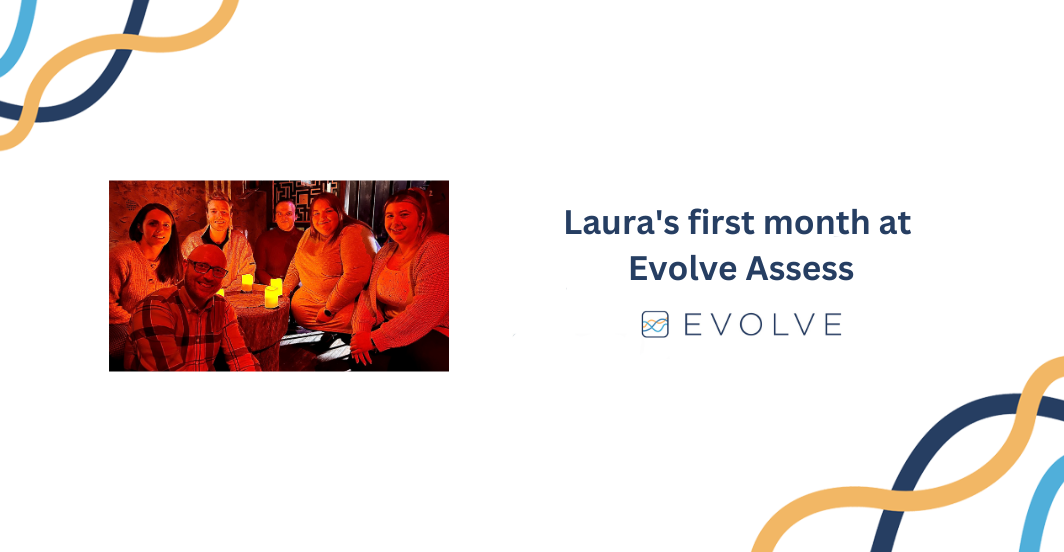
    Laura’s first month at Evolve Assess

    I started to write this blog 2 weeks ago, 2 weeks in, however I now find myself rather quickly 4 weeks into the role so wanted to come back and finish it. The reason for not finishing it as originally planned is that it is inevitably a busy time when starting a new role and I feel that starting at Evolve Assess has been no different.

    At the start of June, I joined Evolve Assess as their Customer Success Manager. I have always worked within SaaS businesses supporting customers and the move to Evolve Assess is an opportunity that I am very excited about.

    Evolve Assess is a business that I have seen grow substantially over the past 6 years. The Evolve Assess platform has been purpose built for practitioners to deliver their own online assessments – predominantly in recruitment or learning & development. We have a very unique approach to delivering online assessment solutions – recognising that every client has their own unique set of requirements, whether the solution is being used to deliver psychometrics, leadership development programmes or 360-feedback.

    My first few days were full of inductions, learning all about the platform and meeting the team – I have actually worked with some of the team previously in other businesses, and felt settled straight away. The team’s friendly faces and genuine enthusiasm made me feel like a valued member of the team right from the start. On my second day, I enjoyed a team session on ‘Positive Psychology’ delivered by Jackie Wade. We completed the VIA survey which I really enjoyed and isn’t something that I have ever completed before. Learning our individual strengths, and discussing these as part of the wider team was a really useful exercise and really does highlight how important a real mix of strengths are within a team and within a business.

    Last week, we held a team development workshop with Peter Pease, who is a business psychologist and works closely with Evolve Assess in a number of different areas. The session was really insightful and featured a hilarious half hour of using ChatGPT to help create our company values and mission statement – which resulted in wedding vows until it was corrected and steered back on track.

    It is a really exciting time to join the business; there is a brand new platform to migrate clients to, some great clients have recently signed contracts and Evolve Assess are currently working towards their ISO27001 accreditation. The new platform will bring with it a lot of new functionality and capabilities and there are lots of exciting things in the pipeline.

    I am really excited to speak with all of our clients and discuss their projects to date and also future plans. It is clear from my short time here already that Evolve Assess not only prides itself on its expertise but also places immense value on fostering a supportive and collaborative work environment. I am also looking forward to the social side, we already have a team lunch planned and the annual company BBQ!

  • Marketing Your Psychometric Services

    Marketing Your Psychometric Services

    When it comes to understanding marketing, it can be a tricky concept for some. But one of the best explanations out there comes in the form of an analogy from Allan Dib, author of the best-selling business program “The One Page Marketing Plan.” 

    Dib compares marketing to a circus: advertising is like putting up a sign that says “circus coming to town”, promotion is like walking an elephant with the sign on its back through town, publicity is like getting the local news to write a story about it, public relations is like getting the town mayor to laugh about it, sales is like showing people the different entertainment booths at the circus and getting them to spend money, and marketing is like planning the whole circus event.

    Now when it comes to marketing for psychometricians, one of the first things to keep in mind is your website. Think of it like the storefront of your business – it’s often the first thing that shows up on Google when people search for your company, it’s on your business cards and email signature, and it’s on your social media channels. Your website needs to grab attention, make it clear what services you offer, and give a reason why someone should choose your services over others.

    1. Page title:

    Your page title is an important factor in how your website will appear in search engine results. It should be an easy-to-read statement that clearly describes the content of the page and includes relevant keywords or phrases. The title should be unique and descriptive, so that it stands out among other search results.

    2. URL:

    The URL for your home page should be hosted on a secure server with a valid HTTPS certificate. For inner pages, use keywords in the URL and separate words with hyphens, this will make it easier for search engines to find your website. Example: example.com/keyword

    3. Headline: Product Hook or Promise

    Your headline should be clear and concise, stating your product hook or value proposition. It should be the first thing that visitors see when they land on your home page, and it should be easy to understand. This first 3 seconds of any visit is not the time to get clever.

    4. Subhead

    The subhead should summarise your promise and provide 3 bullet points that emphasise your 3 unique selling points or value statements. This will help to reiterate the main message of your headline and provide more details for visitors.

    5. Primary Call-to-Action (CTA)

    Your main call-to-action (CTA) should be prominently displayed on your home page, and it should be clear and easy to understand. This could be a button or a link that invites visitors to take a specific action, such as requesting a demo, scheduling a free consultation, or booking a readiness assessment. This CTA should be actionable and give visitors a clear next step in their buyer journey.”

    6. Additional Call-to-Action (CTA)

    Provide a secondary option for prospects who may not be ready to take the primary CTA, but still want to learn more about your offering before committing further time or effort. This could be in the form of “Learn More” button, “Explore Our Assessments” or “Read Case Studies” to name a few examples.

    7. Multimedia Support

    To cater to different learning styles, it’s essential to include various forms of media on your homepage such as images or videos. This way, website visitors can consume information visually, which can be more engaging and memorable.

    8. Third-Party Endorsements

    Include references or reviews from media outlets, review sites or other third-party sources that have talked about your business. This can provide an extra layer of credibility and reassurance for prospects.

    9. Customer Testimonials

    Include real-life customer testimonials, preferably with real photos, as it can provide an extra level of proof that your offering has been shown to create value for others. Testimonials that specifically mention the problems your customers have overcome with your solution are particularly effective in engaging prospects.

    10. Features and Benefits

    Outline the 3 most impactful features of your product or service and how they set you apart from the competition. Explain the value they create for customers and how they solve specific problems.

    11. Educational Resources or Content CTAs

    Offer helpful, useful or interesting content such as guides, templates or courses. This will help to keep prospects engaged and mindful of the challenges they’re facing. Promote a helpful, friendly and educational relationship between your business and the customer, rather than a traditional buyer-seller arrangement.

    12. User-Friendly Navigation

    Ensure that your homepage is simple and easy to navigate, regardless of the device used to access it. Prioritise the most useful content for customers when browsing on mobile devices, as not everyone will be accessing your site on a laptop or desktop.

    In today’s fast-paced and digitally-savvy world, consumers are constantly seeking information that is both instant and engaging. Content marketing has emerged as a key discipline that allows businesses to connect with their target audiences and provide them with valuable and relevant information.

    1. Consumers are always searching for information that is helpful, useful and interesting. This can be anything from answers to their questions, new ideas and inspiration, or referral and recommendations from peers and people they know and trust.
    2. They turn to the internet as the primary source of information and use search engines to find the answers they need.
    3. They are always looking for new and innovative ways to solve problems and improve their lives.
    4. They rely on the opinions and recommendations of others to make informed decisions.
    5. They are constantly seeking to learn and discover new things, whether it’s through education or research.
    6. They seek evidence and research to back up claims made by businesses.

    When you create powerful content that answers the questions your customers are asking, internally or externally, you will naturally appear higher in search engine results pages. The more helpful and informative your content is, the more likely it’s that visitors will engage with your brand and build trust in your business. 

    Your content is the fuel for conversations and the key to progressing a sale and making an introduction to position your message with a new contact. Whether it’s for entertainment, explanation, education or information, content is everything you see on a screen, in your email, or on your smartphone. It’s an essential tool to drive traffic to your website, generate leads, progress conversations and educate customers.

    The Content Audit:

    Creating a comprehensive library of content can seem daunting, especially for small teams. However, it’s important to remember that you likely already have a wealth of content at your disposal, ready to be utilised and shared with your audience.

    To begin your content audit, the first step is to conduct a thorough search of all existing materials. This can include:

    • PDFs on your website
    • PowerPoint decks, Word Documents, and other files on your computer and in shared folders such as Sharepoint or Dropbox
    • Content attached to sales and marketing emails
    • Questions asked by prospects during the sales process and the answers provided
    • Images such as PNGs and JPGs
    • Webinar recordings and pitches recorded as MP4s
    • Presentations, product roadmaps, and explainer videos and demos created by product managers, customer success teams, and sales
    • Proposals, which often contain a combination of problems and solutions
    • Customer correspondence, looking for common questions and responses

    Once you have gathered all relevant materials, the second step is to organise them into a single folder on your computer for easy access and reference. This will help you to have a better understanding of the content that you already have and can be used to identify gaps in your library that need to be filled.

    Organise and Analyse Your Content

    To effectively utilise all the content you’ve gathered in the previous step, it’s important to organise and analyse it. One way to do this is by creating a content audit form.

    The form should include the following elements:

    • A link to the file’s location in the cloud or on your computer
    • The name or title of the asset
    • The topic or main theme it covers
    • The product or service it relates to
    • The target persona or audience it’s intended for
    • Whether it’s suitable for publishing on your website, blog, or social media channels
    • Whether it can be edited or updated
    • Where it fits in the awareness, conversion, engagement, and delight stages of the sales process
    • Additional ideas or ways it can be repurposed

    By filling out this form for each piece of content, you’ll be able to get a comprehensive overview of your content library, including the topics covered, how it can be used, and where it’s most effective in the sales process. The results can be compiled in a spreadsheet for easy reference and analysis.

    As you create valuable content that addresses your prospects’ specific needs and challenges, you can use it as a valuable tool to build trust and keep the conversation going with them. By offering helpful and informative resources in exchange for their contact information, you can engage in targeted marketing efforts and gain valuable insights into their pain points. 

    By understanding what drives them to take action, you can continue to create content that resonates with them and addresses their unique needs. This can be a powerful way to build lasting relationships and drive conversions.

    Partner Marketing

    When it comes to scaling your business and reaching new audiences, partnering with other organisations can be a valuable strategy. In the field of psychometrics, this may include certifying individuals to deliver your tools or working with companies that can refer their own customers to your services. To effectively build out a partner channel, consider the following steps:

    Clearly define your ideal partners: Consider what qualities and characteristics make an organisation a good fit for your business and what you hope to gain from the partnership.

    Understand their motivations: Consider what drives potential partners to want to work with you. Is it to grow their business, expand their product offerings, or increase their network?

    Develop an onboarding program: Create a program that includes training, documentation, and resources to help new partners effectively sell and represent your product or service.

    Establish qualifying criteria: Determine what qualifications, industry expertise, and network connections are necessary for a potential partner to be a good fit for your business.

    Identify the right sales and go-to-market channels: Consider which partners will be most effective at selling your product and how to best support them in this effort.

    Provide the necessary training and support: Determine what resources and support partners will need to be successful in representing your business.

    Consider regional differences: Assess whether different regions require different types of partners or expertise.

    Determine strategic vs. transactional partnerships: Decide which partners will be long-term, strategic partners and which will be more transactional, one-off partners.
  • Leveraging Technology to Expand Your Psychometric Business

    Leveraging Technology to Expand Your Psychometric Business

    As a psychometrician, you have a wealth of knowledge and experience that you bring to your clients. You understand the value of providing the right assessments and interventions to help them reach their goals and improve their performance. 

    However, the competitive landscape is constantly changing and technology is becoming increasingly important to stay ahead of the curve. In this blog post, we’ll explore the benefits of leveraging technology to build new service offerings and grow your business.

    The Importance of Technology in Your Business

    Technology is the cost of entry these days for any profession. It’s critical that you have access to the latest technology to win new business, retain your existing clients, and establish long-term revenue streams. If you can’t stay current, why should your clients stay with you? 

    By incorporating technology into your offerings, you can differentiate yourself from your competitors, provide better value to your clients, and build long-term engagement.

    Building Long-Term Customer Engagement Models

    By combining your services with a Software as a Service (SaaS) technology such as Evolve Assess, you can build long-term customer engagement models that will keep your clients coming back. By providing ongoing support, maintenance, and upgrades, you can ensure that your clients have the latest technology and are getting the best value for their money. This can also help you move to a service retainer contract, where you bundle your services and technology together for a monthly or annual fee.

    Generating New Revenue Streams

    Incorporating technology into your offerings can also help you generate new revenue streams. By productising your assessments, you can scale your business and reach more clients. You can even start your own partner channel and reach a global audience. By leveraging technology, you can build a competitive advantage that is hard to copy and keep your competitors at bay.

    The Benefits of Evolve Assess

    We at Evolve Assess understand the importance of technology in the success of psychometric assessments. That’s why we’ve developed a platform that provides real-time insights, analysis, and support to help you succeed. Here are just a few of the ways in which our platform can help you grow your business:

    Dashboard-Based Analysis

    Our platform provides dashboard-based analysis that can help you produce metrics, track trends, and identify key issues. With real-time insights, you can impress your clients with their staff’s strengths and skill gaps, and provide tailored learning interventions and development plans. You can even leverage aggregated data to provide individual and group insights whenever you need them.

    Uncovering Raw Assessment Data

    Our platform also provides access to raw assessment data, which can help you ensure that your assessments are not adversely impacting certain groups. With this information, you can keep diversity, inclusion, and equity in mind when developing your assessments and interventions.

    Support from the Evolve Assess Team

    At Evolve Assess, we believe in partnerships, and we’re fully committed to supporting you in growing your business. Our team is available to answer technical and security questions, provide technical demonstrations of the platform, and provide technical documentation. We’ll even join you on client sales calls to answer any questions they may have.

    Every client at Evolve Assess has a dedicated Client Success Manager, who will take responsibility for the relationship between our organisations. Your CSM will provide a completely personalised service, share usage data, and provide strategic planning support. We can even collaborate on joint marketing campaigns to maximise exposure for your psychometric tool.

    Setting Up Trial Support: A Key Ingredient for Success

    If you’re looking to expand your psychometric business, then offering a trial version of your services can be a key factor in helping you win new customers. This is where the Evolve Assess team comes in to play a crucial role.

    At Evolve Assess, we understand that it’s important for potential clients to see what you can do and what kind of value you can provide, before they make a commitment. That’s why we offer complimentary credits for the trial period, to help you get those deals over the line.

    This trial support will give you the chance to demonstrate your skills and expertise in a real-life scenario. You’ll be able to show how your assessments can impact your clients’ businesses positively and help them achieve their goals.

    Dedicated Client Success Manager: A Personalised Service Tailored to You

    Another key factor in the success of your psychometric business is having a dedicated Client Success Manager (CSM). Every client at Evolve Assess has a CSM, whose job it is to take responsibility for the relationship between our organisations and provide a completely personalised service tailored to your needs.

    The CSM will be your point of contact for regular catch-ups, usage data sharing, strategic planning support, and more. They’ll work closely with you to ensure that your success is their success, and that you get the most out of your partnership with Evolve Assess.

    Joint Marketing: Maximising Exposure for Your Psychometric Tool

    Finally, another great way to grow your psychometric business is by collaborating with Evolve Assess on joint marketing campaigns. This will give you the opportunity to reach a wider audience and showcase your tool to a broader range of potential customers.

    We’re more than happy to collaborate on joint articles, whitepapers, co-branded materials, webinars, guest blogging and speaking engagements. By working together, we can maximise exposure for your psychometric tool and help you achieve the growth and success that you’re looking for.

    Leveraging technology is crucial to the success of any psychometric business.

    By partnering with Evolve Assess, you’ll have access to the latest technology and a team of experts who are dedicated to your success. From dashboard-based analysis to trial support and joint marketing campaigns, we’re here to help you build a thriving psychometric business that provides value to your clients and generates new revenue streams for you. Get in touch with us today to find out more about how we can help you grow your business.

  • Selling Your Psychometric Services

    Selling Your Psychometric Services

    The Sales Process

    The sales process is a crucial aspect of any business, even more so for service based businesses like those of psychometricians, it serves as the foundation for converting potential customers into actual ones.

    An effective and well-defined sales process is essential for ensuring reliable and predictable revenue streams. Having a clear sales process in place enables a smooth onboarding and training process for new members of your team with business development responsibilities.

    A comprehensive sales process should be established for your business that outlines each stage of the buyer’s journey, providing insights and key information to assist in answering any questions or concerns that may arise during the process.

    It’s important to note that the sales process is not static, but rather one that should be continually reviewed and updated. Incorporating new insights and learnings from the experiences of those who sell within your business is crucial for maintaining a successful and effective sales process.

    You may already have a sales process established – this may or may not be documented. However, for those of you who have not taken the time to consider your sales process, here is an overview of our own template:

    1. Prospecting
    2. Discovery
    3. Sales meeting/solution presentation
    4. Proposal/Quotation
    5. The close
    6. Account management

    1. Prospecting

    As a business psychologist or psychometrician looking to grow your business, prospecting is a key component of acquiring new clients.

    Prospecting can often be done remotely, including through phone calls, email correspondence, or leveraging social media platforms such as LinkedIn. It may be beneficial to utilise a combination of these methods, as different prospects may have different communication preferences and utilising multiple channels increases the likelihood of reaching them. 

    Additionally, using a combination of methods allows you to tailor your approach based on the specific prospect and their needs. For example, a LinkedIn message may be more appropriate for a C-level executive, while an email may be more effective for a department manager. 

    Prior to initial contact, it’s important to conduct thorough research on the prospect’s organisation and potential challenges they may be facing in order to tailor your approach and value proposition accordingly.

    2. Discovery

    Assessing fit, or the discovery stage, is an essential step in the sales process as it allows you to determine if there is a viable business opportunity between your organisation and that of your prospect. The primary focus of this stage should be on gaining a deep understanding of the prospect’s needs and pain points, and determining if your company’s solutions can effectively address them.

    In the past, the discovery process was typically conducted through a series of phone calls and meetings. However, in today’s hybrid world, virtual platforms such as Zoom or video chat have become increasingly popular among prospects. Utilising these platforms allows for a more efficient and convenient discovery process.

    The discovery process is also an excellent opportunity to gain insight into the prospect’s position in the market, as well as their current challenges, desired outcomes, and implementation timelines. By gathering this information, you can better tailor your solutions and value proposition to meet the specific needs of the prospect.

    3. Sales meeting/solution presentation

    After a thorough assessment of business fit and qualification of the prospect as a viable opportunity, the next step is to present your solutions through a sales meeting or product demonstration. This is typically the stage where you will “pitch” your offerings to the prospect.

    In today’s hybrid environment, it’s common for this stage of the process to be conducted remotely. Utilising virtual platforms such as Zoom or MS Teams allows for easy screen sharing, enabling real-time presentations of slide decks or software demos.

    When presenting your solutions, it’s crucial to focus on addressing the specific pain points and needs identified during the discovery stage. Additionally, incorporating interactive elements such as asking questions and encouraging active participation from the prospect will help them visualise how your solutions can benefit and be applied within their organisation.  Here some example questions to try during the process:

    1. What specific challenges or pain points are you currently facing in your organisation?
    2. How do you currently address these issues?
    3. How would our solutions align with your organisation’s goals and objectives?
    4. What specific results or outcomes are you looking to achieve with our solutions?
    5. How do you envision our solutions fitting into your current workflow or processes?
    6. Are there any specific features or capabilities that are important for your organisation?
    7. How do you see our solutions impacting the performance of your team or department?
    8. Are there any concerns or reservations you have about our solutions?
    9. Are there any other stakeholders who need to be involved in the decision-making process?

    4. Proposal/Quotation

    Creating a Proposal/Quotation

    After a successful sales meeting or solution presentation, it’s often necessary to provide a written proposal or quotation to the prospect. This serves as a formal document that summarises the understanding of the prospect’s situation and how your product or service can assist in addressing their challenges.

    It’s essential to include specific details of the deliverables that you are committing to provide and the associated costs. This will help the prospect to better understand the scope of the proposed solution and make an informed decision.

    The proposal or quotation should be tailored to the specific needs of the prospect and the solutions presented in the previous stages of the sales process. It should clearly highlight the value and benefits of your solution and how it will help the prospect achieve their desired outcomes.

    5. The close  

    Finalising the Sale

    The final stage of the sales process, commonly known as “the close,” is arguably one of the most critical. There are various techniques and strategies that can be employed to successfully close a sale, and it’s important to determine which approach is most appropriate for your particular solution and prospect. Experimentation may be required to find the most effective approach.

    It’s worth noting that a collaborative approach throughout the sales process can facilitate a more natural close. When the buyer feels understood and their needs are met, they are more likely to proceed with the purchase. The close is typically confirmed by the exchange of contracts or the receipt of a Purchase Order (PO) number from the new customer.

    Here are a couple of examples from authors who have written specifically about closing techniques:

    “The Ben Franklin Close” by Anthony Iannarino – This technique involves presenting the prospect with a pros and cons list of making a purchase to help them weigh the decision.

    “The Assumptive Close” by Brian Tracy – This approach involves assuming that the prospect is going to make a purchase and taking the necessary steps to move forward with the sale.

    “The Alternative Close” by Steve W. Martin – This technique involves presenting the prospect with a choice between two options, one of which is the desired outcome, to guide them towards the desired decision.

    6. Account management – Customer Retention and Growth:

    Maintaining strong relationships with your customers is crucial for securing repeat business and growing your customer base. Having a well-documented account management process that focuses on fostering and building customer relationships can help you stay on track.

    Effective account managers often use account plans that include a set of key performance indicators (KPIs) for each customer account. These KPIs can include:

    Establishing multiple stakeholder contacts within the customer organisation, to ensure continuity of service in case of personnel changes. This can help you to maintain a reliable point of contact and avoid disruptions in service delivery.

    Setting a target for the minimum number of proactive communications with the customer. Depending on the nature of your business, this could be weekly, monthly or quarterly. By staying in regular communication with your customers, you can ensure that their needs are met and that they are aware of any new products or services that may be of interest to them.

    Defining a revenue target for each customer account, based on the expected additional revenue to be generated within a given time period (usually a year). By setting revenue targets for each customer account, you can track your progress and make adjustments to your account management strategy as needed to ensure that you are meeting your revenue goals.

    Ensuring that your customers are receiving the service they expect and fulfilling the promises made during the sales process is crucial for maintaining customer loyalty. An effective account management process can help to achieve this.

    Providing exceptional account management can lead to repeat business from satisfied customers, who may also introduce you to other contacts or divisions within their organisation. This can provide opportunities for new sales and expansion within existing accounts.

    It can be beneficial to review and rerun the sales process with existing customers, as they may be open to new products or services that were not relevant to them at the time of their initial purchase. For example, after 12 months of implementing a solution, it may be beneficial to reach out to the customer and gather feedback and observations from end-users. This can be an excellent opportunity to identify new areas for growth and improvement within the account.

    Gathering feedback and observations from end-users can provide valuable insights that can help to improve the service and product offering for existing customers. We can often provide additional recommendations or make adjustments to how you use our services and products to show you where step-change improvements can be made.

    Implementing this approach with existing customers can also help to establish good, repeatable habits that can be applied to new prospects. Sales is always about solving problems and delivering value, and incorporating this approach can help to ensure that customer needs are continuously met. 

    The template above can serve as a good starting point for defining your own sales process. However, you may already have a sales process in place, but simply may not be aware of it.

    When developing your sales process, it’s helpful to keep the end goal in mind and work backwards. Analyse past successful opportunities from the last 3 years, and look for patterns. Utilise your CRM system, if you have one, to examine the length of time spent in each stage of the sale. Identify commonalities and differences between buyer personas and your sales process, and document each step.

    CRM software company HubSpot offers a useful template structure to assist you in mapping out your current sales process and identifying areas for improvement. 

    With a clear and effective sales process in place, you’ll be well-equipped to close more deals and drive growth for your business.

  • The Benefits and Drawbacks of 360-degree Feedback

    The Benefits and Drawbacks of 360-degree Feedback

    360 feedback, also known as 360-degree feedback, is a method of performance evaluation in which an individual receives feedback from multiple sources, including superiors, peers, and subordinates. This type of feedback can provide valuable insights into an individual’s strengths and areas for improvement, but it also has its drawbacks. It’s important to be aware of these benefits and drawbacks before starting your first 360-degree feedback campaign.

    BENEFITS

    Benefits of 360 feedback:

    1. Provides a well-rounded perspective: By receiving feedback from multiple sources, individuals can gain a comprehensive understanding of their performance from different perspectives.
    2. Identifies blind spots: Often, people are unaware of certain behaviours or actions that may be negatively impacting their performance. 360 feedback can bring these blind spots to light, allowing individuals to address them.
    3. Improves self-awareness: The feedback received through 360 evaluations can help individuals understand their own strengths and weaknesses, leading to improved self-awareness and self-development.
    4. Facilitates communication and collaboration: 360 feedback can promote open and honest communication among team members, as well as a culture of collaboration and support.

    To take advantage of the benefits of 360 feedback outlined above, learning, development and engagement managers can take the following steps:

    • Establish clear goals: Setting clear and measurable goals for the 360-degree feedback process will help to ensure that the feedback received is aligned with the organisation’s objectives and that the individual receiving feedback knows how to use it to improve their performance.
    • Encourage participation: Encouraging participation from all levels of the organisation will ensure that the feedback received is well-rounded and comprehensive. This can be achieved by clearly communicating the benefits of the process and ensuring that all employees understand the role they play in the process.
    • Regularly review and act on feedback: Reviewing and acting on feedback on a regular basis will ensure that the feedback received is relevant and actionable, and it will demonstrate the organisation’s commitment to continuous improvement.
    • Use feedback software: Using feedback software will ensure that the process is streamlined and efficient, and it will also provide valuable metrics and insights on the performance of the organisation and the individuals.
    • Provide follow-up support: Providing follow-up support, such as coaching or mentoring, will help the individual receiving feedback to understand, process and act on the feedback received.
    • Track progress and measure success: Tracking progress and measuring success will help to ensure that the feedback received is leading to real improvements in performance, and it will also provide valuable insights on what is working well and what areas need improvement.

    DRAWBACKS

    Drawbacks of 360 feedback:

    1. Can be time-consuming: Gathering feedback from multiple sources can be a time-consuming process, both for the individual receiving the feedback and for those providing it.
    2. Can be subjective: Feedback is inherently subjective, and the opinions of those providing feedback may not always align.
    3. Can lead to defensiveness: Some individuals may react defensively to negative feedback, which can impede progress and hinder communication.
    4. Can lead to bias: Without proper training, some people may not be able to provide feedback in an unbiased manner, which can be a problem if it is not addressed.

    To help mitigate the drawbacks of 360 feedback, there are several solutions that organisations can implement:

    • Train providers on how to give feedback: Providing training on how to give feedback in a constructive and unbiased manner can help ensure that the feedback received is accurate and useful.
    • Use a standardised evaluation tool: Using a standardised evaluation tool can help ensure that feedback is consistent and objective across all sources.
    • Limit the number of feedback providers: To avoid overwhelming the individual receiving feedback and to minimise the potential for bias, organisations can limit the number of feedback providers to a manageable number.
    • Encourage open communication: Encouraging open communication between the individual receiving feedback and those providing it can help to mitigate defensiveness and promote a culture of collaboration and support.
    • Provide follow-up support: Providing follow-up support, such as coaching or mentoring, can help the individual receiving feedback to process and act on the feedback received.
    • Make feedback anonymous: Making feedback anonymous can help to ensure that the individual providing feedback is more honest and candid in their feedback and also reduce bias.
    • Assign a facilitator: Assigning a facilitator to oversee the feedback process can help to ensure that the feedback received is accurate, unbiased, and actionable. The facilitator can also help to address any concerns or issues that may arise during the process.
    • Make sure feedback is timely: Feedback is most useful when it is given in a timely manner. Organisations can implement a schedule for giving and receiving feedback to ensure that it is provided when it is still relevant and actionable.

    By implementing these solutions, organisations can help to ensure that the feedback received through 360 evaluations is accurate, unbiased, and actionable while minimising the potential for defensiveness and other drawbacks.

    Overall, 360 feedback can be a valuable tool for improving performance and facilitating self-development. However, it is important to keep in mind its drawbacks and implement it in a way that promotes open communication, collaboration, and unbiased feedback.

  • The Benefits and Drawbacks of Pre-hire Assessments

    The Benefits and Drawbacks of Pre-hire Assessments

    Pre-hire assessments, also known as pre-employment assessments, are a popular tool used by employers to evaluate job candidates before extending an offer of employment. These assessments can include aptitude tests, personality tests, and skill assessments. Before evaluating whether recruitment assessments are a good fit for your organisation, it’s important to understand why hiring managers find them useful, along with the challenges they encounter when implementing them as part of the recruitment process.

    BENEFITS

    Benefits of using pre-hire assessments include:

    • Increased objectivity: Pre-hire assessments can help employers make more objective hiring decisions by providing a standardized way to evaluate candidates. This can reduce the risk of bias and ensure that all candidates are evaluated based on the same criteria.
    • Better candidate fit: Pre-hire assessments can help employers identify candidates who possess the skills, abilities, and personality traits that are necessary for success in a particular role. This can lead to a better fit between the employee and the job, which can improve job satisfaction and performance.
    • Reduced turnover: By identifying candidates who are a good fit for the job, pre-hire assessments can help reduce turnover rates. This can save employers money and reduce the time and resources that are needed to recruit and train new employees.

    To make the most of the benefits of pre-hire assessments, employers can take the following steps:

    • Use appropriate assessments: Employers should choose pre-hire assessments that are appropriate for the job and the skills and abilities that are required for the role. This can help ensure that the assessment results are relevant and useful for making hiring decisions.
    • Use results as one part of the overall evaluation: Pre-hire assessments should be used as one piece of information in the overall evaluation of a candidate. Employers should take into account the candidate’s overall qualifications, experience, and references, as well as the results of the pre-hire assessment, when making hiring decisions.
    • Provide training and development opportunities: Employers can use the results of pre-hire assessments to identify areas where candidates may need additional training or development. By providing these opportunities, employers can help candidates improve their skills and be better prepared for the job.
    • Monitor and evaluate the effectiveness of assessments: Employers should monitor and evaluate the effectiveness of their pre-hire assessments over time. They should track the performance of employees who have been hired using pre-hire assessments and use this information to make any necessary adjustments to the assessment process.
    • Use pre-hire assessments in combination with other tools: Pre-hire assessments should be used in combination with other tools such as interviews, reference checks and work samples. This can provide a more comprehensive view of the candidate and help employers make more informed hiring decisions.
    • Communicate the process clearly: Clearly communicate the pre-hire assessment process to candidates, including what they will be assessed on, how it will be administered and how results will be used in the hiring process. This can help ensure that candidates are aware of what to expect and can better prepare for the assessment.

    By taking these steps, employers can make the most of the benefits of pre-hire assessments and use them to make more informed, objective hiring decisions that lead to improved job performance and reduced turnover.

    DRAWBACKS

    Drawbacks of using pre-hire assessments include:

    • Limited scope: Pre-hire assessments can only assess a limited set of skills and abilities. They may not take into account other factors that are important for job performance, such as motivation, work ethic, or creativity.
    • Potential for bias: While pre-hire assessments can help reduce bias, they are not always free from bias themselves. Test developers and administrators may inadvertently introduce bias into the assessment process.
    • Cost: Pre-hire assessments can be costly to administer and score. Employers may have to pay for the assessment itself, as well as the time and resources needed to administer and score it.

    To mitigate the effects of the drawbacks of pre-hire assessments, employers can take the following steps:

    • Use multiple assessment methods: To get a more comprehensive view of a candidate, employers should use a variety of assessment methods, such as interviews, reference checks, and work samples in addition to pre-hire assessments. This can help employers assess a candidate’s full range of skills and abilities.
    • Address potential sources of bias: Employers should be aware of potential sources of bias, such as test format or language, and take steps to eliminate or minimize them. For example, employers can use assessments that are available in multiple languages to ensure that non-native speakers are not at a disadvantage.
    • Evaluate results in context: Pre-hire assessments should be used as one piece of information in the overall evaluation of a candidate. Employers should take into account the candidate’s overall qualifications, experience, and references, as well as the results of the pre-hire assessment, when making hiring decisions.
    • Provide feedback to unsuccessful candidates: When a candidate does not pass a pre-hire assessment, employers should provide feedback on areas where the candidate needs improvement. This can help the candidate improve their skills and be better prepared for future job opportunities.
    • Regularly review and update assessments: Employers should regularly review and update their pre-hire assessments to ensure they remain relevant to the job and do not contain any outdated or irrelevant questions.
    • Consider cost-benefit: Employers should consider the cost of pre-hire assessments in relation to the potential benefits. They should weigh the cost of administering and scoring the assessment against the potential benefits, such as reduced turnover and improved job performance.

    By taking these steps, employers can reduce the potential drawbacks of pre-hire assessments and use them as an effective tool in the hiring process. It’s also important to note that pre-hire assessments should be used in compliance with legal and ethical guidelines and laws.

    Pre-hire assessments can be a valuable tool for employers when used as part of a comprehensive hiring process. They can provide employers with objective information about candidates and help identify those who are a good fit for the job. However, pre-hire assessments have limitations, and employers should be aware of the potential drawbacks when using them. It’s important to use pre-hire assessment as a tool, not the only tool in the hiring process.

  • How To Scale Your Psychometric Service: Building A Value Proposition

    How To Scale Your Psychometric Service: Building A Value Proposition

    Building a company, department, division or even a personal brand is tough. Not only do you have to put in a tremendous amount of work to get it off the ground, you also need to look after your customers, go to market effectively, make all the right promises, differentiate yourself, and, of course, make a profit!

    In this 7-part blog series, we’ll break down some of the elements that go into scaling a psychometric service.

    1. Mastering a Clear Value Proposition

    What is a value proposition?

    It’s the promise you make to your customers – the value you are committing to deliver to them. 

    Typically, a value proposition is defined by an organisation’s founding members. These are the people who hold the passion and vision of the company and have a clear view and understanding of its value.

    It’s hugely important to fully understand the value that your company is providing, and how you can effectively communicate that value with both internal and external stakeholders. For companies that are looking at creating a value proposition, we strongly recommend answering the following key questions:

    1. Who am I trying to sell to?
    2. What customer problems do I solve? How do I stand out?
    3. Why do my existing customers work with me?

    Once you’ve answered these questions, take a moment to sense-check that others would recognise you by this statement.

    How can I formulate my own value proposition?

    A typical value proposition is created using the following formula: 

    For [Target client/industry]
    Who [Statement of need or opportunity],
    Our product is a [Product name/description]
    That provides [The value you provide]
    Unlike [Reference to competition]
    Our product [Statement of differentiation/features]

    Here’s an example of a value proposition created with this formula:

    For internal recruitment teams who are frustrated by high staff attrition rates and poor‑quality new recruits, our sales-focussed psychometric assessment highlights strong candidates and removes poor-fit candidates with a robust, measurable, and repeatable assessment process. Unlike our competitors, we only focus on assessing salespeople.

    When creating your value proposition, it’s important to use clear, succinct, and
    accurate language. This will make it straightforward to convey to stakeholders, and far easier for everyone to understand and remember!

    Making the Vision a Reality 

    In his programme Traction, Gino Wickman suggests that the more clearly defined an
    organisation’s vision is, the more your employees can make it happen.

    Wickman formulated a list of statements relating to organisational vision, that companies can grade themselves against. The higher the grade, the more likely the success:
    Here are the statements. Go through each one and rank your company 1-5 (‘1’ being weak and ‘5’ being strong). Why not take it to your next management meeting and make it a collaborative exercise!


    • We have a clear vision in writing that has been properly communicated and is shared by everyone in the company.


    • Our core values are clear, and we are hiring, reviewing, rewarding, and firing around them.


    • Our core business is clear, and we keep our people, systems, and processes aligned and focused on it.


    • Our target market and our definition of our ideal customer are clear and our marketing and sales efforts are focused on it.


    • Our 3 unique differentiators are clear and all of our marketing and sales efforts
    communicate them.


    • We have a proven process for doing business with our customers. It has been named and visually illustrated, and all of our salespeople use it.


     We have systems for receiving regular feedback from customers and employees.

    2. What Problems Are You Solving?

    Remember, sales is always only ever about solving problems, and this is always what buyers are looking to achieve. Can you write down the problem(s) you’re solving?

    Here are a few problems that we know exist to which the solution is online assessments.

    For example, are you helping your customers:

    • Reduce staff turnover?
    • Recruit better-fit employees?
    • Free up management time in early interview stages?
    • Provide a fixed, repeatable, and scalable framework environment for running
      assessments?
    • Give management a way to evaluate people for promotion or bonuses and
      compensation?
    • Providing partners with a tool kit to grow their own businesses?

    Once you understand what problems you’re solving, you’ll be able to build your product, make decisions on how to support the service, change your website to reflect the promises you’re making, and start to blog to be helpful, useful, and interesting.

    3. Foster Sustainable Growth Without Neglecting Your Value Proposition 

    When you successfully communicate a strong value proposition to your prospects, growth will often follow. Of course, it’s not guaranteed, and it’s certainly not permanent; there are, however, a few ways to promote sustainable growth:

    1. Focus on the right markets
      It is vital to ensure that you are focusing on the right markets for your business. Your value proposition should help keep you on track. Take some time to check that you’ve thought of all the markets your product/service aligns with. Missing a key customer segment, geography, adjacent category, or service could be catastrophic.
    2. Review your business model
      In order to maximise growth and profit, you might consider changing product, finding new market segments or making adjustments to pricing. However, before you embark upon that journey – have you fully explored if the business model you currently adopt (or intend to adopt) is really the best one for you and your customers?
      We’ve all experienced the ‘subscription revolution’ over the past few years: it’s a model we’ve all become accustomed to. This could certainly be worth exploring for your organisation.
      Adopting a subscription model for your products and services could be potentially far more lucrative than investing time and resources into building new products. Successful brands like Netflix and Spotify are subscription services that pioneered this business model within their industries. Whole industry business models such as Software-as-a-Service (SaaS) have now emerged and become the norm.
      Have you fully considered the ways in which customers are purchasing your products and services? Can you find a better, more suitable model for your customers? How would using this model affect your bottom line?
      Here’s an important question to consider:
      “If you were to compete against yourself from tomorrow, what would you do differently to compete?”
    3. Build from customer needs, not existing products
      Don’t try to shoehorn existing products into new markets – they often don’t fit. Instead, think about what customers in different markets really need. It’s important to take the time to fully understand the problems and challenges customers face, and then consider the best ways of solving them; business is only ever about solving people’s problems!
      Start to think about how your product or service makes your customers’ lives easier in very clear, specific ways – not just its features.
      When your product is built with solving customer problems in mind, you’ll provide a much more relevant overall solution to their challenges and aspirations, and in turn, they’ll be able to extract more value from your offering.
  • Why is Competency Assessment Important?

    Why is Competency Assessment Important?

    Staff development has always been a hot topic in the corporate world – and for good reason: highly-developed equals high-performing organisation. This is not a new concept! That said, we’re seeing an increasing number of organisations invest more resources into this concept.

    Businesses are keen to ensure their employees’ skillset and knowledge align with the strategic plan of the organisation. A powerful way of identifying the level of employee skill and knowledge is to incorporate competency assessment throughout the employee lifecycle. 

    Let’s begin by looking at what  “competency assessment” means?

    Before that, it would be useful to outline what we mean by a “competency”. In a workplace setting, competencies represent broad combinations of knowledge, abilities and skills that work towards predicting job performance. Competencies are very unique to individual organisations: one company’s key competencies may be irrelevant for another company.

    Many organisations group their competencies into what are known as ‘Competency frameworks’. This is a model that groups together the agreed core competencies of an organisation. Competency frameworks have been widely used to help focus employees on the desirable skills required in a role and drive them towards success.

    Once competencies have been established by an organisation, and categorised within a framework, they can be effectively assessed against.

    Competency assessments can be used to support with both recruitment and development – and can be done at both an individual and team level.

    skills-1

    Diagnostic competency assessment

    Many organisations decide to implement a diagnostic assessment in advance of staff training programmes. This allows the member of staff to complete an assessment which has been structured by competency, to effectively identify skill gaps. These types of assessments can be used to provide tailored learning interventions based on a specific set of skill gaps that have been identified in the assessment – rather than placing every learner on a highly-generic training programme.

    Post-training assessment

    Another way of effectively utilising competency assessment, is by ensuring learners sit this assessment upon completion of a training programme/course. Using an assessment upon completion of training, has been proven time and time again to far better increase learners’ knowledge retention than if they had not sat an assessment at all.

    Why choose Competency Assessment?

    • Identifying skills gaps

    A lot of organisations are often unaware of the true quantity of the skill gaps within their employees, although they know they exist, therefore are unable to genuinely prioritise and target them when devising strategies. After all, if you don’t know what you are facing, how can you truly make an informed decision on how to conquer it?

    • More effective management

    When leaders within the organisation better understand what their employees require to succeed, they can better manage the stronger qualities within their teams. Knowing the required skills for particular roles allows leaders to create the most efficient teams, matching employees by their strengths that best complement one another.

    • Continued staff development

    Competency assessment gathers more insightful data, which allows skill gaps to be identified thus allowing for the correct action to be taken in terms or upskilling staff – thus improving the overall training strategy. It should be noted that in order to truly drive ongoing development within an organisation, it is vital to create a cycle of assessment, action, reassessment, and further action in order to get a current insight on capabilities. This cycle allows for a far higher volume and quality of development opportunities.

    • Allowing anticipation of market opportunities

    When an organisation understands the skills and capabilities its employees possess, it can better respond to trends and demands within their sector. By implementing a strong competency framework, and the means to assess competency, organisations can better plan and take advantage of potential opportunities.

    • Assisting the recruitment process

    The use of a competency assessment within the recruitment process provides insight into a candidate’s current capabilities and points of development, as well as providing clarity in the requirements of the job for both recruiter and candidate. Competency assessment provides a standardised selection process, as the same metrics are used to assess all candidates applying for the same position, as well as minimising hiring errors as it reduces the risk of job-irrelevant characteristics affecting the hiring decisions.

    • Increasing job satisfaction and reducing attrition

    Competency assessment can help to motivate and engage employees as it provides an excellent opportunity to recognise their current skills and knowledge and further empower them to take ownership of their professional development. The more competencies they develop, the more valuable they will regard their abilities, likely leading to higher job satisfaction therefore reducing the attrition rate.

    The growth of an organisation ultimately relies on individual progress. Whether it’s discovering skill gaps within the workforce, identifying potential opportunities, or improving the recruitment process, implementing competency assessment provides numerous benefits for an organisation towards continuous development and growth.

  • Optimising the Sales Process for Businesses Selling Psychometric Assessments

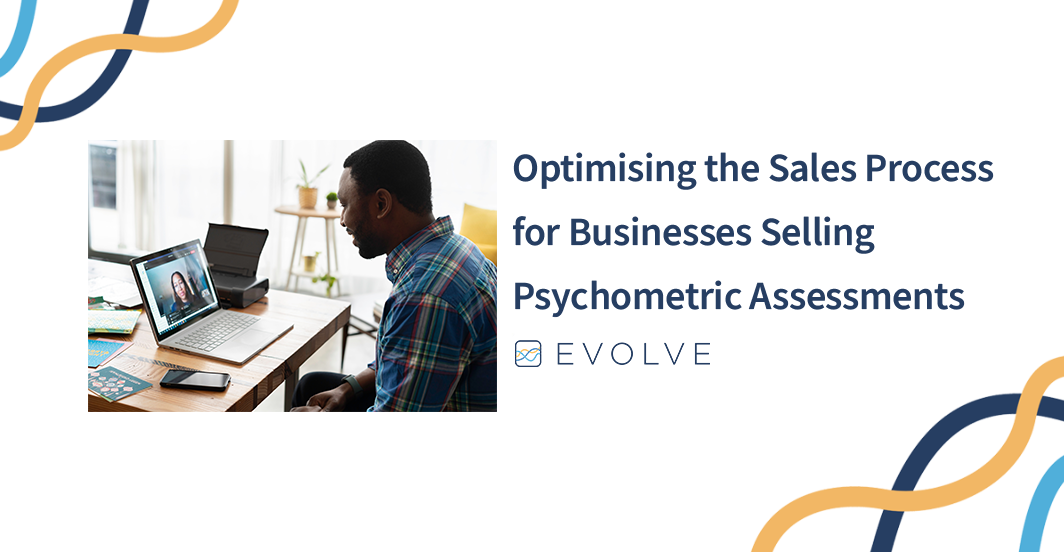
    Optimising the Sales Process for Businesses Selling Psychometric Assessments

    Whether or not you already have a documented sales process for selling psychometric assessments can depend on a number of factors; the size of your business; having a salesperson or team in place; having product or service packages to sell.

    If you’re a small independent business, your sales process might be as simple as finding people on LinkedIn or at events that have the right job title or challenges you can solve, book a meeting and sell your product or services – if this works, that’s great! But as you scale your operations and the volume of psychometric assessments and consulting you sell increases, you might need an optimised sales process that any salesperson can pick up and run with. 

    To optimise your sales process, consider how well thought out the following 6 phases are and how they fit your organisation:

    1) Prospecting

    Prospecting is essentially finding the people that could buy your product or services – it’s your prospective customers. 

    It’s common for this part of the process to be done remotely through phone calls, email and LinkedIn messaging. How you choose who might be a suitable prospect usually depends on your buyer personas and target audience – whether that’s based on the challenges or even job titles in certain size companies.

    For example, you might start by searching for recruitment or talent managers in companies larger than 1,000 people on LinkedIn and work your way through those that fit the buyer persona and ideal customer profile. 

    2) Discovery

    Discovery involves working out if there is a business fit between your organisation and the prospect’s organisation, with a key question being: can you solve their challenges and problems? 

    So let’s say you’ve found 5 prospective customers, each with a slightly different job title and in different industries, you can use the discovery phase to work out what the key challenge they have is, and they might all be slightly different. For example, one might be a recruitment director that is constantly having high attrition rates for new hires, and another might be a team leader or in an upper-management role and is struggling to develop the internal team. 

    This part of the process is often done on a call or video conferencing call and is all about understanding the prospective company, not trying to sell to them!

    linkedin-sales-solutions-6ie6OjshvWg-unsplash

    3) Sales Meeting/Presentation

    The 3rd phase is when you start to pitch your product or service – it’s the point at which you’ve figured out that you can provide the prospect with a solution and they’re in a position to buy. 

    This is often done in person, but it’s not uncommon for the sales meeting to be done over video conferencing as well. When carrying out the sales meeting, demonstration or pitch (or whatever it looks like for your organisation), it’s crucial to know your audience and think about what your product or service can do for them – it’s all about solving their problems!

    It’s also worth considering that it might not only be your core prospect in this meeting, especially if they’re not the final decision maker, so it’s key to understand who you’re going to be pitching to!

    4) Proposal/Quotation

    Congratulations, if you’re at this phase of the process, the presentation has probably gone well! This part is all about outlining what you’ve understood about the prospect’s challenges and current situation and showing how your product/service can now help solve their problems. 

    Try to outline the exact deliverables you’re committing to and the associated costs with each line item and service you’re offering. 

    For example, if you are going to provide psychometric assessments for recruiting senior management professionals, consider what work is needed to do this and the costs that will be associated.

    krakenimages-376KN_ISplE-unsplash

    5) The close

    The close is often seen as the most important phase of the sales process, and providing you’ve been working closely with the buyers throughout the sales process, it might come naturally, but it’s best to have some ideas in place for how you close. Practice it, develop it and optimise it so over time, it’s perfect!

    The close is generally confirmed by the exchange of contracts or receiving a Purchase Order (PO) number from your new customer.

    6) Account Management 

    A key mistake many companies make is thinking that the sales process ends at the closing phase, but actually, account management is key to stopping a new customer from churning and ultimately losing the sale. 

    It’s important to have a fully-documented account management process that takes into account what’s been sold and how that will now be delivered. By sticking to what was set out in the sale and delivering an amazing psychometric assessment experience, you can delight customers and hopefully keep them coming back for more!

    It’s vitally important to ensure that your customers are receiving the service they expect and that you’re delivering on the promises that you made when they signed up to your product and service. An effective Account Management process will help you to achieve this.

    By mapping out and documenting your entire sales process, you can begin to create a repeatable process and scale it over time and with more people. This will in turn help the business grow to a point where it’s not relying on only one or two key people to sell the products and services. 

    And remember, keeping the customer happy once the sale has gone through is crucial!


    Learn more about optimising the Sales Process for businesses selling psychometric assessments in our guide: How to Build and Scale Your Psychometric Service

    Unpack, promote, describe and craft the best psychometric service possible with our new guide! Download your FREE copy now.
  • Creating a clear Value Proposition for Your Psychometric Services

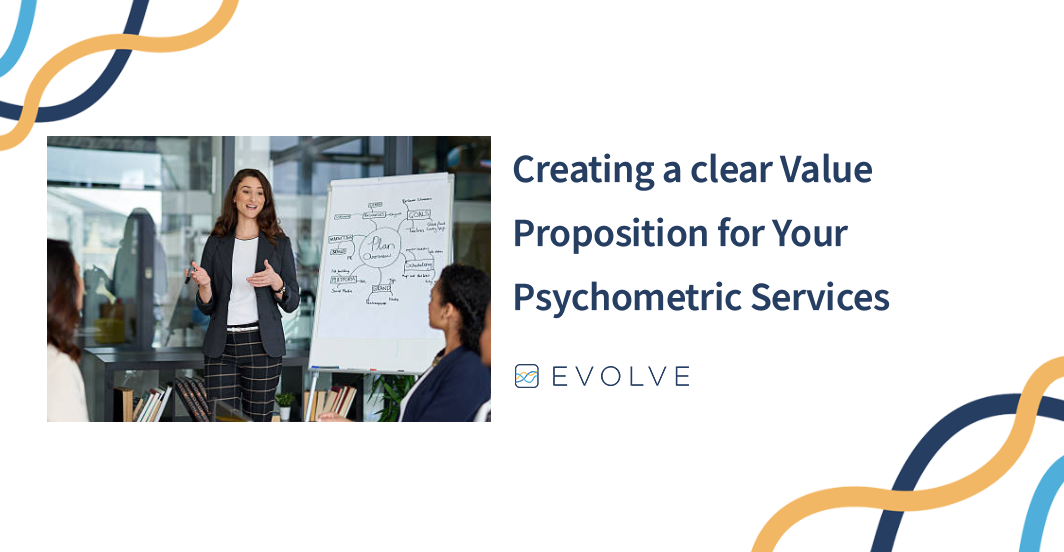
    Creating a clear Value Proposition for Your Psychometric Services

    Your company’s value proposition is quite simply the value you can deliver to a customer – it’s the ‘promise’ you make to your customers. For psychometric services, that could be something like providing bespoke psychometric assessments to recruit better fit employees.

    Here’s an example of a value proposition:

    For internal recruitment teams who are frustrated by high staff attrition rates and poor-quality new recruits, our sales-focused psychometric assessment highlights strong candidates and removes poor-fit candidates with a robust, measurable and repeatable assessment process. Unlike our competitors, we only focus on assessing salespeople.

    This example explains who the product/service is for, what the product is and what it provides and gives a reference to the competition. This is the sort of format that your value proposition might take – it needs to be clear to those in the business and should be recognisable to customers and those that know the business.

    How do you create a value proposition that everyone understands?

    Although it sounds obvious, it’s really important that you fully understand the value that your company is providing, as well as how you can effectively communicate the value to internal and external stakeholders.

    The structure above describing ‘who’s it for’, ‘what’s the product/service’ and ‘the value provided’ is a good format to start with as it gives an idea for what needs to be included in your value proposition. 

    Capture

    Following on from this, there are a number of questions you can ask to help create your value proposition:

    • Who are you trying to sell to?
    • What customer problems do you solve?
    • How do you stand out?
    • Why do your existing customers work with you?

    Remember, when creating your value proposition using the above questions, it’s key to use clear, succinct and accurate language and keep it straightforward to make sure all who read it understand it and associate it with your business.

    Think about the problems you’re solving

    It’s not enough to just know the product or service your company offers, you need to know the problems you’re solving and ensure your value proposition alludes to this. 

    Remember, sales is always only ever about solving problems, and this is always what buyers are looking to achieve.

    For a psychometric service, some of the problems you’re solving might include:

    • Reducing staff turnover
    • Recruiting better fit employees
    • Freeing up management time in early interview stages
    • Providing a fixed, repeatable, and scalable framework environment for running assessments
    • Giving management a way to evaluate people for promotion or bonuses and compensation
    • Providing partners with a tool kit to grow their own businesses

    Once you’ve drafted your value proposition, sense-check it with other people in the business or ask people externally who know your business well – essentially, you want to confirm that your value proposition matches up to how others see you and that they agree with what you promise. 

    To find out more, download your FREE copy of our new guide ‘How to Build and Scale Your Psychometric Service’:

    Unpack, promote, describe and craft the best psychometric service possible with our new guide! Download your FREE copy now.